April Birth Flower: Daisy and Sweet Pea Meaning and Care
The April birth flowers are the daisy and the sweet pea. Learn what each one means by color, where the symbolism comes from and how to grow English daisies, Shasta daisies and fragrant sweet peas.
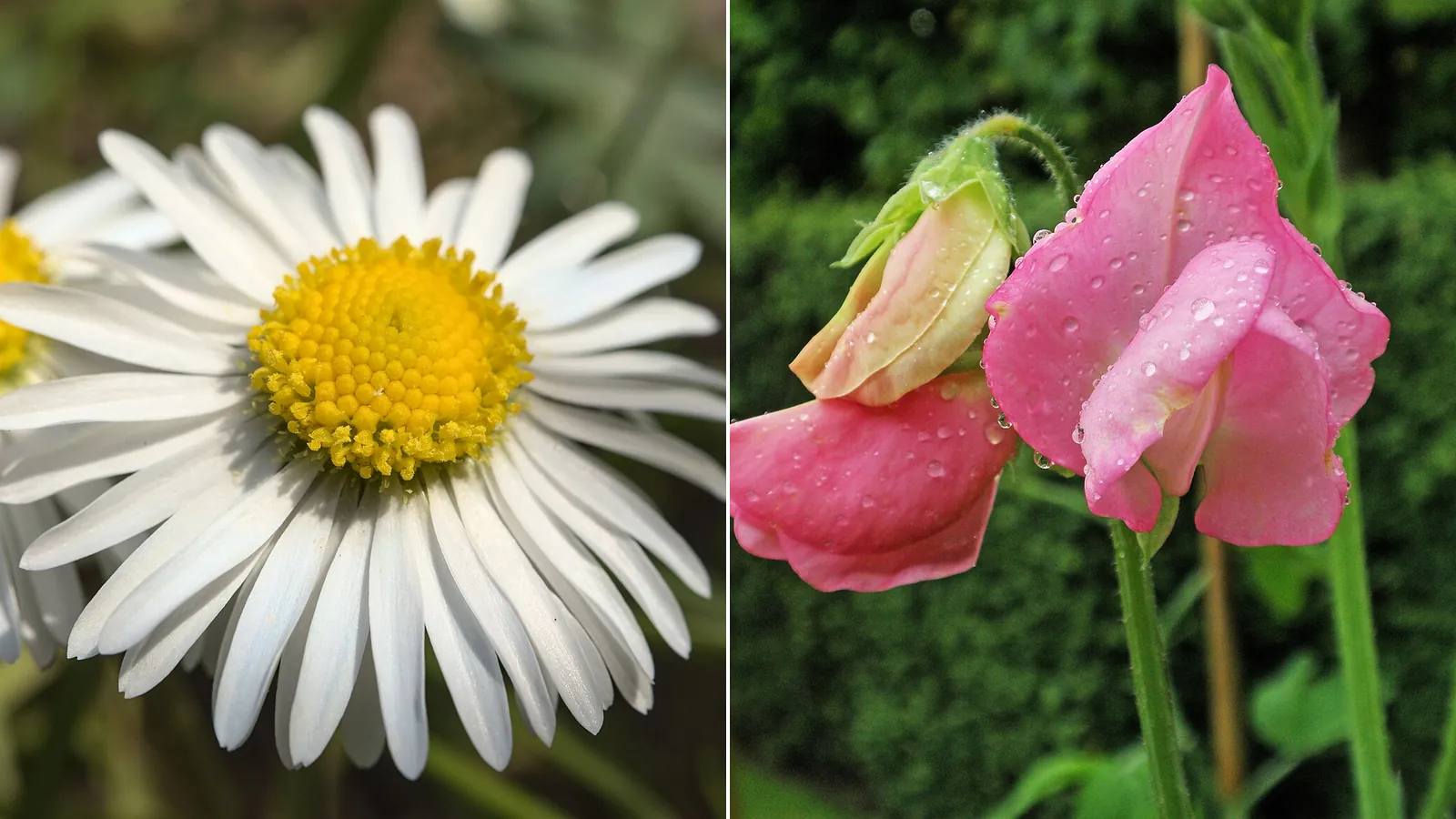
The April birth flower is the daisy, with the sweet pea as the second flower. The daisy stands for innocence, purity and new beginnings, while the sweet pea stands for delicate pleasures and fond farewells. Daisies are easy, cheerful perennials, and sweet peas are fragrant climbing annuals that love cool weather. Sweet pea seeds are poisonous, so never eat them.
April is the month when gardens wake up for real. Lawns fill with tiny white daisies, and sweet pea vines start racing up their supports. Both flowers feel fresh, simple and full of promise, which makes them a natural match for a spring birthday.
The two are very different plants. The daisy is a low, tough flower that opens with the sun. The sweet pea is a climbing vine grown for its ruffled, scented blooms.
This guide covers what each April birth flower means, where the symbolism comes from and how to grow both in a US garden. It also covers bouquets, gifts and a safety note about sweet pea seeds. For every month in one place, see our birth month flowers guide.
Key takeaways
- The April birth flowers are the daisy (primary) and the sweet pea (secondary).
- Daisies symbolize innocence, purity and new beginnings. Sweet peas symbolize delicate pleasures, thanks and fond farewells.
- English daisies are hardy in USDA Zones 4 to 8, and Shasta daisies in Zones 5 to 9.
- Sweet peas are cool-season annual vines. Sow them in early spring, or in fall where winters are mild.
- Pinch young sweet peas, give them a tall support and pick the flowers often to keep them blooming.
- Sweet pea seeds and pods are poisonous. Keep them away from children and pets, and never mix them up with edible peas.
What Is the April Birth Flower?
April has two birth flowers. The daisy is the traditional primary flower, and the sweet pea is the secondary flower. Most US birth flower charts list both, so either one suits an April birthday.
“Daisy” can mean several plants. The classic April daisy is the English daisy, Bellis perennis. Many people also use the larger Shasta daisy, or even a bright gerbera from the florist. They all share the same simple, sunny look.
| Flower | Botanical name | Main meaning | Common colors | Bloom season |
|---|---|---|---|---|
| Daisy | Bellis perennis (English daisy) | Innocence, purity, new beginnings | White, pink, red, all with a yellow eye | Spring to early summer |
| Sweet pea | Lathyrus odoratus | Delicate pleasures, thanks, farewell | White, cream, pink, red, purple, lavender, bicolors | Spring to early summer, while weather stays cool |
Where Do Birth Month Flowers Come From?
No official body picks birth flowers. The lists grew out of old European customs, the Victorian language of flowers and later florist tradition. That is why charts sometimes disagree, especially on the second flower for a month.
Daisies and sweet peas fit April well. In much of Europe and North America, daisies flower freely in spring lawns and meadows. Sweet peas are a cool-season crop, so in many areas they are sown or growing strongly by April.
Daisy: April’s Primary Birth Flower
Daisies belong to the aster family, Asteraceae. What looks like one flower is really a flower head made of many tiny flowers. The white “petals” around the edge are ray florets. The yellow eye in the middle is packed with small tube-shaped disc florets.

English Daisy (Bellis perennis)
The English daisy is the original April daisy. It is a small plant, about 3 to 6 inches tall, with a flat rosette of spoon-shaped leaves. Each flower sits alone on a short, leafless stem. North Carolina State Extension lists flowers up to 2 inches across in white, pink or red, with a yellow center.

The plant is native to Europe. It has spread to lawns across parts of the US and Canada, where many people treat it as a weed. Garden types are much showier. They come in fluffy double forms, such as the ‘Pomponette’ series, with flowers like tiny pompons.
Shasta Daisy and Other Garden Daisies
The Shasta daisy, Leucanthemum × superbum, is the big white daisy of summer borders. It grows 2 to 4 feet tall with flowers 2 to 3 inches across. NC State Extension notes that plant breeder Luther Burbank developed it in the 1890s near Mount Shasta in California.
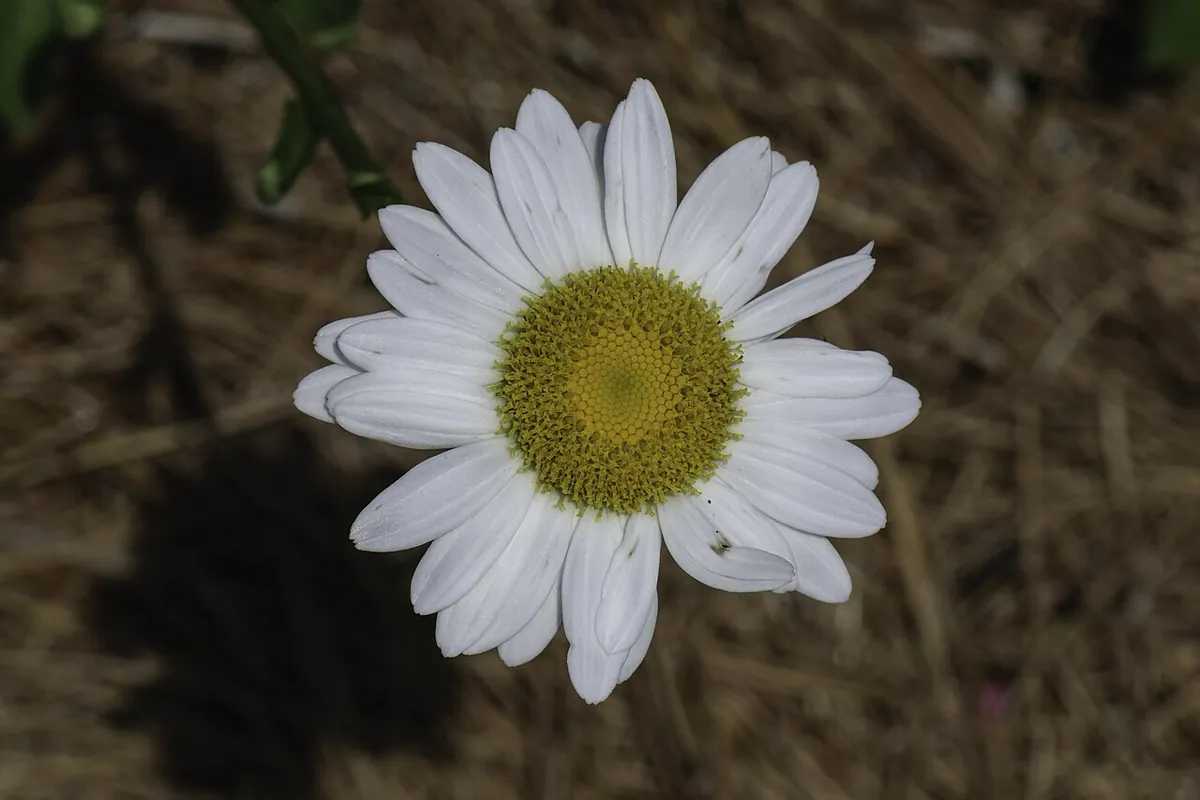
Other plants also carry the daisy name. The oxeye daisy, Leucanthemum vulgare, is a wild European daisy that has become a weed in many places. The gerbera daisy is a florist favorite with large, bold blooms in red, orange, pink and yellow.
Daisy Meaning and Symbolism
In general, daisies stand for innocence, purity and new beginnings. The clean white rays and open, sunny face make the link easy to see. The daisy is also tied to loyal love and to childhood, thanks to games like daisy chains.
Daisies in the Victorian Language of Flowers
Victorian flower dictionaries gave the daisy several messages. Kate Greenaway’s Language of Flowers, published in 1884, lists the daisy as “innocence.” The same book gives the garden daisy “I share your sentiments” and the wild daisy “I will think of it.”
Daisy Meaning by Color
Color meanings below mix Victorian lore with modern florist tradition. Older flower books do not always agree, so treat them as a guide rather than a strict code.
| Color | Meaning |
|---|---|
| White | Innocence, purity and new beginnings |
| Pink | Gentleness, affection and admiration |
| Red | Love and deep feeling |
| Yellow (gerbera and other daisies) | Friendship, joy and cheer |
| Mixed colors | Beauty, from the Victorian “party-colored daisy” |
For an April birthday, white daisies are the classic choice. Pink or red English daisies add warmth when the gift is for a partner or a close friend.
Daisies in History and Folklore
The daisy is one of the oldest named flowers in English, and most of its story lives in its name and in children’s games.
The “Day’s Eye”
The word daisy comes from the Old English dæges ēage, meaning “day’s eye.” The name fits. English daisy flower heads close in the evening, hiding the yellow center, and open again in the morning.
The poet Geoffrey Chaucer played on this idea around 1385 in The Legend of Good Women. He wrote that men may rightly call the flower the “dayeseye, or ellis the eye of day.”
He Loves Me, He Loves Me Not
The best-known daisy game is a simple love test. You pull off the petals one by one, saying “he loves me” and “he loves me not” in turn. The last petal gives the answer. Children also link daisies stem to stem to make daisy chains for crowns and necklaces.
Sweet Pea: April’s Second Birth Flower
The sweet pea, Lathyrus odoratus, is a climbing annual in the pea and bean family, Fabaceae. It climbs by curling tendrils and can reach about 8 feet on a good support. Its flowers have the classic pea shape: a large upright petal called the standard, two side wings and a small keel.
Grown for Fragrance
The species name odoratus means fragrant, and scent is the reason most people grow it. Oregon State University Extension notes that the earliest sweet peas had small flowers but a strong, attractive fragrance. Many modern varieties trade some scent for bigger blooms, so check the packet.
Colors and Types
Sweet peas come in white, cream, pink, salmon, red, maroon, purple, lavender and soft blue, plus many bicolors and streaked forms. There is no true yellow sweet pea. The RHS describes a newer New Zealand hybrid with a wild yellow-flowered pea as probably the closest to yellow so far.
Sweet Pea Meaning and Symbolism
Sweet peas carry two main messages. Kate Greenaway’s 1884 flower dictionary lists the sweet pea as both “delicate pleasures” and “departure.” Modern florists often read that as a fond goodbye or a thank-you for a lovely time.
Sweet Pea Meaning by Color
| Color | Meaning |
|---|---|
| White | Innocence, sincerity and a gentle farewell |
| Pink | Gratitude, affection and sweet thoughts |
| Red | Love and warm appreciation |
| Purple or lavender | Admiration, grace and charm |
| Mixed bunch | Delicate pleasures and thanks for a happy time |
These color meanings come from modern florist tradition rather than one fixed source.
Sweet Pea History: From Sicily to Victorian Gardens
Wild sweet peas grow in southern Italy, Sicily and Crete. Their move into gardens is unusually well recorded.
Father Cupani’s Seeds

In 1699, a Sicilian monk and naturalist named Francesco Cupani sent sweet pea seeds to Robert Uvedale, a schoolmaster and plant collector in Enfield, England. Those wild seeds produced small, intensely fragrant flowers. Seed sold today as ‘Cupani’ is grown as a close match to that early form, with small maroon and violet blooms.
Henry Eckford and the Grandifloras
In the late Victorian era, the breeder Henry Eckford changed them for good. His Grandiflora types had larger flowers in many new colors and kept the famous fragrance. By 1900, the Hardy Plant Society notes, Eckford had bred 115 of the 264 varieties in cultivation.
The Spencer Sweet Pea
In 1900, British growers celebrated two centuries of the sweet pea with a show at the Crystal Palace in London. A year later, Silas Cole, head gardener to Earl Spencer at Althorp, showed ‘Countess Spencer’. Its large, ruffled flowers started the Spencer type, which is still the most popular group of sweet peas today.
Daisy vs Sweet Pea at a Glance
| Feature | English daisy | Sweet pea |
|---|---|---|
| Plant type | Low perennial, often grown as a biennial | Climbing or bush annual |
| Height | 3 to 6 inches | About 3 feet (bush) to 8 feet (climbers) |
| Light | Sun with afternoon shade | Full sun |
| Main appeal | Neat, cheerful flowers | Fragrance and ruffled cut flowers |
| Heat tolerance | Fades in hot summers | Stops blooming in hot, humid weather |
| Safety | Can upset pets if eaten | Seeds and pods are poisonous |
How to Grow Daisies
Daisies are some of the easiest flowers to grow. The two main garden types have slightly different needs.
Growing English Daisies

English daisies are hardy in USDA Zones 4 to 8. They like cool, moist, fertile soil with good drainage. NC State Extension recommends sun with afternoon shade. The plants decline in summer heat, which is why many gardeners treat them as spring bedding plants.
- Planting: set out young plants in spring or fall, or grow from seed. Mature clumps can be divided in spring.
- Watering: keep the soil evenly moist. English daisies do not tolerate drought.
- Spread: they can seed into nearby lawns. Remove faded flowers if you want to keep them in the bed.
Growing Shasta Daisies
Shasta daisies are tough perennials for Zones 5 to 9. Plant them in full sun to part shade in well-drained soil rich in organic matter. They dislike wet soil in winter, which is a common cause of losses. Once settled, they handle dry spells and are seldom bothered by deer or rabbits.
- Deadhead: cut off spent flowers to encourage more blooms through summer.
- Divide: lift and split clumps every 2 to 3 years in spring or fall to keep them vigorous.
- Cut for the vase: Shastas make long-stemmed cut flowers. They pair well with other white flowers in a classic white and green bouquet.
A Note on Oxeye Daisy
Avoid planting oxeye daisy. Montana State University Extension reports that it is on several state noxious weed lists and that one plant can produce thousands of seeds. Its seeds sometimes turn up in wildflower mixes, so read the label before you buy.
How to Grow Sweet Peas

Sweet peas need cool weather to grow and flower, so timing matters more than anything else. Get them in early, and they will bloom for weeks before the heat arrives.
When to Sow Sweet Peas
In most of the US, sow sweet peas in early spring. Oregon State University Extension advises gardeners in western Oregon to plant before mid-March and protect seedlings from frost. In mild-winter areas such as Louisiana, LSU AgCenter recommends sowing in October or November so plants bloom in spring.
You can also start seeds indoors in deep pots, then harden off the seedlings and plant them out once the soil can be worked.
Soaking and Sowing the Seeds
Sweet pea seeds have a hard coat. Soaking them for up to 24 hours can speed germination, though LSU AgCenter notes it is not critical. The RHS warns that soaked seeds can rot if you do not sow them straight away. For a stubborn seed, nick a tiny chip from the coat opposite the “eye” with a sharp knife.
- Prepare the bed. Choose full sun and rich, well-drained soil. Work in compost or well-rotted manure.
- Sow. Plant seeds about 3/4 to 1 inch deep and about 2 inches apart.
- Thin. Once seedlings are up, thin them to 5 to 6 inches apart.
Pinching Out the Tips
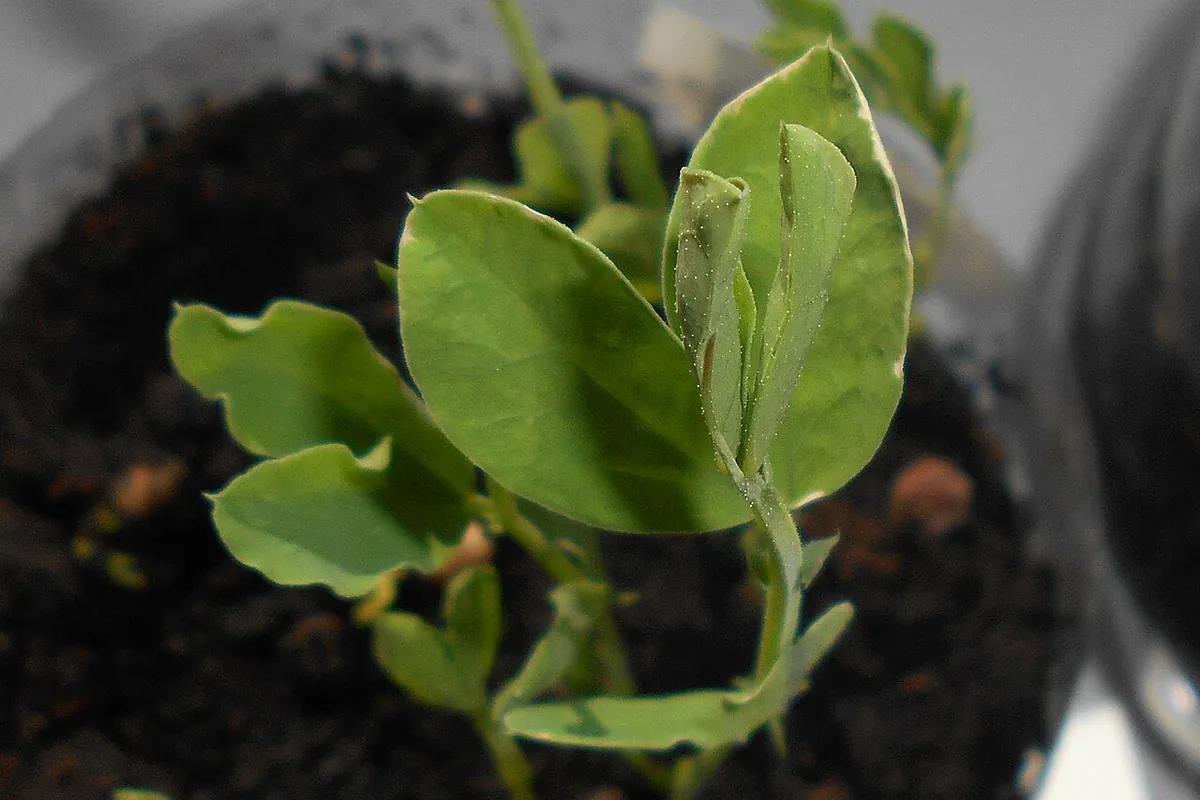
Pinching makes sweet peas bushier, with more stems and more flowers. Oregon State Extension suggests pinching off the growing tip when plants are about 4 inches tall. Use your thumb and finger to snap off the top just above a healthy leaf. Side shoots soon grow from the leaf joints below.
Giving Sweet Peas Support
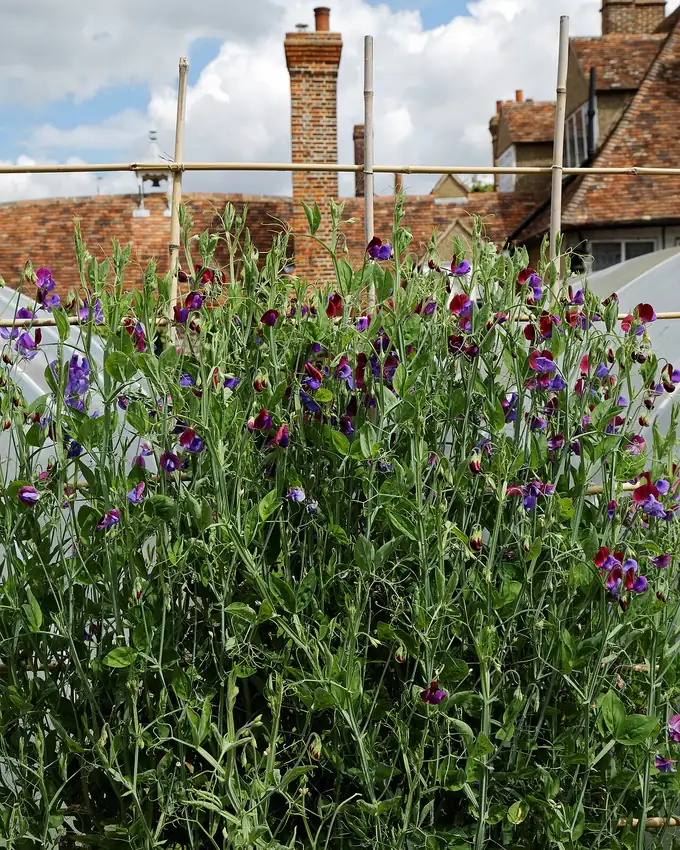
Climbing sweet peas can reach up to 8 feet, so set up supports before you sow. Their tendrils grip thin things best, such as netting, string, chicken wire or twiggy branches. Bamboo canes and wigwams work well too.
Water, Feeding and Heat
Sweet peas flower poorly if they dry out. Water deeply in dry spells so moisture reaches the whole root zone, and check pots daily. For containers, the RHS suggests a high-potassium feed, such as tomato fertilizer, to encourage flowers.
Heat is the main limit. NC State Extension notes that sweet peas struggle in hot, humid summers, so warm-region gardeners should plant early.
Cutting Sweet Peas for More Flowers
Sweet peas are a cut-and-come-again flower. The more you pick, the more they bloom. If seed pods form, annual sweet peas slow down and stop flowering. Cut flowers every few days and remove any pods you missed.
Pick in the morning, when stems are full of water. Johnny’s Selected Seeds advises harvesting when about half the flowers on a stem are open and placing stems in cool water right away. Our cut flower garden guide shows how to fit them in with other crops.
Common Pests and Problems
Both April birth flowers are fairly trouble-free.
Daisy Problems
Shasta daisies can get aphids, leaf miners, leaf spot and powdery mildew, mostly in crowded clumps or wet soil. Divide plants regularly and improve drainage.
Sweet Pea Problems
- Powdery mildew shows as a gray coating on leaves. The RHS notes it gets worse in drought, so keep plants well watered.
- Aphids cluster on shoot and flower tips. Check plants often and wash them off early.
- Slugs and snails eat young seedlings. Protect plants until they are well grown.
- Bud drop can follow drought or sudden heat. Steady watering and mulch help.
Are Sweet Peas Poisonous? Safety for People and Pets
Sweet peas look like garden peas, but they are not food.
Sweet Pea Seeds and Pods
NC State Extension lists the seeds as the poisonous part and describes the pods as inedible and poisonous to people. Sweet pea seeds contain aminopropionitrile compounds. Eaten in quantity, they can cause a condition called lathyrism, which affects the nerves, bones and connective tissue.
- Never eat sweet pea seeds or pods, and teach children not to pick them.
- Do not grow sweet peas next to edible peas, where the pods could get mixed up.
- Horses are especially sensitive to Lathyrus plants. The ASPCA lists the related everlasting sweet pea as toxic to horses.
Daisies and Pets
The ASPCA lists daisies in the chrysanthemum group as toxic to dogs and cats. Signs include vomiting, diarrhea, drooling and skin irritation. NC State Extension rates the Shasta daisy as mildly toxic and suggests gloves when handling it, since the sap can irritate skin.
If you think a pet has eaten sweet pea seeds or daisies, call your veterinarian or the ASPCA Animal Poison Control Center at (888) 426-4435. For a person, call Poison Help at 1-800-222-1222.
April Birth Flower Bouquets
Daisies and sweet peas both shine in a vase, alone or mixed with other spring flowers.

Pairing Daisies and Sweet Peas
For a true April birth flower bouquet, combine white Shasta or gerbera daisies with a loose handful of pink, lavender and white sweet peas. The daisies add a bright, sturdy center. The sweet peas bring scent, soft color and movement around the edges.
- All white: Shasta daisies with white sweet peas and fresh green foliage.
- Hand-tied posy: a small spiral bouquet of English daisies and sweet peas for a birthday table.
New to bouquet making? Our guide to flower arranging for beginners covers conditioning, color schemes and the spiral hand-tied method step by step.
Keeping Sweet Peas Fresh in a Vase
Sweet peas are not long-lasting cut flowers. Johnny’s Selected Seeds notes they can last up to 4 to 5 days when cut at the right stage and kept cool. Use a clean vase, fresh water and flower food. Keep the vase out of direct sun and away from ripening fruit.
Recut daisy stems and change the water every couple of days. When the sweet peas fade, rearrange the rest in a smaller vase.
April Birth Flower Gift Ideas
April flowers are easy to find in spring, both as cut stems and as plants.
- A mixed bunch of fragrant sweet peas, the classic “thank you for a lovely time” flower.
- A pot of pink or red pompon English daisies for a sunny windowsill or front step.
- A Shasta daisy plant that will flower in the garden every summer.
- A packet of scented heirloom sweet pea seeds, such as ‘Cupani’, with a note on when to sow.
- Jewelry, prints or cards with daisies or sweet peas, often paired with diamond, April’s birthstone.
Choose daisies for innocence and fresh starts, and sweet peas for thanks and happy memories. A mix of both covers every meaning of an April birthday.
Fun Facts About April’s Birth Flowers
A few facts to share in an April birthday card:
- The word daisy comes from “day’s eye,” because English daisies close at night and open in the morning.
- Each daisy is really a cluster of many tiny florets packed into one flower head.
- Luther Burbank developed the Shasta daisy in the 1890s near Mount Shasta in California.
- Garden sweet peas trace back to seeds a Sicilian monk sent to England in 1699.
April follows the March birth flower, the daffodil, as well as the February birth flowers, the violet and primrose, and the January birth flowers, the carnation and snowdrop. Later in the year, the October birth flowers, marigold and cosmos, bring the same cheerful daisy shape in warm fall colors.
April Birth Flower FAQs
What is the April birth flower?
April has two birth flowers: the daisy, its primary flower, and the sweet pea, its secondary flower. The classic April daisy is the English daisy, Bellis perennis, though Shasta and gerbera daisies are often used too. Daisies stand for innocence and new beginnings, while sweet peas stand for delicate pleasures and fond farewells.
What does the daisy symbolize?
Daisies symbolize innocence, purity and new beginnings. The Victorian language of flowers listed the daisy as innocence, the garden daisy as “I share your sentiments” and the wild daisy as “I will think of it.” White daisies are the classic choice, while pink and red daisies suggest affection and love.
What does the sweet pea flower mean?
Sweet peas stand for delicate pleasures and departure. Kate Greenaway’s 1884 flower dictionary lists both meanings. Today florists often use sweet peas to say thank you for a lovely time or to wish someone well as they leave. A mixed bunch of colors is the traditional way to give them.
Are sweet pea seeds poisonous?
Yes. Sweet pea seeds and pods are poisonous and should never be eaten. They contain aminopropionitrile compounds that can cause lathyrism if eaten in quantity. Keep seeds away from children and pets, and do not grow sweet peas next to edible garden peas. Call Poison Help or your vet if someone swallows them.
When should I plant sweet peas?
Sow sweet peas in early spring in most of the US, as soon as the soil can be worked. In mild-winter areas such as the Gulf South, sow them in October or November for spring flowers. Sweet peas need cool weather to grow and bloom, and they usually stop flowering once hot, humid summer weather arrives.
Should you pinch sweet peas?
Yes. Pinching the growing tip makes sweet peas branch, which gives more stems and more flowers. Oregon State Extension suggests pinching when plants are about 4 inches tall. Snap off the top just above a healthy leaf with your thumb and finger. New side shoots will grow from the leaf joints below.
Do daisies come back every year?
Shasta daisies are perennials that return each year in Zones 5 to 9, especially if you divide them every 2 to 3 years. English daisies are short-lived perennials that many gardeners grow as biennials or spring annuals, because they fade in summer heat. They often reseed, so new plants may appear on their own.
Related flower guides
More guides you might enjoy.