September Birth Flower: Aster and Morning Glory Meaning
The September birth flowers are the aster and the morning glory. Learn what each one means, aster and morning glory meanings by color, the myths behind both flowers, how to grow asters for fall pollinators and morning glories on a fence, plus gift ideas for a September birthday.
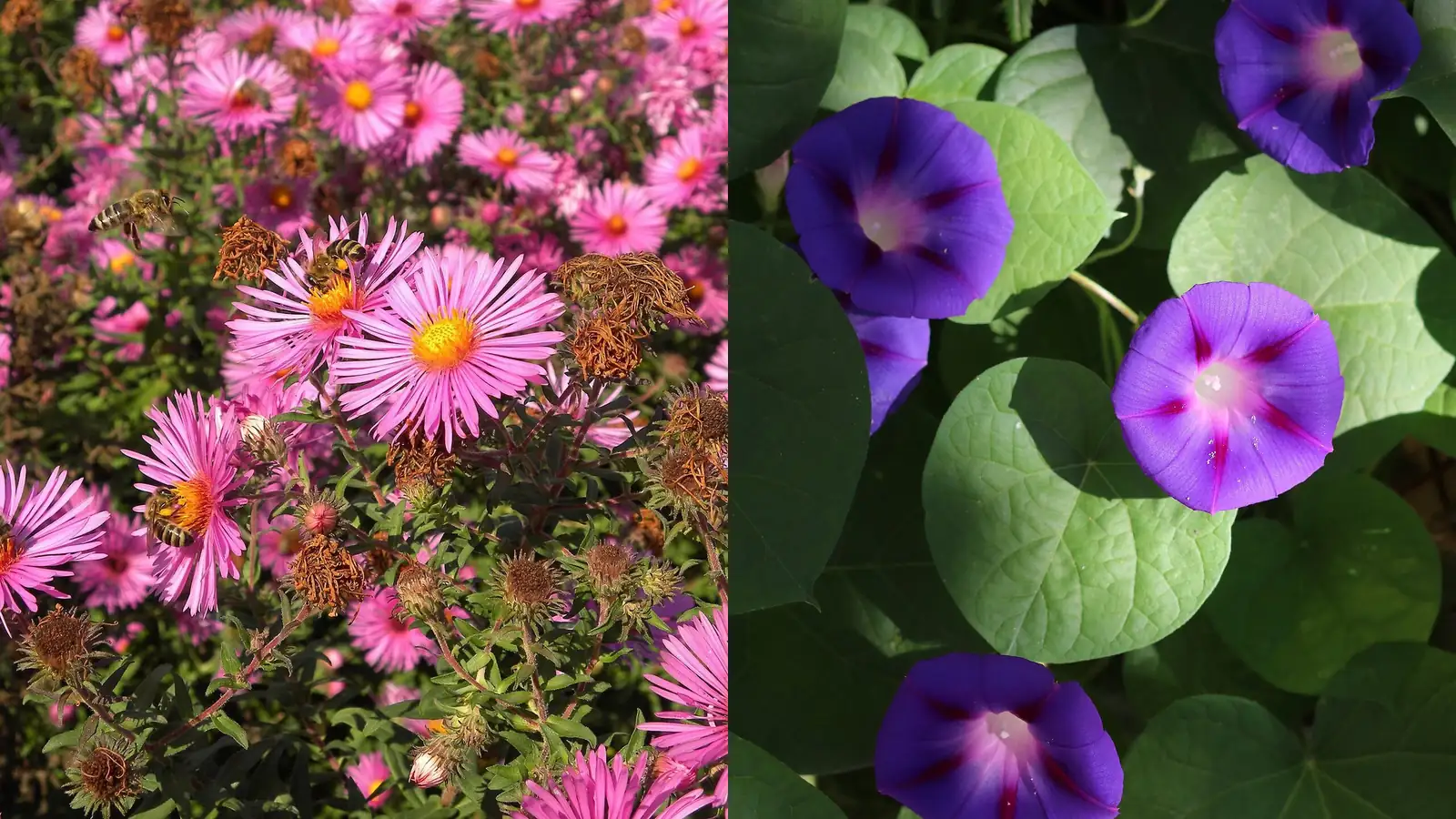
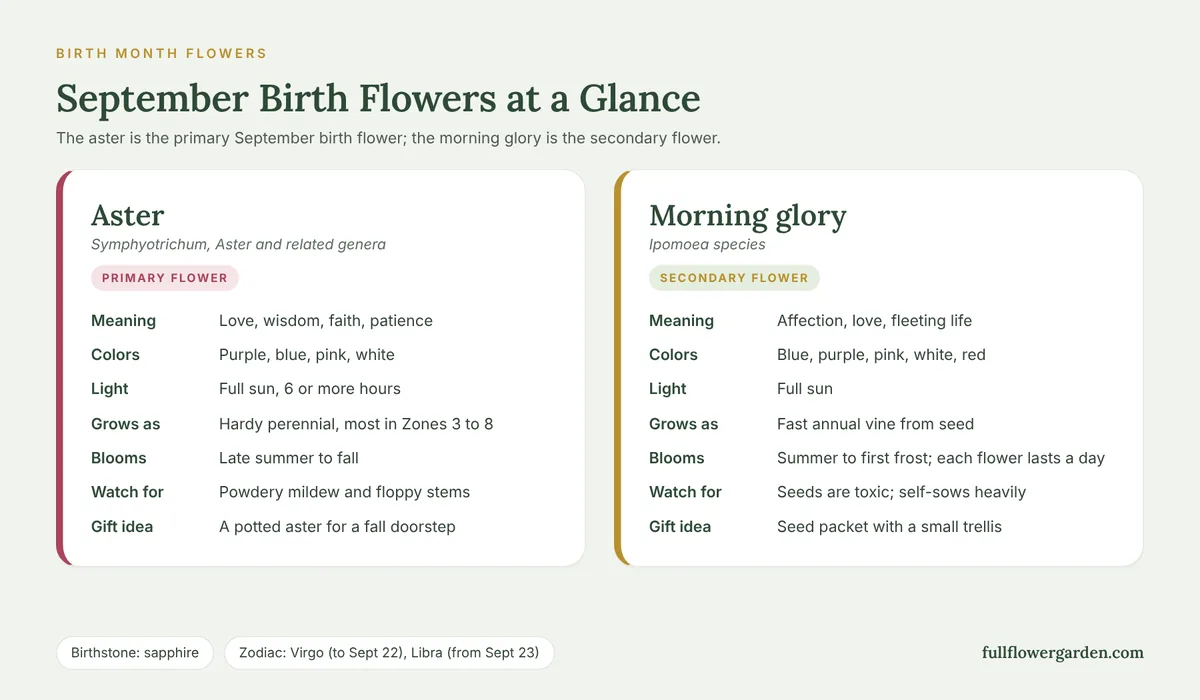
The September birth flowers are the aster and the morning glory. The aster stands for love, wisdom, faith and patience, and its name comes from the Greek word for star. The morning glory stands for affection and the fleeting nature of life. Asters are hardy perennials that bloom in late summer and fall. Morning glories are fast annual vines, and their seeds are toxic if eaten.
September marks the turn from summer to fall, and its two birth flowers bridge the seasons. Asters fill late borders and roadsides with purple, pink and blue daisies just as other flowers fade. Morning glories, sown in spring, are at their peak on fences and trellises in late summer, opening fresh blue and purple trumpets each dawn.
One is a sturdy perennial that feeds migrating butterflies. The other is a quick-growing vine with flowers that last a single morning. Both bring color at a time of year when gardens can start to look tired.
This guide explains what each September birth flower means, how color changes the message and how to grow both at home. It also covers the September birthstone, the two September zodiac signs and gift ideas. For every month in one place, see our birth month flowers guide.
Key takeaways
- The September birth flowers are the aster (primary) and the morning glory (secondary).
- The aster means love, wisdom, faith, patience and valor. Its name means star in Greek.
- The morning glory means affection and love, and also the fleeting nature of life.
- Asters need full sun. Pinch them back by early July for bushier plants and more flowers.
- Soak or nick morning glory seeds before sowing, and plant them in full sun after the last frost.
- September’s birthstone is the sapphire, and its zodiac signs are Virgo and Libra.
What Is the September Birth Flower?
September has two birth flowers. The aster is the traditional primary flower, and the morning glory is the secondary flower. Most US birth flower charts list both, so either one suits a September birthday.
Timing explains the choice. Asters are among the last perennials to bloom, and September is when most of them hit their peak. Morning glories grow all summer and often flower most heavily in late summer and early fall, when the nights start to cool.
| Flower | Botanical name | Main meaning | Flower color | Bloom season |
|---|---|---|---|---|
| Aster | Symphyotrichum, Aster and related genera | Love, wisdom, faith, patience | Purple, blue, pink, white | Late summer to fall |
| Morning glory | Ipomoea species | Affection, love, fleeting life | Blue, purple, pink, white, red | Summer to first frost |
Aster: September’s Primary Birth Flower
Asters belong to the daisy family, Asteraceae. Each “flower” is really a flower head made of many tiny flowers. The colored rays around the edge surround a yellow center of disk flowers.
What Asters Look Like
Most garden asters grow 1 to 6 feet tall, depending on the species. They form bushy clumps topped with masses of starry flowers, usually 1 to 2 inches wide. Common colors are purple, lavender, blue, pink and white, almost always with a yellow center.
Native American Asters
Botanists moved most North American asters out of the genus Aster around the year 2000 after DNA studies. The best-known ones are now in Symphyotrichum. These include New England aster (Symphyotrichum novae-angliae) and New York aster (Symphyotrichum novi-belgii). Gardeners and garden centers still call them asters, and so do we.
Asters for Pollinators
Asters are one of the most valuable fall flowers for wildlife. They feed bees, hoverflies and butterflies at a time when little else is in bloom. In much of the eastern US, monarch butterflies stop to feed on asters during their fall migration to Mexico. Many native bees rely on them to stock up before winter.
Aster Meaning and Symbolism
The aster stands for love, wisdom, faith, patience and valor. Its starry shape gave it a link to the heavens, and its late bloom gave it a link to patience and lasting love.
Where the Name Comes From
The name aster comes from the Greek word for star. It refers to the shape of the flower head, with rays spreading out from a bright center.
Asters in Myth
In Greek myth, the goddess Astraea was saddened by how few stars lit the earth. She wept, and where her tears fell, star-shaped asters grew. Another story says that the gods placed asters on altars, and the ancient Greeks burned aster leaves to keep away evil spirits and snakes.
Aster Meaning by Color
- Purple asters: wisdom, royalty and devotion.
- Blue asters: faith and loyalty.
- Pink asters: love and sensitivity.
- White asters: purity and innocence.
- Red asters: deep devotion.
In the Victorian language of flowers, asters stood for patience and daintiness. They are also a traditional flower for 20th wedding anniversaries.
Morning Glory: September’s Second Birth Flower
Morning glories are climbing vines in the genus Ipomoea, in the bindweed family, Convolvulaceae. The genus also includes the sweet potato. There are several hundred species, and the most common garden types come from tropical America.
Common Morning Glories
- Common morning glory (Ipomoea purpurea): purple, pink, blue or white flowers, very easy and fast growing.
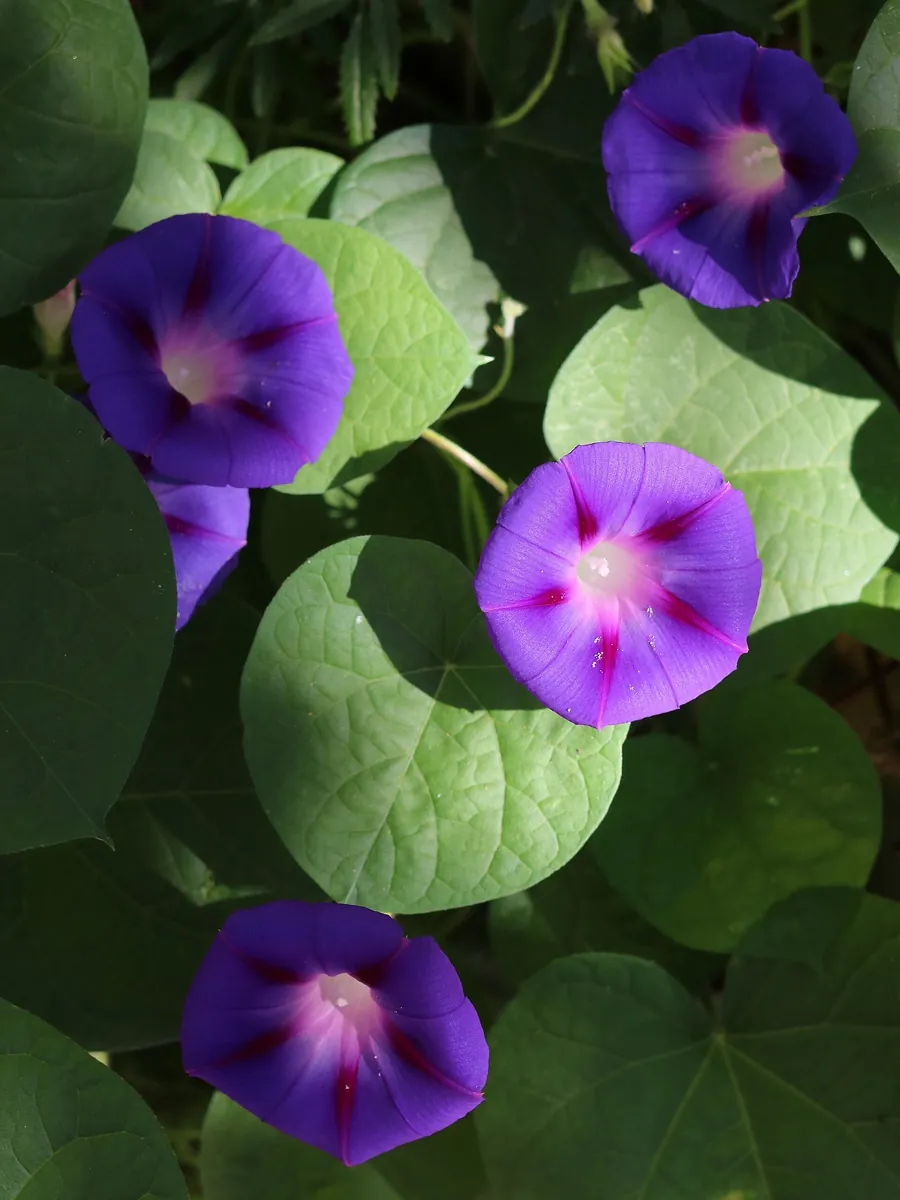
- Heavenly Blue (Ipomoea tricolor): large, sky-blue flowers with a white throat. One of the most loved varieties.
- Japanese morning glory (Ipomoea nil): bred for centuries in Japan in many colors and flower forms.
- Moonflower (Ipomoea alba): a close cousin with large, white, scented flowers that open at night.
- Cypress vine (Ipomoea quamoclit): small red flowers and fine, feathery leaves, loved by hummingbirds.
How the Flowers Open and Close
Each morning glory flower opens in the early morning and closes by the afternoon. On hot days, flowers may close before noon. On cool or cloudy days, they stay open longer. Each flower lasts only one day, but a healthy vine opens new ones every morning for months.
Morning Glory Meaning and Symbolism
The morning glory stands for affection and love. Because each flower opens for only a single morning, it also stands for the short, precious nature of life and the beauty of the present moment.
Meaning in Different Cultures
In Japan, the morning glory is called asagao, which means morning face. It became a popular garden flower during the Edo period, when growers bred unusual forms and held contests. The flower is a summer symbol in Japan and appears in poems, prints and festivals.
In the Victorian language of flowers, the morning glory meant affection. Some sources also tie it to unrequited love, since the flower fades so quickly.
Morning Glory Meaning by Color
- Blue morning glory: trust, calm and lasting affection.
- Purple morning glory: love and grace.
- Pink morning glory: gentle love and care.
- White morning glory: purity and new beginnings.
- Red morning glory: passion and strong love.
How to Grow Asters
Asters are tough, reliable perennials. Most are hardy in Zones 3 to 8.
Planting Asters
Plant asters in spring or early fall, so they have time to settle in before hot weather or hard frost. Choose a spot with full sun, at least 6 hours a day. Asters grow in most soils, but they do best in moist, well-drained soil with some compost. Space plants 1 to 3 feet apart, depending on their size.
Watering and Feeding
Water young plants regularly during their first season. Once settled, most asters handle short dry spells, but they flower best with even moisture. A layer of compost in spring is usually all the feeding they need. Too much fertilizer makes tall, floppy stems.
Pinching for Bushier Plants
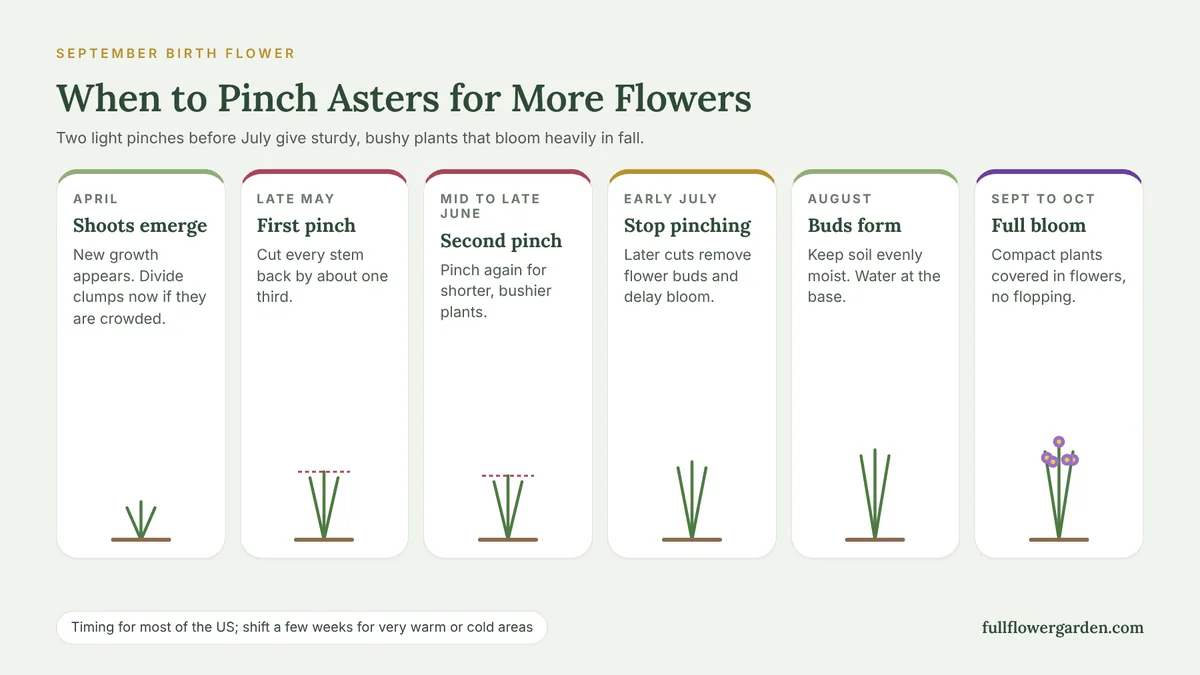
Tall asters can flop over by fall. To prevent this, pinch or cut back the stems by about one third in late spring and again in early summer. A good rule is to finish pinching by early July. This makes shorter, bushier plants with more flowers. Pinching after mid-July can remove the buds and delay flowers.
Dividing Asters
Divide clumps every two to three years in spring. Dig up the clump, discard the woody center and replant the healthy outer pieces. Dividing keeps the plants vigorous and blooming well.
Common Aster Problems
- Powdery mildew: a white coating on leaves in late summer. Give plants good air flow, water at the base and choose resistant varieties.
- Bare lower stems: tall asters often lose their lower leaves. Plant shorter plants in front to hide the stems.
- Flopping: pinch in early summer or use stakes.
Companion Plants for Asters
Asters look great with goldenrod, ornamental grasses, sedum and black-eyed Susans. They also pair well with fall mums. See our guide to garden mums for a full fall border.
How to Grow Morning Glories
Morning glories are some of the fastest and easiest flowers to grow from seed. In a warm summer, vines can climb 10 to 15 feet.
When to Sow
Sow morning glory seeds outdoors after the last frost, once the soil is warm. They grow poorly in cold soil. In short-season areas, start seeds indoors in peat or paper pots about 4 weeks before the last frost. They do not like their roots disturbed.
Preparing the Seeds
Morning glory seeds have a hard coat. To help them sprout faster, soak them in lukewarm water overnight, or nick the coat gently with a nail file. Plant them about 1/2 inch deep. Seeds usually sprout in 5 to 21 days.
Light, Soil and Support
- Light: full sun. Vines in shade grow leaves but few flowers.
- Soil: average, well drained. Rich soil leads to lots of leaves and few flowers.
- Support: a fence, trellis, arch or strings. The vines twine around thin supports.
- Water: water regularly until the vines are growing well, then water during dry spells.
Controlling Self-Seeding
Morning glories drop many seeds, and they can come up everywhere the next year. In the South, common morning glory can become a weed in gardens and fields. To keep it in check, pick off seed pods before they ripen and turn brown. Some species are listed as noxious weeds in some states, so check your local rules.
Are Morning Glories Poisonous?
Yes, the seeds are. Morning glory seeds, especially from Ipomoea tricolor, contain alkaloids that can cause nausea, vomiting and other serious effects if eaten. Keep seed packets and ripe pods away from children and pets. The ASPCA lists morning glory as toxic to dogs, cats and horses.
Asters are generally considered non-toxic to people and pets. Even so, it is best to keep pets from chewing on any garden plant. If you think a person has eaten morning glory seeds, call Poison Control at 1-800-222-1222.
September Birthstone and Zodiac Signs
September’s birthstone is the sapphire. Most people know it as a deep blue gem, but sapphires also come in pink, yellow and other colors. It stands for wisdom, loyalty and truth, which matches the meaning of the aster well.
People born from September 1 to September 22 are Virgo, an earth sign known for being careful and kind. Those born from September 23 to September 30 are Libra, an air sign known for balance and charm.
September Birth Flower Gift Ideas
Fresh Bouquets
Asters make long-lasting cut flowers. Mix purple and pink asters with sunflowers, zinnias or mums for a fall bouquet. Morning glories do not last in a vase, so give them as plants or seeds instead.
Gifts That Keep Growing
- A potted New England aster for a sunny border.
- A packet of Heavenly Blue morning glory seeds with a small trellis.
- A blue sapphire piece of jewelry with a small aster posy.
- A framed botanical print of asters or a Japanese morning glory print.
For tips on building a bouquet, see our beginner’s guide to flower arranging. For the month before, read about the July birth flower, or jump ahead to the October birth flower.
Fun Facts About the September Birth Flowers
- A single aster flower head can hold more than 100 tiny flowers.
- New England asters can grow up to 6 feet tall in good soil.
- Morning glories climb by twining, always in the same direction around their support.
- Moonflowers, a close relative of the morning glory, open in the evening fast enough that you can watch them unfurl.
- The sweet potato is a member of the same genus as the morning glory.
September Birth Flower FAQs
What is the September birth flower?
September has two birth flowers. The aster is the primary September birth flower, and the morning glory is the secondary flower. The aster stands for love, wisdom, faith and patience. The morning glory stands for affection and the fleeting beauty of life.
What does the aster flower symbolize?
The aster symbolizes love, wisdom, faith, patience and valor. Its name comes from the Greek word for star. Color adds meaning: purple stands for wisdom, blue for faith, pink for love and white for purity. Asters are also the traditional flower for a 20th wedding anniversary.
What does the morning glory symbolize?
The morning glory symbolizes affection and love. Because each flower opens in the morning and fades by afternoon, it also stands for the brief, fleeting nature of life. In Japan, it is a beloved summer flower called asagao.
Do asters come back every year?
Yes. Garden asters such as New England and New York asters are hardy perennials that come back each year in about Zones 3 to 8. Divide them every two to three years to keep them healthy. China asters, sold as annuals, are a different plant and do not return.
Why are my morning glories not blooming?
The most common causes are too much shade and too much fertilizer. Morning glories need full sun and do best in average soil. High-nitrogen feed or very rich soil makes lots of leaves and few flowers. Some varieties also wait until late summer to bloom.
Are morning glories invasive?
Morning glories self-seed freely and can become weedy, especially in warm climates. Some species are listed as noxious weeds in certain states. Remove seed pods before they ripen to keep them under control.
What is the September birthstone?
The September birthstone is the sapphire, a gem linked to wisdom, loyalty and truth. People born from September 1 to September 22 are Virgo, and those born from September 23 to September 30 are Libra.
Related flower guides
More guides you might enjoy.