Blue Flowers: 35 True Blue Blooms and How to Grow Them
Fewer than 10 percent of flowering plants bloom true blue. Here are 35 that do, grouped by annuals, perennials, bulbs, shrubs and natives, with zones, light and growing tips.
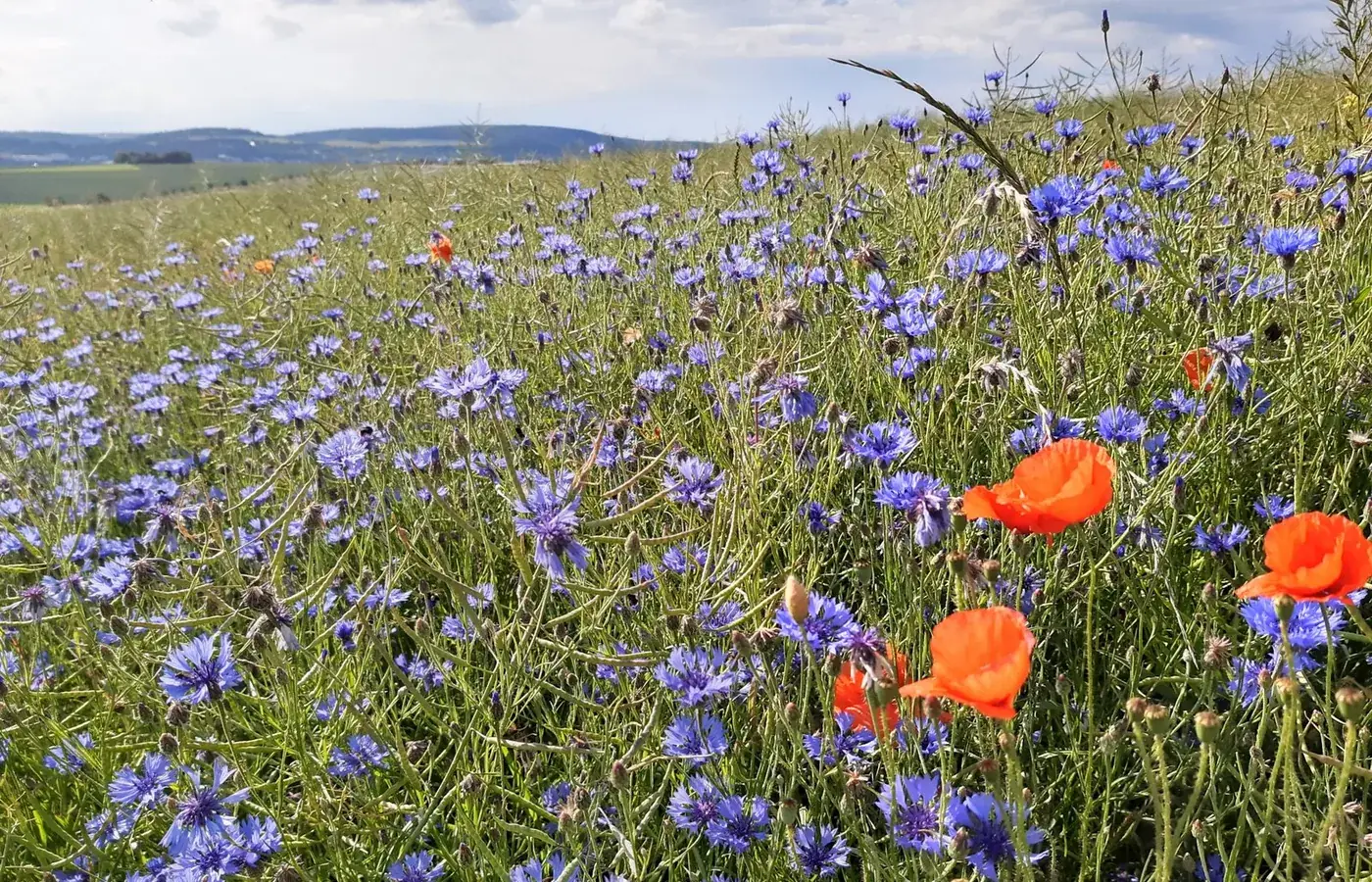
True blue flowers are rare because plants have no blue pigment, and fewer than 10 percent of flowering plants produce them. Reliable choices for US gardens include cornflower, delphinium, grape hyacinth, Siberian squill, blue salvia, Baptisia, balloon flower and bigleaf hydrangea grown in acidic soil. Most prefer full sun and good drainage, and cool-season blue annuals do best sown in fall or early spring.
Blue flowers are the hardest color to find at the garden center, and the easiest to fall in love with. Fewer than one in ten flowering plants produce a true blue bloom, so most gardens lean on purple and call it close enough. It does not have to be that way.
This guide lists 35 true blue flowers that grow well in US gardens, from quick annuals like cornflower to long-lived shrubs like ceanothus. Each entry gives the botanical name, USDA zones, light, bloom time, height, and one tip that makes the difference between a sulking plant and a thriving one.
You will also find a table of the 12 easiest blue flowering plants, design ideas, and answers to common questions, including why a true blue rose does not exist.
Key takeaways
- Fewer than 10 percent of the 280,000 known flowering plants produce true blue flowers.
- Blue comes from delphinidin anthocyanin shifted by pH, flavone co-pigments and metal ions such as iron and aluminum.
- Cornflower, grape hyacinth, Veronica and Baptisia are among the easiest blue flowers for beginners.
- Bigleaf hydrangea blooms blue only at soil pH 5 to 5.5 with available aluminum; at pH 6 or above it turns pink.
- Sow cool-season blue annuals like cornflower, nigella and bluebonnet in fall or very early spring.
- Periwinkle (Vinca minor) is invasive in the eastern US; choose dwarf crested iris or wild ginger for shade.
Why True Blue Flowers Are So Rare
Plants have no blue pigment. Instead, every blue petal starts with anthocyanins, the same red and purple pigments found in blueberries and red cabbage. According to Science in School, fewer than 10 percent of the more than 280,000 known flowering plant species carry blue flowers.
Pigment, pH and metal ions
The key anthocyanin is delphinidin, named after delphinium. On its own it looks mauve. To shift it to blue, the plant must raise the pH inside its petal cells, stack the pigment with colorless co-pigments called flavones, or bind it to metal ions. Cornflower does all three. Its blue complex contains six pigment molecules, six flavones, plus iron, magnesium and calcium ions. Few plants manage that much chemistry in one petal.

How to tell true blue from purple and violet
Hold the flower next to a clear sky or a blue paint chip. True blue shows no red cast at all. Purple and violet always carry some red, which is why they look warmer. Many plants sold as blue, such as most “blue” petunias and verbena, are actually violet. If you love that warmer tone, the violet, the February birth flower, is a classic example. Every plant below leans to the cool side of the line.

Blue Annuals for Fast Color
Annuals give you blue flowers within weeks of sowing, and most prefer cool weather.
Cornflower (bachelor’s button)
Centaurea cyanus. Annual, all zones. Full sun. Blooms late spring to midsummer. 1 to 3 feet. Tip: sow directly in fall in zones 6 and warmer for stronger, earlier plants.
Lobelia
Lobelia erinus. Annual, all zones. Sun to part shade. Blooms spring until heat arrives. 4 to 9 inches. Tip: shear plants by half in July and they rebloom when nights cool.
Morning glory ‘Heavenly Blue’
Ipomoea tricolor. Annual vine, all zones. Full sun. Blooms midsummer to frost. 8 to 12 feet. Tip: nick the seed coat and soak overnight, then sow after soil warms to 65°F.
Forget-me-not
Myosotis sylvatica. Biennial, zones 3 to 8. Part shade. Blooms April to June. 6 to 12 inches. Tip: let a few plants set seed and you will never need to buy it again.
Borage
Borago officinalis. Annual, all zones. Full sun. Blooms June to frost. 2 to 3 feet. Tip: bees adore it, and the edible star-shaped flowers freeze beautifully in ice cubes.
Love-in-a-mist
Nigella damascena ‘Miss Jekyll’. Annual, all zones. Full sun. Blooms late spring to early summer. 15 to 24 inches. Tip: sow every three weeks from early spring, because each sowing flowers for only about a month.
Blue Perennials That Return Every Year
These plants form the backbone of a blue border and most outlive the shed.
Delphinium
Delphinium elatum hybrids. Zones 3 to 7. Full sun. Blooms June to July. 3 to 6 feet. Tip: stake early and cut spent spikes to the basal leaves for a second flush in September.
Blue salvia
Salvia farinacea ‘Victoria Blue’ (zones 8 to 10, annual elsewhere) and Salvia guaranitica ‘Black and Blue’ (zones 7 to 10). Full sun. Blooms summer to frost. 18 inches to 4 feet. Tip: ‘Black and Blue’ is a hummingbird magnet, so plant it where you can watch.
Gentian
Gentiana acaulis and G. septemfida. Zones 3 to 7. Sun to part shade. Blooms late spring or late summer by species. 4 to 12 inches. Tip: give it gritty, evenly moist soil and never let it dry out in summer.
Himalayan blue poppy
Meconopsis baileyi. Zones 5 to 7. Part shade. Blooms late spring to early summer. 2 to 4 feet. Tip: it needs cool, humid summers under 75°F, so the Pacific Northwest and northern New England suit it best.
Balloon flower
Platycodon grandiflorus. Zones 3 to 8. Full sun to light shade. Blooms July to August. 1 to 2.5 feet. Tip: it emerges very late in spring, so mark the spot and do not dig it up by mistake.
Blue flax
Linum perenne. Zones 5 to 8. Full sun. Blooms May to July. 1 to 2 feet. Tip: each flower lasts one morning, but a healthy plant opens dozens daily.
Veronica
Veronica spicata ‘Royal Candles’. Zones 3 to 8. Full sun. Blooms June to August. 12 to 18 inches. Tip: deadhead to the next side bud and it keeps sending up spikes.
Globe thistle
Echinops ritro ‘Veitch’s Blue’. Zones 3 to 8. Full sun. Blooms July to August. 2 to 4 feet. Tip: poor, dry soil keeps stems upright and color strong.
Sea holly
Eryngium planum ‘Blue Glitter’. Zones 4 to 9. Full sun. Blooms July to September. 2 to 3 feet. Tip: the taproot hates moving, so plant small and leave it alone.
Brunnera
Brunnera macrophylla ‘Jack Frost’. Zones 3 to 8. Part to full shade. Blooms April to May. 12 to 18 inches. Tip: the silver leaves scorch in afternoon sun, so site it under trees.
Jacob’s ladder
Polemonium caeruleum. Zones 3 to 7. Part shade. Blooms May to June. 1.5 to 3 feet. Tip: cut it back hard after flowering to refresh the ferny foliage.

Blue Bulbs for Spring and Summer
Bulbs deliver the purest blues and ask for almost nothing after planting.
Grape hyacinth
Muscari armeniacum. Zones 4 to 8. Sun to part shade. Blooms April. 6 to 8 inches. Tip: plant 100 bulbs in a river shape rather than 20 in a clump.
Siberian squill
Scilla siberica. Zones 2 to 8. Sun to part shade. Blooms March to April. 4 to 6 inches. Tip: it naturalizes in lawns, so delay the first mowing until leaves yellow.
Glory-of-the-snow
Chionodoxa forbesii, now listed as Scilla forbesii. Zones 3 to 8. Sun to part shade. Blooms March. 4 to 6 inches. Tip: plant it under deciduous shrubs where it gets full spring sun.
Bluebells (English and Virginia)
English bluebell, Hyacinthoides non-scripta, zones 5 to 8, blooms April to May, 12 inches. Virginia bluebell, Mertensia virginica, zones 3 to 8, blooms April, 1 to 2 feet. Both want part shade. Tip: choose native Virginia bluebell east of the Rockies and pair it with hostas, since it goes dormant by July.
Agapanthus
Agapanthus ‘Storm Cloud’. Zones 7 to 10, pots elsewhere. Full sun. Blooms July to August. 2 to 4 feet. Tip: crowded roots mean more flowers, so divide only every five years.
Blue iris (Dutch and bearded)
Dutch iris Iris x hollandica ‘Blue Magic’, zones 6 to 9, blooms late May, 18 to 24 inches. Bearded iris Iris germanica ‘Victoria Falls’, zones 3 to 9, blooms May to June, 3 feet. Both need full sun. Tip: plant bearded iris rhizomes with the top exposed to sunlight, or they rot.
Anemone ‘Blue Shades’
Anemone blanda ‘Blue Shades’. Zones 4 to 8. Sun to part shade. Blooms March to April. 4 to 6 inches. Tip: soak the shriveled corms overnight before planting, just as you would for ranunculus corms.
Camassia
Camassia leichtlinii ‘Caerulea’. Zones 4 to 8. Sun to part shade. Blooms May. 2 to 3 feet. Tip: it is one of the few bulbs that tolerates heavy, wet clay.
Blue Shrubs, Vines and Ground Covers
Woody plants give blue structure for decades. One needs a warning label.
Blue hydrangea
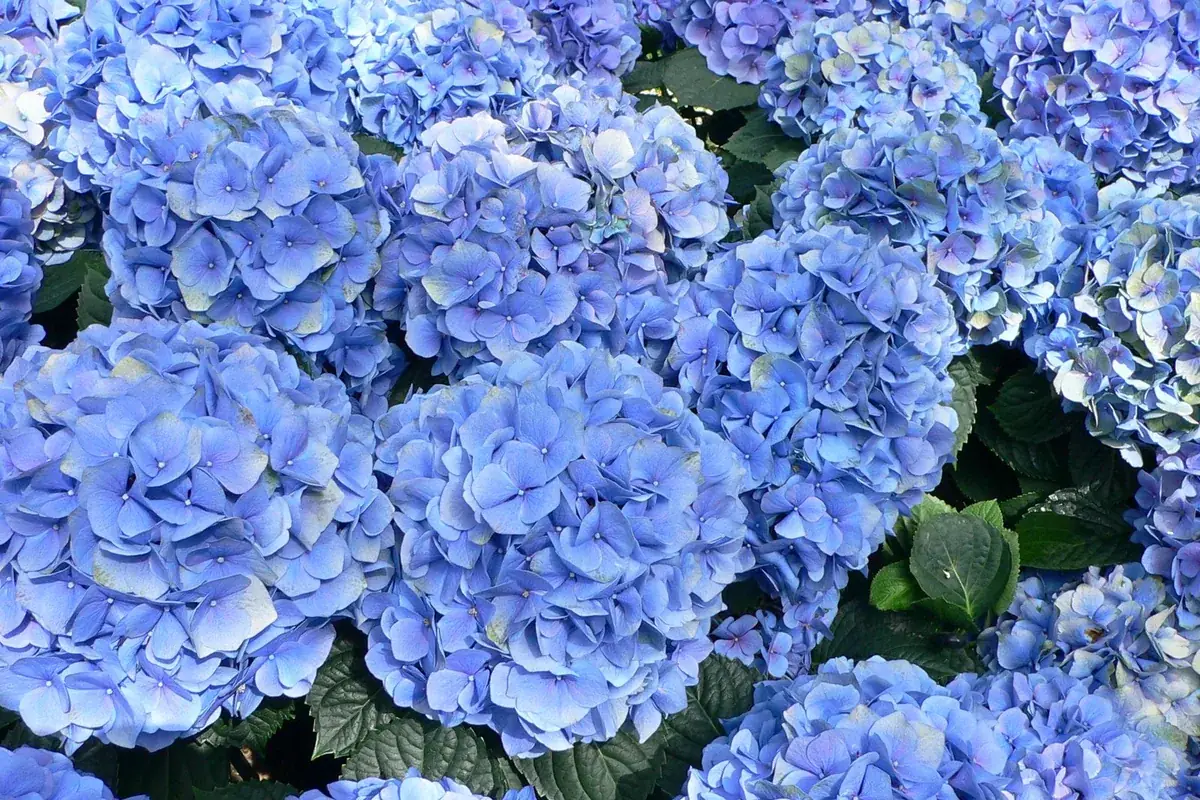
Hydrangea macrophylla ‘Nikko Blue’ or ‘Endless Summer’. Zones 5 to 9. Morning sun, afternoon shade. Blooms June to August. 3 to 6 feet. Tip: blue needs acidic soil around pH 5 to 5.5 plus available aluminum; at pH 6 and above the same shrub turns pink.
Plumbago
Cape plumbago Plumbago auriculata, zones 9 to 11, 3 to 6 feet, blooms spring to fall. Hardy plumbago Ceratostigma plumbaginoides, zones 5 to 9, 8 to 12 inches, blooms August to October. Full sun to part shade. Tip: the hardy type leafs out late, so interplant it with spring bulbs.
Ceanothus (California lilac)
Ceanothus ‘Concha’ or ‘Dark Star’. Zones 8 to 10. Full sun. Blooms March to May. 6 to 8 feet. Tip: never water it in summer once established; wet roots in warm soil kill it fast.
Periwinkle
Vinca minor. Zones 4 to 9. Part to full shade. Blooms April to May. 4 to 6 inches. Tip: Purdue Extension lists it as invasive across the eastern US and recommends dwarf crested iris or wild ginger instead. Plant it only where concrete or lawn contains it, never near woodland.
Blue Wildflowers and Native Plants
Native blue flowers feed local bees and need less water than imports.
Texas bluebonnet
Lupinus texensis. Annual, zones 7 to 10 (sow in fall). Full sun. Blooms March to May. 12 to 18 inches. Tip: scarify the hard seed with sandpaper and sow in September into poor, alkaline soil.
Blue-eyed grass
Sisyrinchium angustifolium. Zones 4 to 9. Full sun. Blooms May to June. 8 to 12 inches. Tip: it is an iris relative, not a grass, so give it the same moist, sunny spot.
Blue false indigo
Baptisia australis. Zones 3 to 9. Full sun. Blooms May to June. 3 to 4 feet. Tip: it takes three years to bulk up, then lives for decades without division.
Rocky Mountain columbine
Aquilegia caerulea. Zones 3 to 8. Part shade. Blooms May to June. 1 to 2 feet. Tip: keep it away from other columbines or the seedlings will cross and lose their blue. Our columbine growing guide covers hummingbird-friendly planting in detail.
Amsonia (blue star)
Amsonia tabernaemontana. Zones 3 to 9. Full sun to part shade. Blooms May. 2 to 3 feet. Tip: the pale blue stars are brief, but the golden fall foliage lasts for weeks.
Chicory
Cichorium intybus. Zones 3 to 9. Full sun. Blooms July to October. 2 to 4 feet. Tip: this naturalized European roadside plant opens at dawn and closes by noon.
The 12 Easiest Blue Flowers at a Glance
Start with these twelve. Each tolerates average soil and ordinary neglect.
Quick comparison table
| Flower | Type | Zones | Sun | Bloom season |
|---|---|---|---|---|
| Cornflower | Annual | All | Full sun | Late spring to summer |
| Borage | Annual | All | Full sun | Summer to frost |
| Love-in-a-mist | Annual | All | Full sun | Late spring |
| Forget-me-not | Biennial | 3 to 8 | Part shade | Spring |
| Grape hyacinth | Bulb | 4 to 8 | Sun or part shade | April |
| Siberian squill | Bulb | 2 to 8 | Sun or part shade | Early spring |
| Camassia | Bulb | 4 to 8 | Sun or part shade | May |
| Veronica | Perennial | 3 to 8 | Full sun | Summer |
| Balloon flower | Perennial | 3 to 8 | Sun or light shade | Midsummer |
| Blue false indigo | Native perennial | 3 to 9 | Full sun | Late spring |
| Brunnera | Shade perennial | 3 to 8 | Shade | Spring |
| Salvia ‘Black and Blue’ | Tender perennial | 7 to 10 | Full sun | Summer to frost |
Designing With Blue Flowers
Blue recedes visually, so it makes a small garden look deeper and calms every color beside it.
Pairings that work
- Blue with white: delphinium behind white flowers such as shasta daisy gives a crisp, classic look.
- Blue with pastel pink: forget-me-nots under pink tulips is the easiest spring combination there is.
- Blue with hot colors: salvia ‘Black and Blue’ next to orange celosia or marigolds creates maximum contrast, because orange sits opposite blue on the color wheel.
- Blue with silver: sea holly and globe thistle among lamb’s ear read as cool and modern.
Moon gardens and pollinators
Pale blues such as Amsonia and ‘Heavenly Blue’ morning glory glow at dusk, so they suit a moon garden beside white blooms. By day, bees see blue far better than red, which is why borage, Baptisia and salvia hum with activity. For a broader palette, browse our guide to 100 types of flowers.
Blue Flowers for Pots and Cutting
Blue never clashes with a pot, and it holds its color well in a vase.
Best blue flowers for containers
Lobelia trails over rims, agapanthus thrives root-bound, and ‘Victoria Blue’ salvia gives height without staking. In shade, Brunnera ‘Jack Frost’ fills a pot all season. Bring agapanthus into a frost-free garage north of zone 7.
Best blue flowers for cutting
Cornflower, nigella, delphinium, sea holly and Dutch iris are the workhorses of a cut flower garden. Cut delphinium when the bottom third of the spike is open and sear the hollow stem end in boiling water for ten seconds. Our flower arranging guide for beginners shows how to balance tall blue spikes with rounder blooms.
Growing Tips for Blue Flowering Plants
Most blue flowers share two needs: the right soil chemistry and a cool start.
Soil pH for blue hydrangea
Test first. NC State Extension advises that only bigleaf hydrangeas change color, and that pH 5 to 5.5 gives blue while pH 6 or higher gives pink. To lower pH, apply garden sulfur in fall and again in spring, then retest each year, because soil drifts back to its natural pH. Change it slowly; a sudden shift browns the foliage.
Cool-season sowing
- Sow cornflower, nigella, bluebonnet and borage directly outdoors in fall (zones 6 and warmer) or as soon as soil can be worked in spring.
- Start lobelia and delphinium indoors 10 to 12 weeks before the last frost, since both germinate best at 60 to 65°F.
- Plant spring bulbs such as squill, Muscari and camassia in October, 3 times as deep as the bulb is tall.
- Hold morning glory and salvia until the soil is warm; they are the exceptions that hate cold feet.
Blue Flowers FAQs
What is the rarest blue flower?
The Himalayan blue poppy (Meconopsis baileyi) is the rarest blue flower most gardeners can hope to grow. It needs cool, damp summers below 75°F and often dies after flowering. Among wild plants, true blue gentians and the blue puya of the Andes are rarer still, but neither suits an ordinary backyard.
Is there a true blue rose?
No. Roses lack the gene that produces delphinidin, the pigment behind most blue flowers. Breeders have inserted a pansy gene to create the 'Applause' rose, but its petals are lavender rather than sky blue. Any deep blue rose sold as cut stems has been dyed by drawing colored water up the stem.
Which blue flowers bloom the longest?
Salvia 'Black and Blue' and Salvia farinacea flower from early summer until the first hard frost, often four months or more. Borage, Cape plumbago and lobelia (in mild climates) are close behind. Among perennials, Veronica 'Royal Candles' and balloon flower give six to eight weeks if you deadhead regularly.
What blue flowers grow in shade?
Brunnera, Virginia bluebell, forget-me-not, Jacob's ladder and Rocky Mountain columbine all flower well in part to full shade. Siberian squill and glory-of-the-snow bloom under deciduous trees before the canopy closes. For a shady ground cover, choose dwarf crested iris rather than periwinkle, which spreads into woodland.
Why does my blue hydrangea turn pink?
Your soil pH has risen above about 6, which locks up the aluminum the plant needs for blue pigment. Lime leaching from concrete foundations and patios is a common cause. Test the soil, apply garden sulfur in fall and spring, and expect the shift back to blue to take one to two seasons.
What do blue flowers symbolize?
Blue flowers traditionally stand for trust, calm, loyalty and remembrance. Forget-me-nots are worn for lost loved ones, and bluebonnets carry state pride in Texas. In Romantic literature the unreachable "blue flower" came to represent longing for the infinite, which still colors how florists market blue bouquets today.
Are blue flowers good for pollinators?
Yes. Bees see blue and ultraviolet far better than red, so blue flowers such as borage, salvia, Baptisia and cornflower rank among the most visited plants in pollinator surveys. Hummingbirds favor tubular blue blooms like Salvia guaranitica. A patch of blue flowers in full sun will draw more insects than almost any other color.
Final Thoughts
Start with three, then build
Pick one blue annual, one bulb and one perennial and plant them together. Cornflower, grape hyacinth and Veronica make a reliable first trio for most of the US. Once you see how true blue flowers lift every color around them, you will find room for the other 32.
Related flower guides
More guides you might enjoy.