Celosia (Cockscomb): Types, Growing Tips and Flower Meaning
Meet celosia, the heat-loving cockscomb: its three main types, how to grow it from seed, how to dry it and what it means.
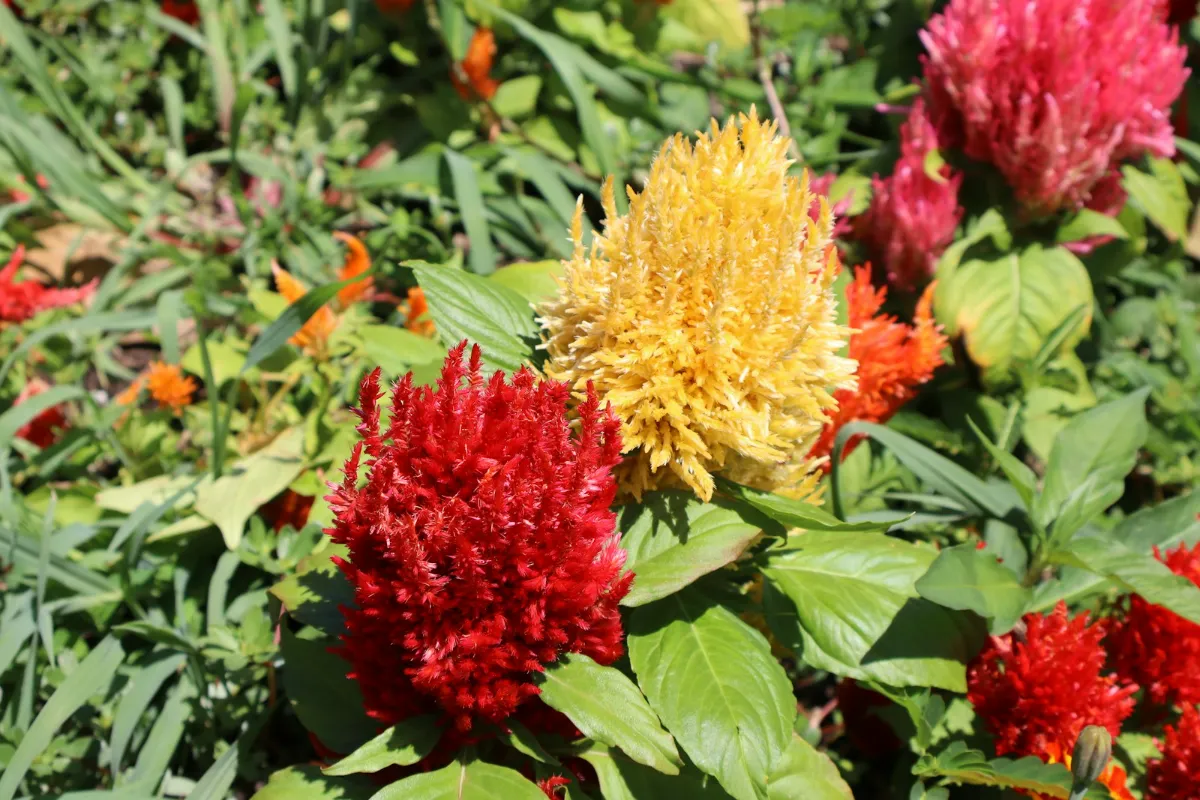
Celosia (Celosia argentea) is a heat-loving tender annual that comes in three main forms: crested cockscomb, feathery plume and slim wheat spikes. Start seed indoors at 75 to 80°F, then plant out after frost once the soil reaches 55°F. Give it 6 to 8 hours of sun and well-drained soil, water only when the top inch dries, and cut stems for bouquets.
What Is Celosia?
Celosia is a bold summer annual grown for velvety flowers that look like flames, brains or feathers. Botanists call it Celosia argentea, and it sits in the Amaranthaceae, the same family as amaranth and quinoa. Gardeners know it by many names: cockscomb, woolflower, plume celosia, wheat celosia and silver cockscomb.
The plant comes from the tropics, and the wide genetic diversity in tropical Africa points to its likely origin there. In most US gardens it acts as a tender annual. Frost blackens it, but summer heat makes it thrive. The genus name comes from the Greek word kelos, meaning “burning,” a nod to the fiery flower heads.
Plants range from 6-inch edging types to 3-foot cut flower varieties, in red, orange, gold, pink, purple and cream. Bees and butterflies visit the blooms.
Key takeaways
- Celosia has three main types: crested (cockscomb), plume and wheat (spicata).
- Seed germinates in about 7 to 10 days at 75 to 80°F.
- Plant out only after frost, once soil reaches at least 55°F.
- Give it 6 to 8 or more hours of sun and well-drained soil.
- Wet, cold soil causes most problems, including root and stem rot.
- The ASPCA lists cockscomb as non-toxic to dogs, cats and horses.
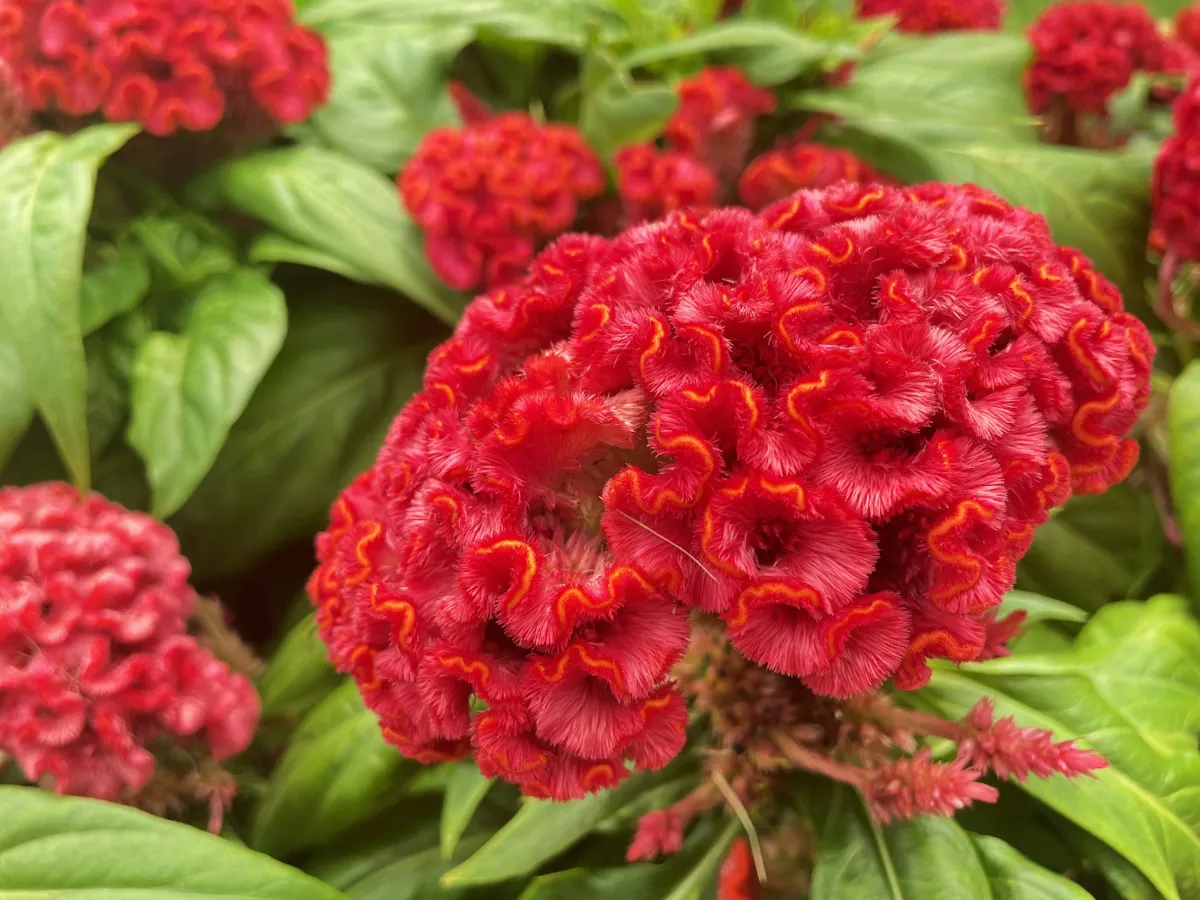
The 3 Main Types of Celosia
All garden celosia belongs to one species, but breeders group cultivars by flower shape. For a wider view of flower shapes and families, see our guide to types of flowers for every garden.
Crested Celosia (Cristata Group)
This is the classic cockscomb. A flattened, wavy flower head forms on top of a thick stem and looks like a rooster’s comb or coral. Tall cut flower series such as ‘Chief’ and ‘Bombay’ carry large heads on long stems. Heads can get heavy, so tall plants may need staking.
Plume Celosia (Plumosa Group)
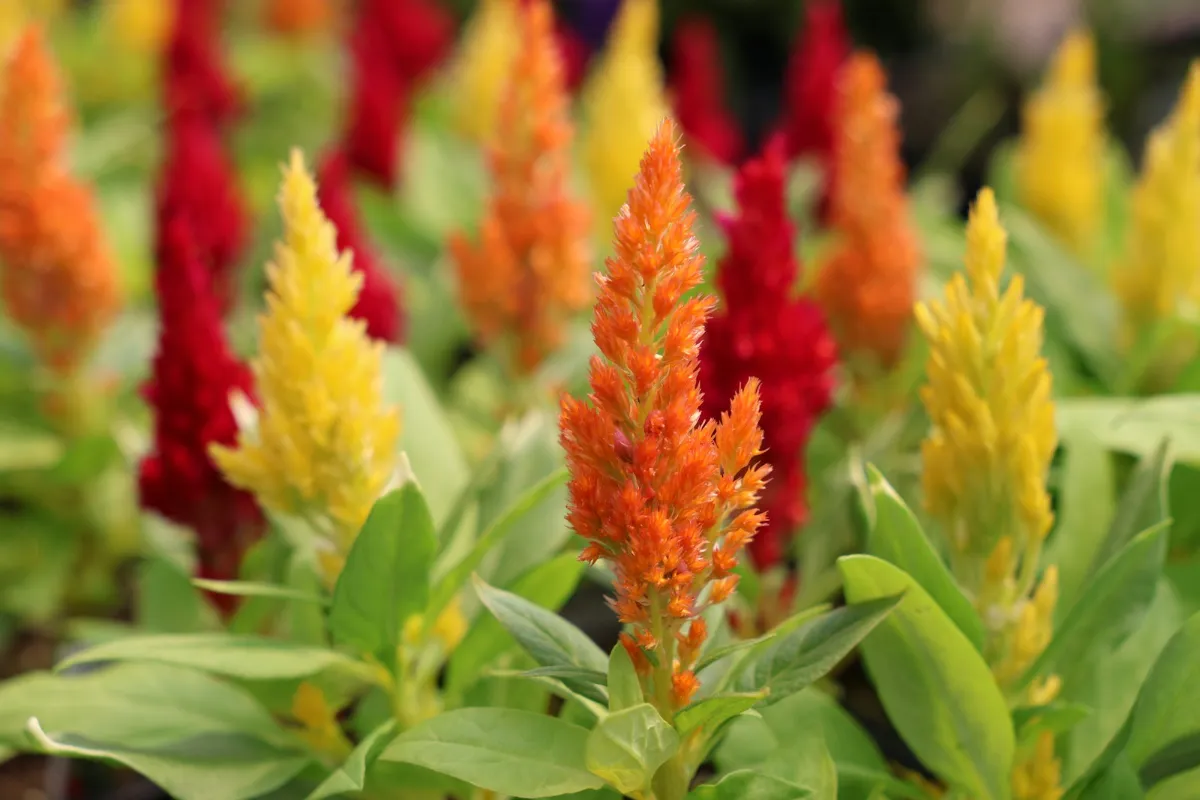
Plume types make soft, upright feathers in bright, saturated colors. They are the most common bedding celosia. ‘Fresh Look’, a 2007 All-America Selections winner, grows about 18 inches tall and keeps producing new plumes all summer without deadheading.
Wheat Celosia (Spicata Group)
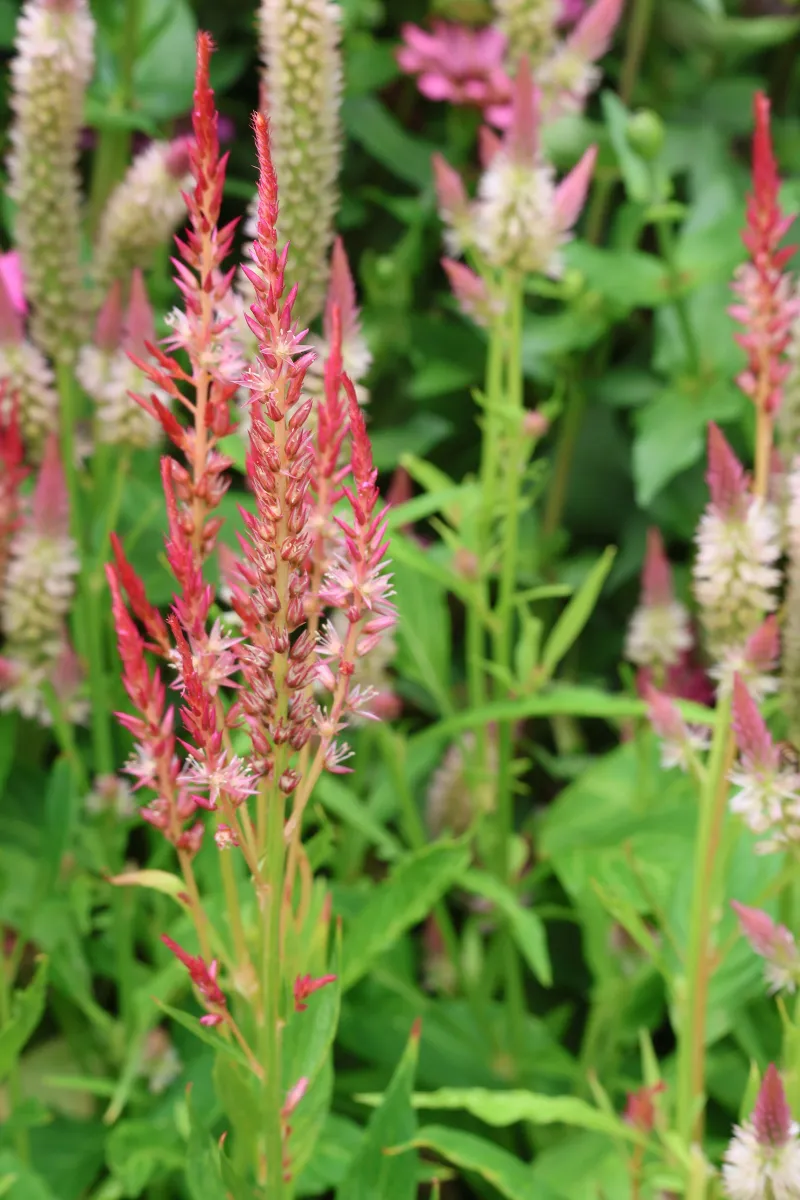
Wheat celosia produces many slim, pointed spikes that fade from bright tips to silvery bases. Plants branch freely and have an airy, wild look. ‘Flamingo Feather’ is a popular pink cut flower, and ‘Asian Garden’, a 2017 All-America Selections winner, reaches 2.5 to 3.5 feet.
| Type | Flower form | Typical height | Best uses | Example cultivars |
|---|---|---|---|---|
| Crested (Cristata) | Fan-shaped, wavy, brain-like comb | 12 to 36 inches; cut flower types up to about 40 inches | Cut flowers, drying, bold accents | ‘Chief’, ‘Bombay’ |
| Plume (Plumosa) | Upright, feathery plumes | 8 to 24 inches | Beds, borders, containers | ‘Fresh Look’, ‘Century’ |
| Wheat (Spicata) | Narrow, pointed spikes, often bicolor | 12 to 36 inches | Cutting gardens, cottage borders, dried bunches | ‘Flamingo Feather’, ‘Asian Garden’ |
| Compact spiky hybrids | Dense spikes in magenta and purple | About 14 to 24 inches | Pots, edging, mass planting | ‘Intenz’ |
Note that ‘Intenz’ is grown from cuttings, not seed, so you will usually buy it as a started plant.
How to Grow Celosia From Seed
Celosia seed is cheap and easy to grow. The main rule is simple: keep everything warm. Cold seedlings stall and often flower too early on short stems.
Starting Seed Indoors
- Sow 4 to 6 weeks before your last spring frost date.
- Use individual cells or small pots instead of open flats. Celosia dislikes root disturbance, and separate cells reduce transplant shock.
- Sow about 1/4 inch deep and cover lightly with vermiculite or fine mix.
- Keep the mix at 75 to 80°F. A heat mat helps. Expect sprouts in about 7 to 10 days.
- Move seedlings under bright light as soon as they emerge so they do not stretch.
- After germination, grow them at about 70 to 75°F by day and 65 to 70°F at night.
Transplant at the 2 to 4 leaf stage, roughly 4 weeks after sowing. University of Maryland Extension warns that seedlings held too long in small packs become stunted and flower prematurely. Plant them out on time rather than late.
Direct Sowing Outdoors
In warm regions you can skip the indoor step. Wait until frost has passed and the soil feels warm, then scatter seed thinly and press it in with a light covering of soil. Thin seedlings to their final spacing once true leaves appear.
Planting and Caring for Celosia
Good celosia care starts with the right spot. University of Minnesota Extension recommends full sun for 8 or more hours a day. NC State Extension lists 6 or more hours as the minimum.
Soil, Timing and Spacing
- Soil: well-drained ground rich in organic matter, with a pH of about 6.0 to 6.5. Avoid heavy, soggy clay.
- Timing: plant out after the last frost, once soil reaches 55°F or warmer.
- Garden spacing: 8 to 12 inches apart for bedding types.
- Cut flower spacing: give large crested types at least 18 inches and plume or wheat types about 24 inches if you want big, branching plants.
Watering and Feeding
Water new transplants well, about 1 inch per week while they settle in. After that, water when the top 1 to 2 inches of soil feel dry. Celosia copes with dry spells far better than with wet feet. Water at the base in the morning so the leaves dry fast.
Feed lightly. Work a balanced fertilizer into the bed at planting. Minnesota Extension then suggests a monthly feed with more phosphorus than nitrogen to push flowers rather than leaves.
Pinching and Deadheading
Pinching removes the growing tip so the plant sends up side shoots. Plume celosia responds well when pinched at 8 to 12 inches tall. Wheat types branch on their own, so a pinch is optional. With crested types, skip the pinch if you want one large comb. Seed suppliers for ‘Chief’ and ‘Bombay’ advise against pinching those series.
Deadheading keeps the show going. Snip faded flowers back to a side shoot, and new blooms will follow. Celosia also self-sows readily, so leave a few heads in fall if you want volunteers next year.
Heat and Drought Tolerance
Heat is where celosia shines. It keeps blooming through hot, humid midsummer when cool-season flowers like ranunculus have long finished. University of Florida IFAS rates its drought tolerance as moderate once established.
Common Celosia Problems
Celosia is usually trouble-free. NC State Extension notes that most problems trace back to wet soil and cold weather. Fix those two and you avoid most issues.
- Damping-off: seedlings collapse at the soil line. Use clean trays and fresh, sterile seed mix.
- Root and stem rot: caused by soggy, poorly drained soil. Improve drainage and water less often.
- Leaf spot: brown or tan spots on foliage. Water at the base and give plants space for airflow.
- Spider mites: fine speckling and webbing in hot, dry weather. Hose off leaf undersides or use insecticidal soap.
- Aphids: clusters on new growth. Spray them off with water or use horticultural oil or neem.
Celosia as a Cut and Dried Flower
Celosia is a cutting garden workhorse. Fresh stems last about 5 days to 2 weeks in a vase, according to Mississippi State University Extension.
- Crested: cut when the center of the comb has filled out but before the outer edges discolor or set seed.
- Plume and wheat: cut when about half the flowers on the stem are open.
To dry celosia, remove the leaves, bundle a few stems with a rubber band and hang them upside down. Pick a dark, airy spot. Most stems dry in about 2 weeks and hold their color well, which is why florists use them in fall wreaths. Pair dried celosia with potted garden mums for an easy autumn porch display.
Can You Eat Celosia?
Yes. In West Africa, Celosia argentea is a leafy vegetable known as Lagos spinach or soko. It is especially popular in southwestern Nigeria and is also eaten in Benin, Togo, Ghana and Cameroon. Cooks add the leaves and tender stems to soups and stews with tomato, onion, pepper and palm oil.
Young leaves have a mild, spinach-like taste. Older leaves turn bitter after the plant flowers. The leaves contain oxalic acid, so they are usually cooked rather than eaten raw.
Celosia Flower Meaning and Symbolism
Celosia has a surprisingly mixed reputation. In the Victorian language of flowers, cockscomb stood for affectation and foppery, a teasing jab at its showy, puffed-up look. Today most people read it in a warmer way.
The fiery name, from Greek kelos for “burning,” links the flower to passion, warmth and courage. Its family ties add another layer. The word amaranth comes from Greek for “unfading,” and amaranth has long symbolized immortality. Dried celosia keeps its color for months, so many see it as a sign of lasting love.
Celosia Colors and Their Meanings
Color meanings are tradition, not fixed rules, but these are the common associations:
- Red: passion, courage and romantic love.
- Orange: energy, enthusiasm and warmth.
- Yellow and gold: joy, friendship and optimism.
- Pink: affection, gratitude and gentleness.
- Purple and magenta: admiration and a sense of luxury.
- White and cream: purity and fresh starts.
Celosia is not an official birth flower, but its rust and gold tones blend well with autumn bouquets. If you want a gift with a fixed meaning, check the October birth flower or the November birth flower and tuck a few celosia stems into the arrangement.
Best Companion Plants for Celosia
Pick partners that share celosia’s love of sun, heat and sharp drainage. Good choices include zinnias, marigolds, cosmos, salvia, lantana, ornamental grasses, gomphrena and sweet potato vine.
Avoid pairing celosia with shade or moisture lovers. A woodland plant like columbine wants dappled light and cooler roots, so give it its own bed. For indoor color once celosia fades in fall, plant a few amaryllis bulbs for winter blooms.
Is Celosia Safe for Pets?
The ASPCA lists cockscomb and Celosia plumosa as non-toxic to dogs, cats and horses. That makes celosia a sensible choice for yards and patios where pets roam. If your pet eats a plant treated with pesticide, call your vet or the ASPCA Animal Poison Control Center at (888) 426-4435.
Celosia FAQs
Is celosia an annual or a perennial?
Celosia is a tender plant from the tropics, so most US gardeners grow it as an annual. Frost kills it, and it will not survive a cold winter outdoors. It often self-sows, though, so seedlings may pop up the next spring where flowers dropped seed the year before.
Does celosia come back every year?
The same plant does not return after frost. However, celosia drops plenty of seed, and those seeds can sprout once the soil warms in late spring. To encourage volunteers, leave a few spent flower heads standing in fall. Hybrid seedlings may look different from the parent plant.
How long does celosia take to bloom from seed?
Most celosia blooms about 2 to 4 months after sowing, depending on the type and the weather. Compact bedding types flower sooner. Tall crested cut flower series such as ‘Chief’ take about 90 to 120 days. Warm temperatures speed growth, while cool nights slow it down.
Why are my celosia leaves turning yellow?
Yellow lower leaves usually point to overwatering or poor drainage, which starves roots of air. Let the top 1 to 2 inches of soil dry before watering again. Cold nights and low nitrogen can also cause yellowing. Check for spider mites if leaves look pale and speckled.
Can celosia grow in pots?
Yes, compact plume and spiky types do well in containers at least 8 to 10 inches wide. Use a fast-draining potting mix and a pot with drainage holes. Pots dry out quicker than beds in summer heat, so check moisture daily, but let the surface dry between waterings.
Do deer or rabbits eat celosia?
NC State Extension lists celosia as resistant to deer browsing, so deer usually leave it alone. No plant is fully deer-proof, and hungry animals may nibble anything in a dry year. Rabbits sometimes chew young seedlings, so protect new transplants with a light fence until they toughen up.
Related flower guides
More guides you might enjoy.
Pingback: White Flowers: 40 Beautiful White Blooms for Every Garden
Pingback: Angel Trumpet Flower: How to Grow Brugmansia Safely