Pink Flowers: 40 Pink Blooms for Beds, Borders and Pots
40 pink flowers for beds, borders and pots: annuals, perennials, shrubs, bulbs, climbers and shade plants, with USDA zones, bloom season, light, height, pink flower meaning and design tips.

The best pink flowers for US gardens include tulips, creeping phlox and peonies in spring, cosmos, coneflowers and bigleaf hydrangeas in summer, and Japanese anemones and ‘Autumn Joy’ sedum in fall. For shade, grow astilbe, bleeding heart and Lenten rose. For pots, choose geraniums, petunias and million bells. Match each plant to your USDA zone, light and bloom season.
Why Grow Pink Flowers?
Pink flowers are the easy color of the garden. Soft pinks blend with almost anything, and hot pinks pull the eye across a bed from far away.
This list covers 40 pink flowers grouped by use: annuals, perennials, shrubs, bulbs, climbers, shade plants and container flowers. Each one has its botanical name, USDA zones, bloom season, light and height. We checked the plant data against the NC State Extension Gardener Plant Toolbox and university extension sources. Looking for a calmer palette? See our guide to white flowers, which pair beautifully with pink.
Key takeaways
- Pink flowers can cover the whole season, from Lenten roses in late winter to cosmos at frost.
- Annuals such as cosmos, zinnias and periwinkle grow in every zone for one season.
- Bigleaf hydrangeas turn pink in alkaline soil and blue in acidic soil.
- Astilbe, bleeding heart and impatiens bring pink to shade.
- True lilies, including ‘Stargazer’, are toxic to cats.
What Do Pink Flowers Mean?
In the traditional language of flowers, pink stands for gentleness, affection, gratitude and joy. It sits between the passion of red and the purity of white, so it suits friendships, thank-you bouquets and new babies as well as romance.
Shade changes the message a little. Pale and blush pinks suggest grace, admiration and sweetness. Deep and hot pinks carry stronger thanks and appreciation. Pink carnations are closely linked with a mother’s love, which is why they appear so often on Mother’s Day.
Treat these meanings as tradition rather than rules. Old flower dictionaries did not always agree.
Pink Annual Flowers
Annuals flower in their first season and grow in every zone. Most bloom nonstop until frost.
1. Cosmos (Cosmos bipinnatus)
Cosmos carries pink, white or rose daisies over lacy, thread-like leaves. Series such as ‘Sonata’ stay compact, while ‘Sensation’ grows tall for cutting. It also features in our October birth flower guide.
Zones: all (annual) | Bloom: summer to frost | Sun: full sun to part shade | Height: 2 to 4 feet | Type: annual

2. Zinnia (Zinnia elegans)
Zinnias come in every pink from salmon to magenta, on stiff stems that last well in a vase. The more you cut, the more they bloom, which makes them a staple of any cut flower garden.
Zones: all (annual) | Bloom: summer to frost | Sun: full sun | Height: 6 inches to 3 feet | Type: annual
3. Snapdragon (Antirrhinum majus)
Snapdragons send up spikes of pink, rose and blush flowers that open from the bottom up. They prefer cool weather, so plant them in early spring or fall.
Zones: 7 to 10 (annual elsewhere) | Bloom: spring and fall | Sun: full sun to part shade | Height: 6 inches to 3 feet | Type: annual or short-lived perennial
4. Madagascar Periwinkle (Catharanthus roseus)
The species name roseus means pink, and this heat lover earns it with rose-pink flowers all summer. Modern hybrids need no deadheading. All parts are poisonous if eaten.
Zones: 10 to 11 (annual elsewhere) | Bloom: summer to frost | Sun: full sun to part shade | Height: 6 to 18 inches | Type: annual
5. Celosia (Celosia argentea)
Pink plume celosia looks like soft, upright flames. The flowers hold their color when dried. See our celosia growing guide for the crested and wheat types.
Zones: 10 to 11 (annual elsewhere) | Bloom: summer to fall | Sun: full sun | Height: 9 to 18 inches | Type: annual
6. Spider Flower (Cleome hassleriana)
Cleome holds airy pink, lavender or white heads on tall stems. It reseeds freely, so deadhead it if you want fewer seedlings next year.
Zones: 10 to 11 (annual elsewhere) | Bloom: summer to fall | Sun: full sun to part shade | Height: 3 to 6 feet | Type: annual
Pink Perennials That Come Back Every Year
Perennials return each spring when planted in the right zone. These eight cover spring through fall.
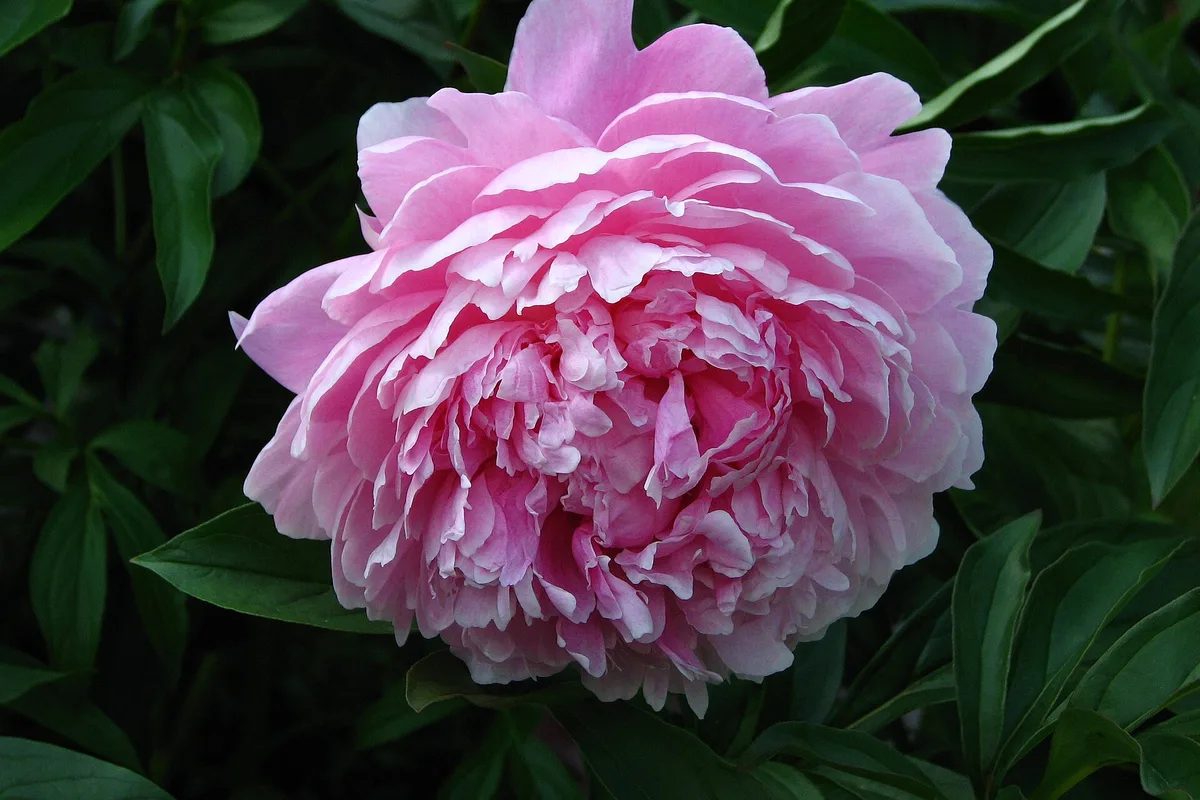
7. Peony (Paeonia lactiflora ‘Sarah Bernhardt’)
‘Sarah Bernhardt’ is a classic double peony with large, fragrant, soft pink flowers. Herbaceous peonies live for decades but need winter cold to bloom well.
Zones: 3 to 8 | Bloom: late spring to early summer | Sun: full sun to part shade | Height: 1 to 3 feet | Type: perennial
8. Purple Coneflower (Echinacea purpurea)
Despite its name, the species has rosy-pink petals around a coppery cone. This native perennial handles heat and drought, and it draws butterflies and bees all summer.
Zones: 3 to 8 | Bloom: summer | Sun: full sun to part shade | Height: 3 to 4 feet | Type: perennial
9. Garden Phlox (Phlox paniculata)
Garden phlox carries large, fragrant pink flower heads in summer. Choose mildew-resistant cultivars and give plants space for air to move.
Zones: 4 to 8 | Bloom: summer | Sun: full sun to part shade | Height: 2 to 4 feet | Type: perennial
10. Swamp Milkweed (Asclepias incarnata)
Swamp milkweed has clusters of pink to rose-purple flowers and is a host plant for monarch caterpillars. It is native to wet sites but adapts to moist garden soil.
Zones: 3 to 9 | Bloom: summer to early fall | Sun: full sun to part shade | Height: 3 to 5 feet | Type: perennial
11. Cheddar Pink (Dianthus gratianopolitanus)
Cheddar pinks form low blue-green mats topped with spicy, clove-scented pink flowers. They need sharp drainage and bloom again if you deadhead them.
Zones: 4 to 8 | Bloom: late spring | Sun: full sun | Height: 6 to 12 inches | Type: perennial
12. Creeping Phlox (Phlox subulata)
Creeping phlox smothers slopes and wall tops in pink stars each spring. It stays only a few inches tall, so use it at the front of a sunny bed.
Zones: 3 to 9 | Bloom: spring | Sun: full sun to light shade | Height: 4 to 6 inches | Type: perennial
13. Japanese Anemone (Anemone x hybrida)
Japanese anemones lift pink or white saucers on wiry stems as summer ends. They spread slowly into handsome clumps in moist, rich soil.
Zones: 4 to 8 | Bloom: late summer to fall | Sun: full sun to part shade | Height: 2½ to 3 feet | Type: perennial
14. ‘Autumn Joy’ Sedum (Hylotelephium ‘Autumn Joy’)
This succulent forms broad flower heads that open pink and deepen to coppery red in fall. It tolerates drought and salt, and butterflies love it.
Zones: 3 to 10 | Bloom: late summer to fall | Sun: full sun | Height: 1½ to 2 feet | Type: perennial
Pink Flowering Shrubs
Shrubs give pink color with height and structure, and many bloom for weeks.
15. ‘The Fairy’ Rose (Rosa ‘The Fairy’)
‘The Fairy’ is a compact polyantha rose with sprays of small, light pink flowers from summer into fall. It tolerates light shade but stays healthiest in full sun.
Zones: 5 to 9 | Bloom: summer to fall | Sun: full sun to part shade | Height: 2½ to 3 feet | Type: shrub
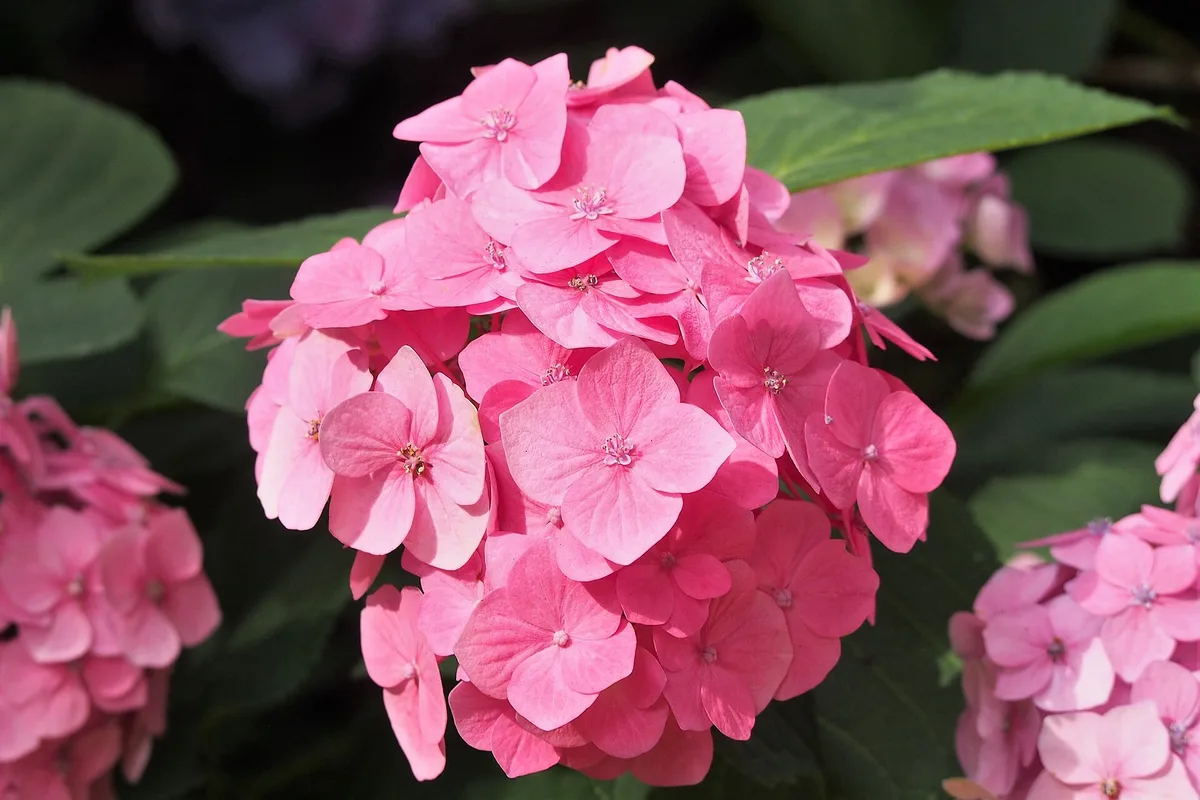
16. Bigleaf Hydrangea (Hydrangea macrophylla)
Bigleaf hydrangea is the only plant on this list that can change color. Flowers turn pink in alkaline soil and blue in acidic soil. To keep blooms pink, add garden lime to raise soil pH. Most types bloom on old wood, so prune right after flowering.
Zones: 6 to 9 | Bloom: summer | Sun: part shade | Height: 3 to 6 feet | Type: shrub
17. Southern Pinxter Azalea (Rhododendron canescens)
This native deciduous azalea covers bare branches with pink and white tubular flowers in spring. Give it moist, acidic soil and protection from hot afternoon sun.
Zones: 5 to 9 | Bloom: spring | Sun: dappled sun to part shade | Height: 6 to 15 feet | Type: shrub
18. Weigela (Weigela florida)
Weigela covers its arching branches with rosy, funnel-shaped flowers for about two weeks in spring. A lighter repeat show often follows in summer.
Zones: 4 to 8 | Bloom: spring, with some summer rebloom | Sun: full sun to part shade | Height: 6 to 10 feet (cultivars smaller) | Type: shrub
19. Rose of Sharon (Hibiscus syriacus)
Rose of Sharon opens large pink, white or lavender hibiscus flowers when many shrubs are done. A spring prune encourages bigger blooms on new growth.
Zones: 5 to 9 | Bloom: summer | Sun: full sun to part shade | Height: 8 to 12 feet | Type: shrub
20. Crape Myrtle (Lagerstroemia indica)
Crape myrtle carries crinkled pink flower clusters through summer heat. Dwarf cultivars suit small yards, while tree forms reach 30 feet. It resists deer and drought.
Zones: 6 to 9 | Bloom: summer | Sun: full sun | Height: 6 to 30 feet | Type: shrub or small tree
Pink Bulbs for Spring and Summer
Plant spring bulbs in fall and summer bulbs in spring.
21. Tulip (Tulipa)
Pink tulips range from shell pink to deep rose. Plant the bulbs in fall, in generous groups, for a bold spring show.
Zones: 3 to 8 | Bloom: spring | Sun: full sun | Height: 4 to 28 inches | Type: bulb
22. Hyacinth (Hyacinthus orientalis)
Hyacinths pack fragrant pink bells into dense spikes. Plant them near a path or door to enjoy the scent.
Zones: 4 to 8 | Bloom: spring | Sun: full sun to part shade | Height: 8 to 12 inches | Type: bulb
23. Ranunculus (Ranunculus asiaticus)
Pink ranunculus builds layer upon layer of thin petals, perfect for bouquets. Learn how to plant the corms in our ranunculus growing guide.
Zones: 8 to 10 (annual elsewhere) | Bloom: spring | Sun: full sun | Height: 1 to 2 feet | Type: corm
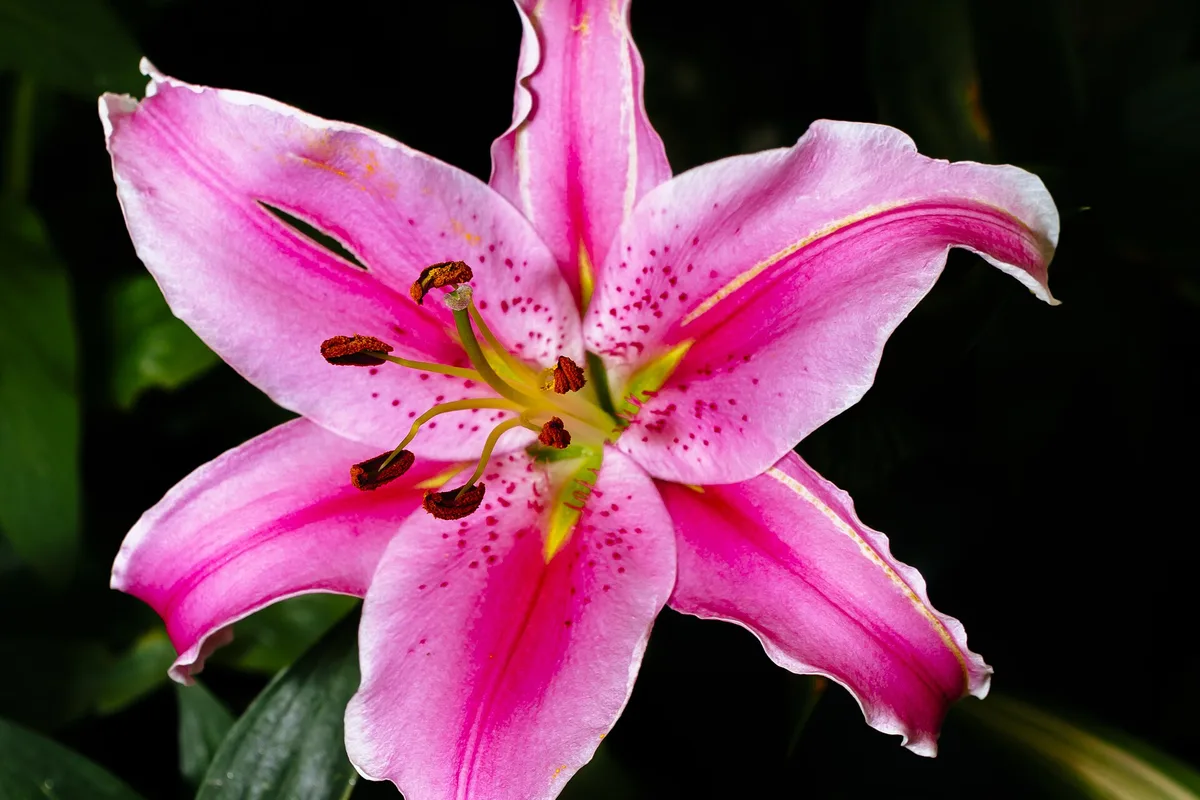
24. ‘Stargazer’ Lily (Lilium ‘Stargazer’)
This Oriental lily opens upward-facing, strongly scented pink flowers with darker spots. Plants can reach 6 feet but usually stay at 3 to 4. Keep it away from cats, because the ASPCA lists true lilies as toxic to cats.
Zones: 4 to 9 | Bloom: midsummer | Sun: full sun to part shade | Height: 3 to 4 feet | Type: bulb
25. Dahlia (Dahlia hybrids)
Pink dahlias range from small pompons to dinner-plate blooms. North of Zone 7, dig and store the tubers after the first frost.
Zones: 7 to 10 | Bloom: summer to frost | Sun: full sun to part shade | Height: 1 to 6 feet | Type: tuber
26. Surprise Lily (Lycoris squamigera)
The leaves appear in spring and die back by summer. Then, in late summer, bare stalks shoot up with five to seven pale pink trumpets each.
Zones: 5 to 9 | Bloom: late summer | Sun: full sun to part shade | Height: 1½ to 2 feet | Type: bulb
Pink Climbing Vines
Climbers lift pink flowers to eye level on fences, arbors and trellises.
27. Mountain Clematis (Clematis montana)
Mountain clematis covers walls with star-shaped, vanilla-scented flowers in late spring. Pink forms such as var. rubens are popular. It blooms on old wood, so prune right after flowering.
Zones: 6 to 9 | Bloom: late spring | Sun: full sun to part shade | Height: 16 to 40 feet | Type: vine

28. ‘New Dawn’ Climbing Rose (Rosa ‘New Dawn’)
‘New Dawn’ bears sweetly fragrant, soft pink semi-double flowers. It blooms heavily in June, then repeats into fall.
Zones: 5 to 9 | Bloom: early summer to fall | Sun: full sun | Height: 10 to 15 feet | Type: climbing rose
29. Sweet Pea (Lathyrus odoratus)
Sweet peas climb by tendrils and carry ruffled, fragrant flowers in pink and many other colors. Sow early, since they fade in summer heat. The seeds are poisonous.
Zones: all (annual) | Bloom: spring to early summer | Sun: full sun | Height: 3 to 8 feet | Type: annual vine
30. Mandevilla (Mandevilla hybrids)
Mandevilla is a tropical vine with glossy leaves and large pink trumpets. Grow it in a pot on a patio trellis and bring it indoors before frost.
Zones: 10 to 11 (annual elsewhere) | Bloom: summer | Sun: full sun to part shade | Height: 3 to 10 feet | Type: vine
Pink Flowers for Shade
Pink shows up well in low light, especially the paler shades.
31. Astilbe (Astilbe x arendsii)
Astilbe raises feathery pink plumes over fern-like leaves. Keep the soil evenly moist, because the leaves scorch in dry ground.
Zones: 3 to 9 | Bloom: late spring to summer | Sun: part shade | Height: 1½ to 4½ feet | Type: perennial
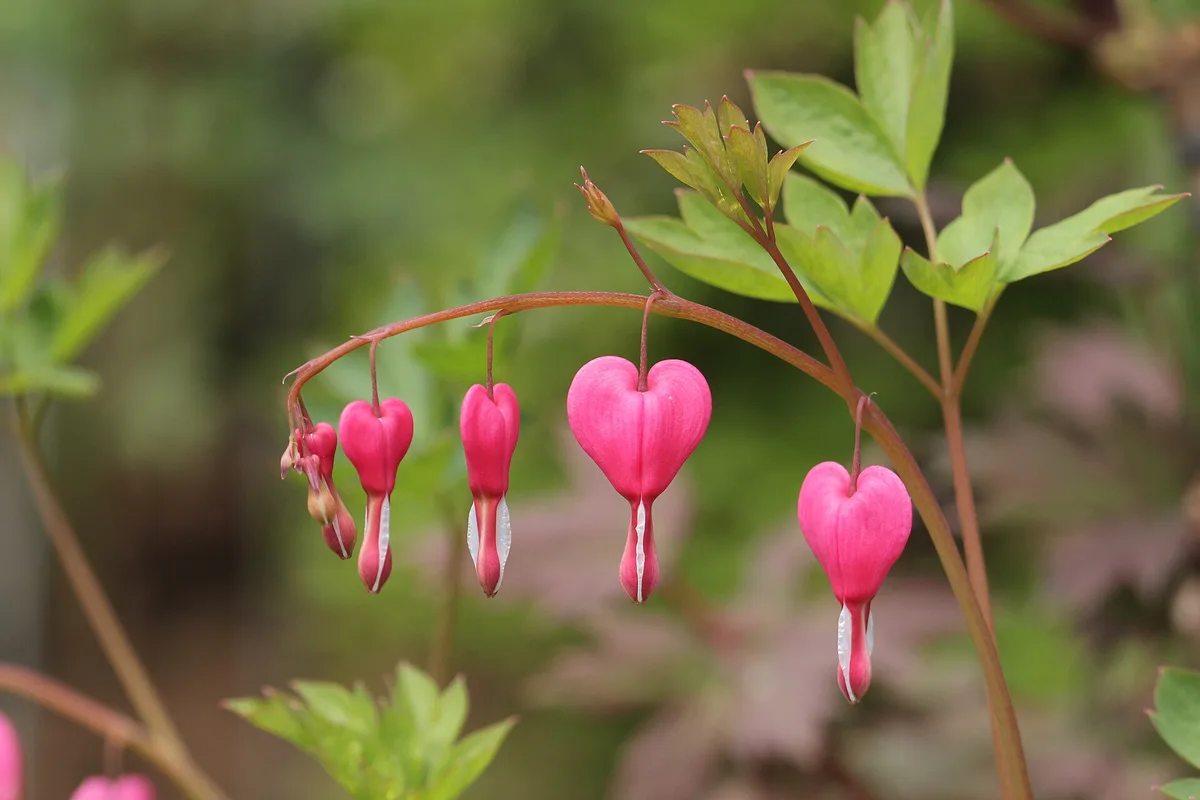
32. Bleeding Heart (Lamprocapnos spectabilis)
Arching stems hang rows of pink, heart-shaped flowers. The plant goes dormant by midsummer, so pair it with hostas or ferns to fill the gap.
Zones: 3 to 9 | Bloom: spring to early summer | Sun: part to full shade | Height: 2 to 3 feet | Type: perennial
33. Lenten Rose (Helleborus x hybridus)
Lenten rose opens nodding pink, rose or plum cups in late winter. Its leathery leaves stay evergreen, and it thrives under deciduous trees.
Zones: 4 to 9 | Bloom: late winter to spring | Sun: part to full shade | Height: 1 to 2 feet | Type: perennial
34. Foxglove (Digitalis purpurea)
Foxglove is a biennial that forms leaves in year one and tall pink spires in year two. Let a few flowers set seed to keep it going. Every part is poisonous.
Zones: 4 to 9 | Bloom: late spring to early summer | Sun: part shade (or sun with afternoon shade) | Height: 2 to 5 feet | Type: biennial
35. Impatiens (Impatiens walleriana)
Impatiens is the classic annual for deep shade, with pink flowers until frost. Choose downy mildew resistant series where the disease is a problem.
Zones: 10 to 11 (annual elsewhere) | Bloom: summer to frost | Sun: part to full shade | Height: 6 inches to 2 feet | Type: annual
Pink Flowers for Pots and Containers
These compact bloomers fill pots, window boxes and hanging baskets with pink from spring to fall.
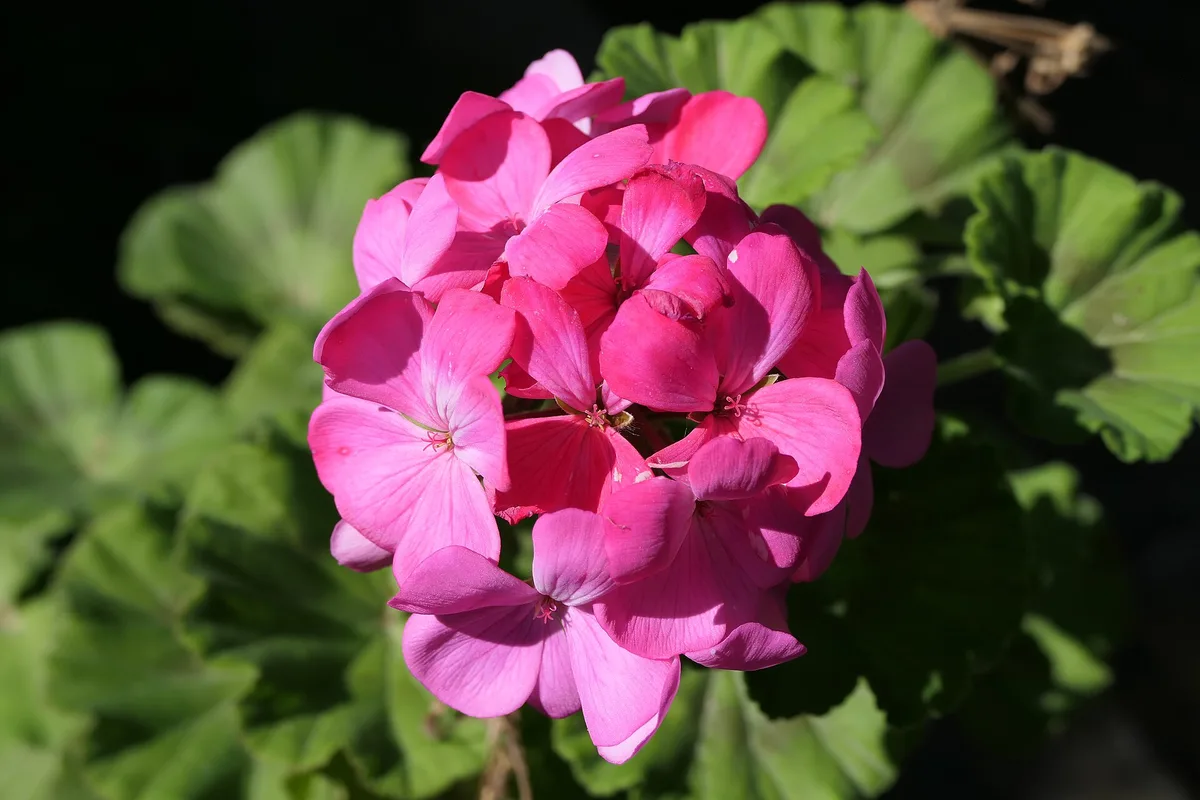
36. Zonal Geranium (Pelargonium x hortorum)
Zonal geraniums carry round heads of pink, salmon or rose flowers above scalloped leaves. They need full sun and well-drained soil, so pots suit them well.
Zones: tender perennial grown as an annual | Bloom: spring to frost | Sun: full sun | Height: 1 to 2 feet | Type: annual
37. Petunia (Petunia x hybrida)
Petunias spill pink trumpets over pot edges all summer. Spreading types fill large containers fast.
Zones: 10 to 11 (annual elsewhere) | Bloom: summer | Sun: full sun to part shade | Height: 6 to 18 inches | Type: annual
38. Million Bells (Calibrachoa hybrids)
Million bells looks like a miniature petunia, with hundreds of small pink flowers on trailing stems. It is ideal for hanging baskets.
Zones: 7 to 11 (annual elsewhere) | Bloom: spring to fall | Sun: full sun to part shade | Height: 3 to 9 inches | Type: annual
39. Fuchsia (Fuchsia hybrids)
Fuchsias dangle pink and purple ballerina flowers from hanging baskets in shade. They prefer cool summers and steady moisture.
Zones: 10 to 12 (annual elsewhere) | Bloom: spring to fall | Sun: part shade | Height: 1½ to 3 feet | Type: annual
40. Pentas (Pentas lanceolata)
Pentas forms star-shaped pink flower clusters that butterflies visit all summer. It thrives in heat and keeps blooming into fall.
Zones: 10 to 11 (annual elsewhere) | Bloom: summer to fall | Sun: full sun to part shade | Height: 1 to 2 feet | Type: annual
Top 10 Pink Flowers Compared
| Flower | USDA zones | Bloom time | Sun | Height | Best for |
|---|---|---|---|---|---|
| Cosmos | All (annual) | Summer to frost | Sun to part shade | 2 to 4 ft | Easy color from seed |
| Peony ‘Sarah Bernhardt’ | 3 to 8 | Late spring | Sun to part shade | 1 to 3 ft | Fragrant cut flowers |
| Purple coneflower | 3 to 8 | Summer | Sun to part shade | 3 to 4 ft | Pollinators, drought |
| Creeping phlox | 3 to 9 | Spring | Sun to light shade | 4 to 6 in | Slopes and edging |
| Bigleaf hydrangea | 6 to 9 | Summer | Part shade | 3 to 6 ft | Big blooms, color control |
| Crape myrtle | 6 to 9 | Summer | Full sun | 6 to 30 ft | Hot, sunny yards |
| ‘Stargazer’ lily | 4 to 9 | Midsummer | Sun to part shade | 3 to 4 ft | Fragrance (not for cat homes) |
| ‘New Dawn’ rose | 5 to 9 | Early summer to fall | Full sun | 10 to 15 ft | Arbors and fences |
| Astilbe | 3 to 9 | Late spring to summer | Part shade | 1½ to 4½ ft | Moist shade |
| Zonal geranium | Annual | Spring to frost | Full sun | 1 to 2 ft | Pots and window boxes |
How to Design With Pink Flowers
Pink is easy to love but easy to overdo. The secret is to separate cool pinks from warm pinks. Cool pinks lean toward blue, like magenta phlox and hot pink geraniums. Warm pinks lean toward orange, like salmon zinnias and coral dahlias. Mixing both in one small bed can look muddy.
- With purple and blue: catmint, salvia and lavender make soft pinks look richer.
- With white: white flowers brighten pink and calm stronger shades.
- With silver foliage: lamb’s ear and artemisia make blush pinks glow.
- With chartreuse: lime-green leaves give hot pink a modern edge.
- With burgundy: dark foliage adds depth behind pale pink blooms.
Next, plan for bloom succession. Overlap plants so a new pink opens as the last one fades. Start with Lenten roses and bulbs, move into peonies and weigela, then hand over to hydrangeas, coneflowers and crape myrtles. Finish with anemones, sedum and late cosmos.

For fall, pink and rose garden mums pair well with sedum and anemones. Want more ideas by name? Browse our list of types of flowers.
Pink Flowers FAQs
What are the most popular pink flowers?
Roses, peonies, tulips, cosmos, zinnias, hydrangeas, lilies and geraniums are among the most popular pink flowers. They are easy to find at garden centers and work well in both beds and bouquets.
What do pink flowers symbolize?
Pink flowers traditionally symbolize gentleness, affection, gratitude and joy. Pale pinks suggest grace and admiration, while deep pinks express strong thanks and appreciation.
Which pink flowers bloom all summer?
Annuals such as cosmos, zinnias, Madagascar periwinkle, petunias, million bells and impatiens bloom from early summer until frost. Among shrubs, The Fairy rose and crape myrtle give a long summer show.
What pink flowers grow well in shade?
Astilbe, bleeding heart, Lenten rose, foxglove, impatiens and fuchsia all flower in part shade. Paler pinks show up best in low light.
What pink perennials come back every year?
Peonies, purple coneflower, garden phlox, creeping phlox, cheddar pinks, Japanese anemone and Autumn Joy sedum return each year when planted in the right USDA zone.
How do I keep my hydrangea flowers pink?
Bigleaf hydrangea flowers turn pink in alkaline soil and blue in acidic soil. Add garden lime to raise the soil pH and keep the flowers pink. White hydrangeas do not change color.
Are any pink flowers toxic to pets?
Yes. True lilies such as Stargazer are toxic to cats. Foxglove, Madagascar periwinkle, azaleas and hydrangeas are also poisonous, so call your vet if a pet chews one.
Related flower guides
More guides you might enjoy.



Pingback: June Birth Flower: Rose and Honeysuckle Meaning and Care