Water Lily: How to Grow Hardy and Tropical Water Lilies
Water lilies are easier to grow than they look. This guide covers hardy and tropical Nymphaea, the best varieties, planting depth, feeding, dividing, overwintering and growing one in a patio barrel.
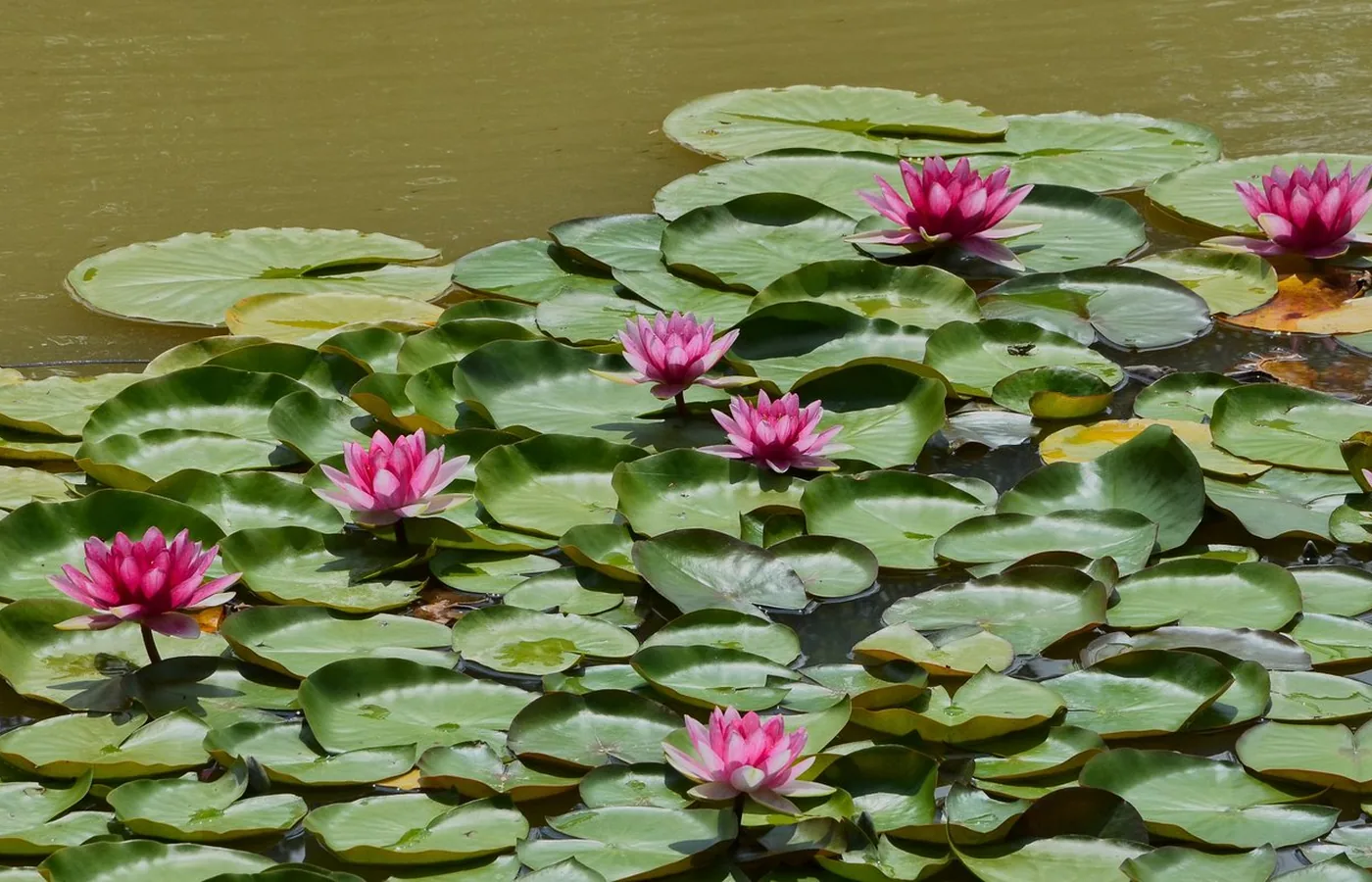
To grow a water lily, plant it in a wide pot of heavy loam and set it 12 to 24 inches under still water with at least six hours of sun. Feed it with aquatic fertilizer tablets every two to four weeks. Hardy water lilies survive winter in zones 3 to 10, while tropical types need water above 70°F or winter storage indoors.
A water lily turns a tub of still water into a garden. The floating pads shade the pond, the flowers open on the surface for days at a time, and frogs and dragonflies move in uninvited. Best of all, Nymphaea is far easier to grow than its exotic look suggests.
Hardy water lilies survive winter under the ice across most of the United States. Tropical water lilies bring blue, purple and night-blooming flowers, but they need warm water and some winter care. This guide covers both: the best varieties, how deep to plant, what to feed, when to divide, and how to grow a water lily in a half barrel on a patio.
Missouri Botanical Garden, the Royal Horticultural Society (RHS), university extension services and the International Waterlily and Water Gardening Society (IWGS) agree on the basics: sun, still water, heavy soil and regular feeding.
Key takeaways
- Water lilies (Nymphaea) float their pads and flowers on the surface; lotus (Nelumbo) holds leaves and flowers 1 to 3 feet above the water.
- Hardy types are winter hardy in zones 3 to 10 and bloom by day; tropicals need zones 10 to 11 or indoor storage and include blues, purples and night bloomers.
- Plant in a wide pot of heavy loam, never potting mix, with the hardy rhizome angled against the pot wall and the tropical tuber upright in the center.
- Give six hours of sun, still water away from fountains, and 12 to 24 inches of depth over the soil, lowering new pots gradually.
- Feed hardy types monthly and tropicals every two to three weeks with aquatic tablets; divide hardy rhizomes every two to three years.
- Dwarf 'Helvola' or viviparous 'Tina' will flower in a half barrel on a sunny patio.
What Is a Water Lily?
A water lily is any flowering plant in the genus Nymphaea. About 50 wild species exist, plus hundreds of named cultivars. All of them root in mud under water, float round pads on the surface, and open and close their flowers on a daily rhythm.
Water lily or lotus: how to tell them apart
People often confuse water lilies with the sacred lotus (Nelumbo nucifera), but the two belong to different families.
| Feature | Water lily (Nymphaea) | Lotus (Nelumbo) |
|---|---|---|
| Leaves | Float flat, with a notch toward the center | Round, no notch, held on stalks above the water |
| Flowers | On or a few inches above the surface | 1 to 3 feet above the water |
| Seed head | Sinks after flowering | Flat showerhead-shaped pod |
| Water depth | 12 to 30 inches | 2 to 12 inches over the soil |
For flowers that rise high above the pond, choose a lotus. For pads and blooms that carpet the surface, choose a water lily. For a wider tour of blooms, see our guide to the 100 most popular types of flowers.
Hardy vs Tropical Water Lilies
Every water lily sold in the United States belongs to one of two groups, and the group decides how you plant and overwinter it.
Hardy water lilies
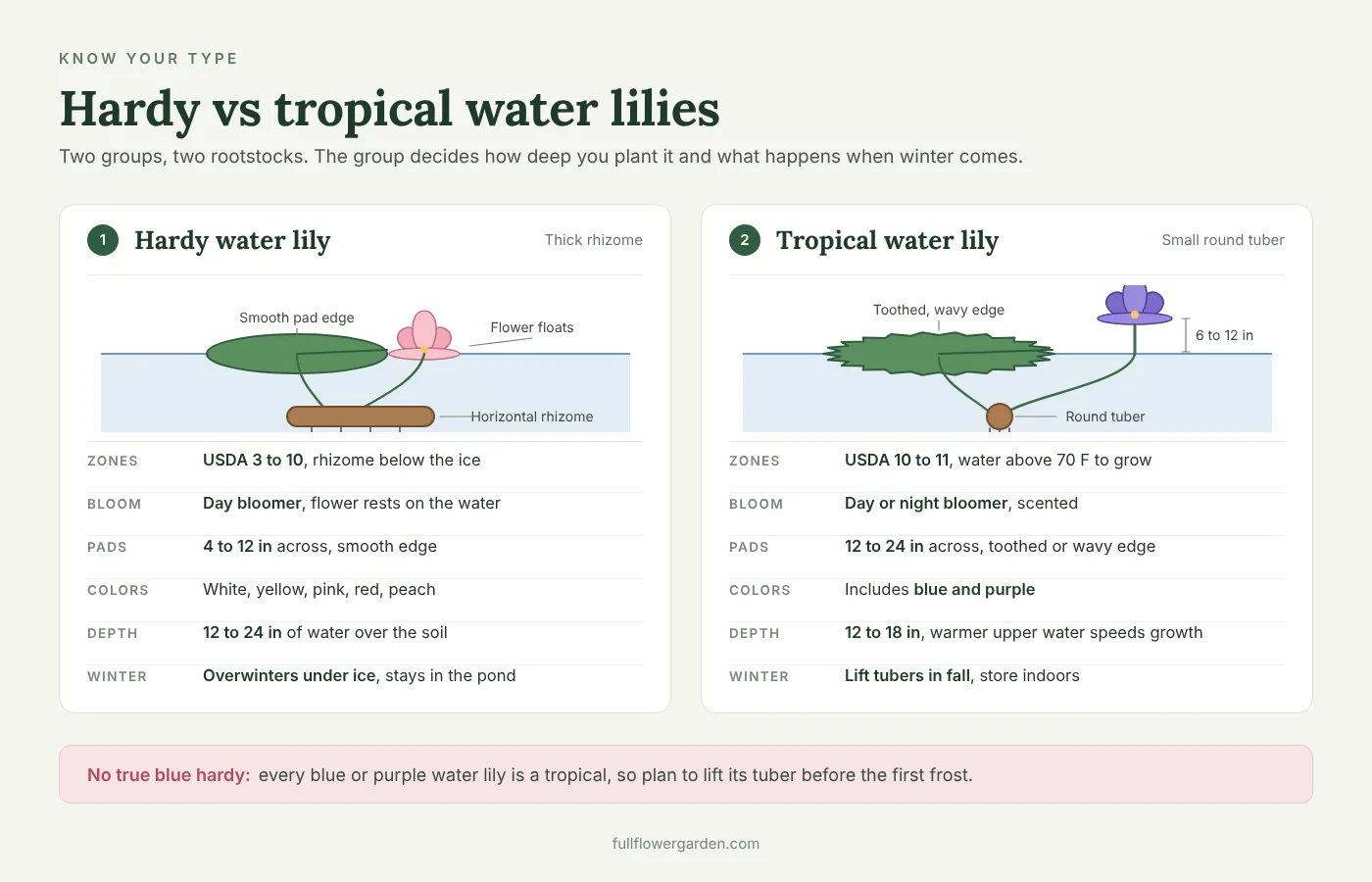
Hardy water lilies grow from a thick rhizome and survive in USDA zones 3 or 4 through 10 if the rhizome sits below the ice. The pads have smooth edges and measure 4 to 12 inches across. Flowers open by day, float on the surface, and come in white, yellow, pink, red and peach. No hardy type is truly blue.
Tropical water lilies
Tropical water lilies grow from a small round tuber and are only hardy in zones 10 and 11. They need water above 70 F to start growing. Pads are larger, often 12 to 24 inches, with toothed or wavy edges. Flowers stand 6 to 12 inches above the water, carry a strong scent, and include the blues and purples hardy types cannot offer.
Day bloomers, night bloomers and viviparous types
Tropicals split into day bloomers, open mid-morning to late afternoon, and night bloomers, open from dusk to mid-morning. Some day bloomers are also viviparous: they grow a tiny plantlet where the stalk joins the pad. Pin that leaf onto wet soil and you have a new plant in weeks.
Best Water Lily Varieties
Choose by pond size first and color second. Spread figures below are typical after two or three seasons.
Ten reliable cultivars for home ponds
| Variety | Type | Color | Spread | Best pond size |
|---|---|---|---|---|
| ‘Attraction’ | Hardy, day | Garnet red | 4 to 6 ft | Medium to large |
| ‘Marliacea Chromatella’ | Hardy, day | Soft yellow, mottled leaves | 4 to 5 ft | Medium |
| ‘Pink Sensation’ | Hardy, day | Clear pink, stays open late | 3 to 4 ft | Small to medium |
| ‘Helvola’ (dwarf) | Hardy, day | Pale yellow, 2 inch flowers | 1 to 2 ft | Tub or container |
| ‘Colorado’ | Hardy, day | Salmon peach | 4 to 5 ft | Medium |
| ‘Gonnère’ | Hardy, day | Double white, scented | 3 to 4 ft | Small to medium |
| ‘Director George T. Moore’ | Tropical, day | Deep violet blue | 6 to 8 ft | Large |
| ‘Blue Beauty’ | Tropical, day | Rich blue, scented | 5 to 7 ft | Medium to large |
| ‘Tina’ | Tropical, day, viviparous | Violet purple | 3 to 4 ft | Tub to medium |
| ‘Red Flare’ | Tropical, night | Deep red, bronze leaves | 5 to 7 ft | Medium to large |
Matching the variety to your space
‘Helvola’ and ‘Tina’ suit a container, ‘Pink Sensation’ and ‘Gonnère’ a small pond, and ‘Attraction’ and the big tropicals a large one. Collectors of true blue flowers will find ‘Blue Beauty’ and ‘Director George T. Moore’ among the purest blues in any garden. Fans of white blooms should look at ‘Gonnère’ and the wild Nymphaea odorata.
Pond, Sun and Depth Requirements
Sun and still water
Six hours of direct sun is the minimum for steady flowering. University of Florida extension notes that ‘Attraction’ manages a few flowers on 4 hours, but more light means more blooms. Keep the plant away from fountains and pump outlets, because splashing water rots the pads and stops buds from forming.
Water depth by type
- Dwarf hardy types such as ‘Helvola’: 6 to 12 inches of water over the soil.
- Standard hardy types: 12 to 24 inches, up to 30 inches for vigorous types once established.
- Tropical types: 12 to 18 inches, because the warmer upper water speeds growth.
Depth means the distance from the soil in the pot to the water surface.
How to Plant a Water Lily Step by Step
Plant hardy types in spring once the water reaches about 60 F, and tropicals once it holds at 70 F.
Choosing the pot and soil
Use a wide, shallow container. A pot 12 to 16 inches across and 8 to 10 inches deep suits most hardy types; dwarfs manage in 6 to 8 inches, and big tropicals want 18 inches or more. Fill it with heavy garden loam or clay-based aquatic soil, never bagged potting mix, which floats, clouds the water and rots into sludge.
Planting the rhizome or tuber
- Fill the pot two thirds full with damp loam and press two or three aquatic fertilizer tablets into it.
- For a hardy water lily, set the rhizome at a 45 degree angle against the pot wall, cut end to the side and growing tip pointing up toward the center. Cover the rhizome but leave the crown exposed.
- For a tropical water lily, set the tuber upright in the center with the crown right at the soil surface.
- Firm the soil and top it with 1 inch of pea gravel or coarse sand to hold the soil down and stop fish digging. Keep gravel off the crown.
- Soak the pot until bubbles stop, then lower it into the pond with the crown 4 to 6 inches under the surface.
- As pads reach the surface, lower the pot in stages over two or three weeks to its final depth.

Growing a water lily in a patio container
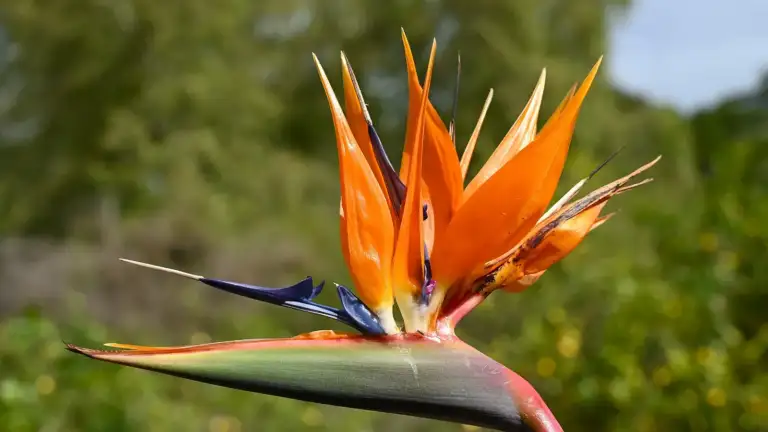
You do not need a pond. A half whiskey barrel with a liner, a glazed tub or a stock tank at least 18 inches across and 12 inches deep works well. Set it in full sun before filling. Plant ‘Helvola’ or ‘Tina’ in a 6 to 8 inch pot on bricks so the crown sits 6 to 8 inches down, add an oxygenating plant, and top up weekly in hot weather. A potted bird of paradise beside the barrel makes a striking pair.
Feeding and Dividing Water Lilies
Fertilizer schedule
Push slow-release aquatic tablets 2 to 3 inches into the soil, several inches from the crown. Feed hardy types once a month from the first pads until late summer, and tropicals every two to three weeks. Stop feeding hardy types about six weeks before frost. Never scatter lawn fertilizer into a pond; it feeds algae and can harm fish.
Dividing hardy rhizomes every two to three years
Crowded pads standing out of the water and shrinking flowers mean it is time to divide. Do it in spring as growth starts:
- Lift the pot and hose the soil off the rhizome.
- Cut it into pieces 3 to 6 inches long, each with a healthy growing eye and some roots.
- Discard the oldest woody section and repot each piece in fresh loam with new tablets.
Snip yellow pads and spent flowers at the base every week or two. Water lily blooms do not last in a vase, so keep them on the pond and grow your cut flower garden on dry land.
Overwintering Water Lilies
Hardy types stay out all winter. Tropicals come in, or you replace them each spring.
Hardy types: keep the rhizome below the ice
After frost, cut back the foliage and move the pot to the deepest part of the pond. Missouri Botanical Garden advises simply dropping containers to the point where the water will not freeze, and 18 to 24 inches is enough in most regions. If your pond freezes solid, lift the pot, keep the rhizome damp in a plastic bag, and store it in a garage that stays just above freezing.
Tropical types: lift tubers or treat as annuals
Lift tropicals four to five weeks before your first frost, while the tuber is still firm. Cut off all growth, rinse the soil away, and find the walnut-sized tuber at the base. Pack it in a covered container of damp sand and store it at 50 to 55 F in a cool basement or a refrigerator drawer, never letting the sand dry out. Repot once pond water reaches 70 F. Many gardeners skip this and buy a new tropical each year.

Water Lily Pests and Problems
Water lilies have few problems, and the RHS advises tolerating the common pests because plants recover on their own.
Common pests
- Water lily aphids: small brown or green insects that crowd on pads and buds in summer. Hose them into the water for the fish; never spray insecticide near a pond.
- China mark moth: aquatic caterpillars that cut oval pieces from pads and glue them into floating shelters. Pick off the shelters. The RHS profile of waterlily pests has clear photos.
- Water lily beetle: adults and grubs chew slots in leaves. Remove damaged pads.
Diseases, yellow leaves and no flowers
Leaf spot shows as brown patches in warm wet weather; cut off affected leaves. Crown rot turns the crown soft and black, and the plant must be destroyed with its soil. Each pad lives about six weeks, so old leaves yellow naturally; yellow young pads mean the plant is hungry, too deep, or outgrowing its pot. A water lily that will not flower almost always has one of five problems: under six hours of sun, splashing water, no fertilizer, a crowded pot, or a plant set too deep too soon. Fix those in order and buds usually appear within a month.
Pond Balance, Wildlife and Pets

Shade and algae control
Aim to cover 50 to 60 percent of the surface with pads and floating plants by midsummer. That shade starves green water algae of light, and with oxygenating plants and modest fish numbers most ponds clear without chemicals.
Are water lilies toxic to pets?
Nymphaea is not a true lily. The Lilium and daylily species that cause kidney failure in cats belong to a different family, and the ASPCA’s lily warnings refer to those. Water lilies are regarded as low risk, though any pond plant can upset a dog’s stomach in quantity.
Water Lily Meaning and the July Birth Flower
The water lily is the birth flower for July, alongside the larkspur. For every month’s bloom, see our hub on birth month flowers.
Symbolism across cultures
Across many traditions the water lily stands for purity, rebirth and calm, because it rises clean from muddy water each morning. In ancient Egypt the blue water lily, Nymphaea caerulea, symbolized the sun, and Monet’s Giverny paintings made the flower an emblem of peace. If flower symbolism interests you, ranunculus and the range of pink flowers each carry their own stories.
Water Lily FAQs
How deep should a water lily be planted?
Measure from the soil in the pot to the water surface. Standard hardy water lilies do best with 12 to 24 inches of water over the crown, dwarfs with 6 to 12 inches, and tropicals with 12 to 18 inches. Start a new plant at 4 to 6 inches and lower the pot in stages over two or three weeks as the pads reach the surface.
Can you grow a water lily without a pond?
Yes. A half barrel, glazed tub or stock tank at least 18 inches across and 12 inches deep holds a dwarf hardy type such as 'Helvola' or a compact tropical such as 'Tina'. Place it in six hours of sun, raise the pot on bricks, add an oxygenating plant, and top up the water weekly in summer.
How often should I fertilize water lilies?
Feed hardy water lilies once a month with slow-release aquatic tablets pushed 2 to 3 inches into the soil, from the first pads until late summer. Feed tropicals every two to three weeks, because they grow and bloom faster. Stop feeding about six weeks before frost. Never use lawn or garden granular fertilizer in a pond.
Why are my water lily leaves turning yellow?
Each pad lives about six weeks, so a few yellow leaves are normal. If young pads yellow as well, the usual causes are a hungry plant, a crowded pot that needs dividing, or a pot set too deep too early in the season. Trim yellow pads at the base, add fertilizer tablets, and check the depth over the crown.
What is the difference between a water lily and a lotus?
Water lily (Nymphaea) pads float flat and have a notch, and the flowers sit on or just above the water. Lotus (Nelumbo) leaves are round without a notch and stand on stalks above the pond, with flowers rising 1 to 3 feet high. Lotus also forms the familiar flat seed pod and grows from a long banana-shaped tuber.
Do water lilies come back every year?
Hardy water lilies return each spring in zones 3 or 4 through 10 as long as the rhizome stays below the ice. Tropical water lilies survive winter outdoors only in zones 10 and 11. Elsewhere, lift the tuber before frost and store it in damp sand at 50 to 55 F, or simply buy a new plant each spring.
Are water lilies poisonous to cats and dogs?
Water lilies are not true lilies, so they do not carry the kidney risk that Lilium and daylily species pose to cats. Pet poison references treat Nymphaea as low risk, though eating a lot of any pond plant can cause vomiting. Keep dogs supervised around open water, which is the bigger danger near a pond.
Final Thoughts
The short version
Give a water lily six hours of sun, still water, heavy loam in a wide pot and a fertilizer tablet every few weeks, and it will flower from early summer to frost. Pick a hardy type for a plant that lives for decades under the ice, or a tropical for blue flowers and scent. One pot of Nymphaea in a tub is all it takes.
Related flower guides
More guides you might enjoy.