Garden Mums: How to Plant, Overwinter and Keep Fall Mums Blooming
Garden mums care made simple: buy in bud, pinch by July 4, mulch after frost and overwinter pots in a garage so fall mums bloom again.

Garden mums are hardy perennial chrysanthemums that return each year in USDA zones 5 to 9. Buy them in tight bud for about six weeks of color, and plant in spring or at least six to eight weeks before the ground freezes. Pinch shoots until about July 4, stop feeding by mid-August and mulch the crown after the first hard frost.
Garden Mums: Hardy Perennials For Lasting Fall Color
Garden mums are hardy perennial chrysanthemums that flower from late summer until a hard frost. With the right start, a single plant returns every year and grows into a wide, dense mound of fall color.
Botanists call the plant Chrysanthemum x morifolium, a member of the daisy family, Asteraceae. Most nurseries sell cushion mums, and these plants thrive in USDA zones 5-9 when you plant them early and protect them.
This guide covers fall mums care from purchase to spring regrowth. You will learn how to plant, water, pinch and feed them. It explains how to overwinter mums in beds and pots for repeat blooms.
Key takeaways
- Hardy garden mums return each year in USDA zones 5-9, while florist mums are best treated as annuals.
- Buy plants in tight bud for about six weeks of bloom in cool weather.
- Spring planting is best, and fall plantings need six to eight weeks before the ground freezes.
- Pinch shoots every two to three weeks until about July 4, and stop feeding by mid-August.
- Leave stems standing, mulch the crown after a hard frost and store potted mums at 32°F to 50°F.
Hardy Garden Mums Vs Florist Mums
Two different plants share the name mum. Hardy mums are bred for outdoor beds and survive winter in the ground. Florist mums are bred for gift pots and indoor display, so they rarely survive frost.
The difference sits underground. Hardy types spread by stolons, short horizontal stems that send up new shoots each spring. Florist types form few stolons, because growers force them in a greenhouse for quick, uniform blooms.
Check the tag before you buy. Words like hardy, perennial or garden chrysanthemum signal a plant for beds. Foil wrap, oversized blooms and indoor labels usually mean a gift mum best treated as an annual.
| Feature | Hardy garden mums | Florist mums |
|---|---|---|
| Bred for | Outdoor beds | Gift pots and indoor display |
| Winter survival | Survive winter in the ground | Rarely survive frost |
| Roots | Spread by stolons | Form few stolons |
| Tag clues | Hardy, perennial, garden chrysanthemum | Foil wrap, oversized blooms, indoor labels |
| Best treated as | Perennial | Annual |
Buying Garden Mums: Choose Buds, Not Open Blooms
Shop in late August or early September, when garden centers have the widest choice of colors and sizes. Late shoppers often find picked-over plants that have spent their best weeks on a hot sales bench.

Choose plants with tight buds showing a hint of color. A plant in full bloom looks impressive, but it will fade within two or three weeks. Budded plants bloom for six weeks in cool weather.
Turn the pot and inspect it closely. Skip plants with yellow leaves, spindly stems, wilted tips or dark spots. Lift the pot: very light pots often hide a root-bound plant that has dried out repeatedly.
When To Plant Garden Mums: Spring Vs Fall
Spring planting gives the best long-term results. A mum set out after the last frost has a full growing season to build deep roots. It then faces its first winter as a sturdy, established plant.
Fall planting works if you act early. Plant by late August or early September, at least six to eight weeks before the ground freezes. Plants set out in October rarely root deeply enough to survive.
Garden centers sell most mums in fall, so many gardeners plant them then. Pick a hardy type, plant it promptly and water often. Mums planted after the first frost are best enjoyed as seasonal décor.
Choosing The Right Site And Soil
Give mums at least six hours of full sun each day. Plants grown in shade stretch, flop open and produce fewer flowers. Morning sun is especially helpful, because it dries dew from the leaves quickly.
Mums need well-drained soil rich in organic matter. Mix two to three inches of compost into the top foot of soil. Aim for a soil pH of 6.0 to 6.5, which suits most garden flowers.
Dig each hole twice as wide as the root ball and set the plant at its pot depth. Allow 18 to 24 inches of spacing so air moves freely and leaves dry quickly after rain.
Watering Potted And Root-Bound Mums
Fall mums are usually sold root-bound, with roots packed tightly against the walls of the pot. That dense mass dries out fast, so a potted mum can need water every day during warm, sunny weather.
Use the finger test. Push a finger into the soil up to the second knuckle and water if it feels dry. Aim the spout at the soil, not the flowers, because wet petals can rot.
If water runs straight through, the root ball has shrunk from the pot wall. Set the pot in a bucket of water for 30 minutes. This bottom watering method rewets the whole root ball evenly.
Deadheading Mums For A Longer Show
Deadheading means removing individual flowers once they brown and shrivel. This simple task keeps the plant tidy and stops it spending energy on forming seeds. It can also encourage side buds to open more fully.
Use clean pruning snips or your fingertips. Cut each spent flower back to the next leaf or bud below it. On plants with hundreds of small blooms, shear the faded layer instead of cutting singly.
Deadhead every few days during peak bloom. Remove fallen petals from the pot surface too, because damp debris invites gray mold. A weekly cleanup keeps a porch display fresh until frost finally ends the show.
Pinching Mums: The July 4 Rule
Pinching shapes a hardy mum into a full, rounded mound. When spring shoots reach four to six inches, remove the top inch of each growing tip with your fingers. Two new side shoots soon form.
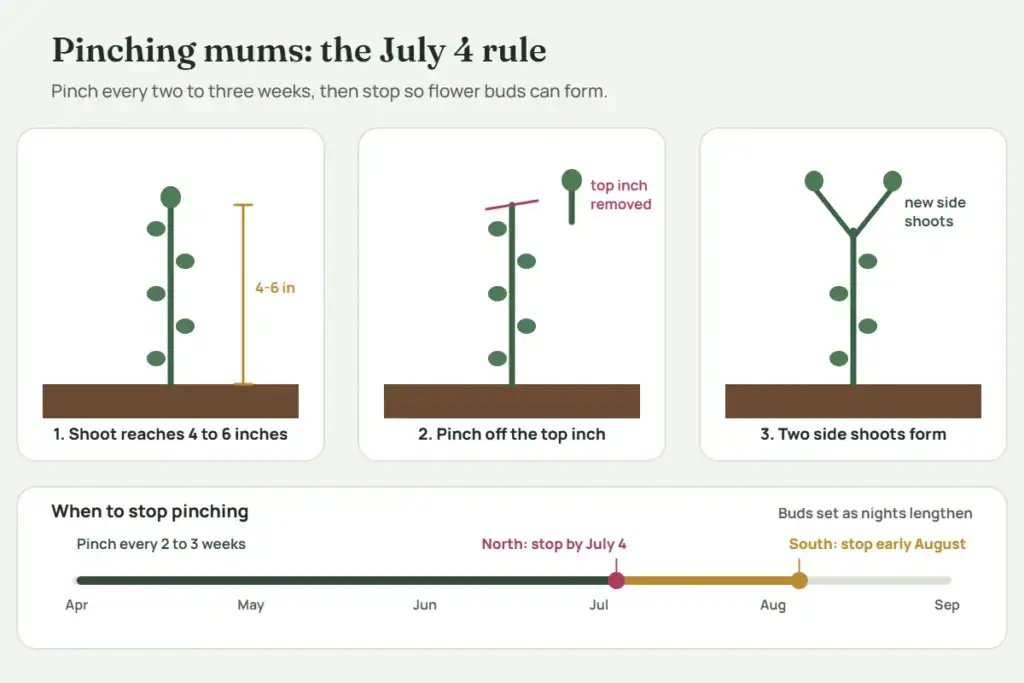
Repeat every two to three weeks. Each pinch roughly doubles the number of stems, and every stem will carry flower buds in fall. Unpinched plants grow tall, flop open and bloom only at their tips.
Stop by the July 4 rule. Mums are short-day plants, so they set buds as nights lengthen. Pinch later and you cut off flowers. Northern gardeners stop around July 4, southern gardeners in early August.
Fertilizing Garden Mums The Right Way
Feed in-ground mums when new growth appears in spring. A balanced fertilizer such as 10-10-10 works well, or work a slow-release fertilizer into the soil just once. Water the plant well before and after feeding.
Repeat liquid feeding every two to three weeks through early summer. Stop all feeding by mid-August. Late fertilizer pushes soft green growth that freezes easily, and it can delay buds that should open in September.
Do not feed a mum you bought in full bloom. Growers have already fertilized it heavily, and extra nitrogen cannot add flowers now. Steady water and bright sun matter far more during its fall display.
How To Overwinter Mums In The Ground
Leave the stems standing after the flowers fade. Dead foliage traps snow and leaves, which insulate the crown through winter. Many gardeners lose plants by cutting them back in October, so wait until early spring.
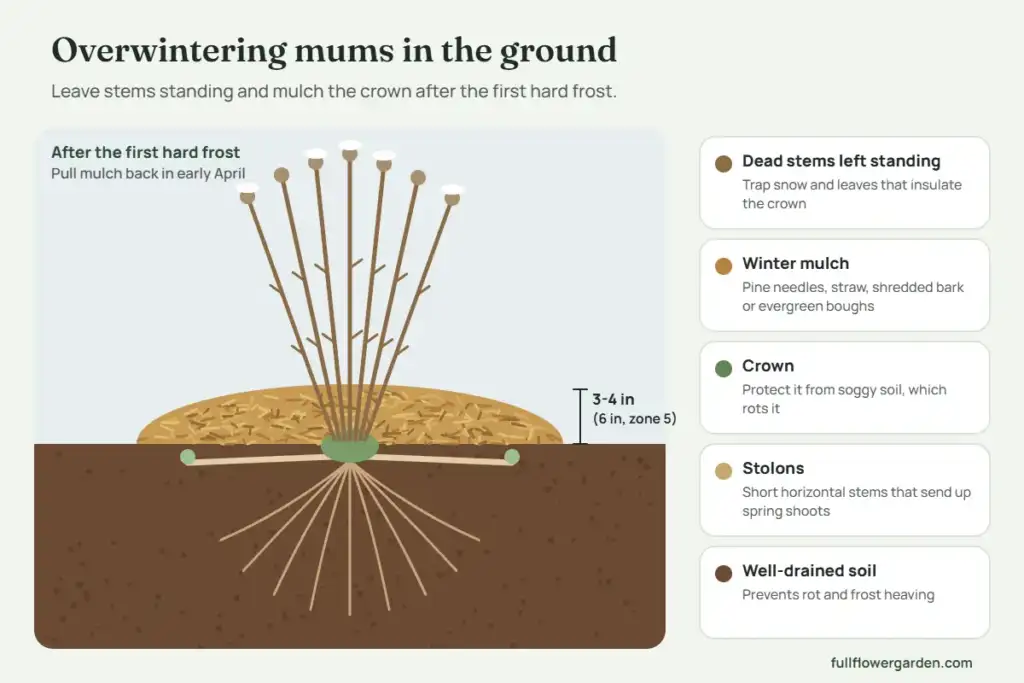
After the first hard frost, spread three to four inches of loose winter mulch over the crown. Pine needles, straw, shredded bark or evergreen boughs work. In zone 5, increase the layer to six inches.
Wet soil kills more mums than cold. Soggy ground rots crowns, and freezing cycles cause frost heaving that lifts roots from the soil. Plant in well-drained beds, then pull the mulch back in early April.
How To Overwinter Mums In Pots
Potted roots face harsher cold than roots in the ground. After a hard frost, cut stems back to four to six inches. Then move the pot into an unheated garage, garden shed or cold frame.
Keep the storage space between 32°F and 50°F. Mums are dormant in winter, so they need no light. Water lightly about once a month, keeping the mix barely moist and never soggy or bone dry.
You can also bury the pot in a sheltered bed up to its rim, then mulch it. In spring, bring stored pots outdoors gradually and return them to full sun after the last spring frost.
| Method | Where | Key steps |
|---|---|---|
| In the ground | Well-drained garden bed | Leave stems standing, add 3 to 4 inches of mulch after the first hard frost (6 inches in zone 5), pull it back in early April |
| Stored pot | Unheated garage, garden shed or cold frame | Cut stems to 4 to 6 inches, keep at 32°F to 50°F, water lightly about once a month |
| Buried pot | Sheltered bed | Bury the pot up to its rim, then mulch it |
Spring Wake-Up And Dividing Mums
Pull back mulch as soon as fresh shoots appear. Cut last year’s dead stems to the ground, and new growth fills the gap. Feed lightly once the plant shows several inches of healthy new growth.
Dividing keeps older plants vigorous. Every two to three years, the center of a clump turns weak and woody while the edges stay lush. Thin centers with fewer flowers clearly show that division is overdue.
Lift the clump in spring with a garden fork. Pull or slice the outer sections into divisions, each holding three to five shoots with roots. Discard the old center and replant pieces 18 inches apart.
Common Pests And Diseases Of Mums
Aphids cluster on soft new tips, while spider mites leave pale stippling and fine webs during hot, dry weather. Spray both with insecticidal soap, coating leaf undersides, and repeat after one week if pests return.
Powdery mildew coats leaves with white dust, and leaf spot causes brown blotches that usually start low on the plant. Improve air movement, water at soil level in the morning and remove infected leaves promptly.
Aster yellows spreads through sap-feeding leafhoppers and causes twisted, greenish flowers. No cure exists, so pull and discard affected plants quickly. Root rot follows waterlogged soil, so plant in raised, well-drained beds to prevent it.
Growing Mums In Containers
Use containers at least two inches wider than the nursery pot, with good drainage holes. Fill them with fresh potting mix, not garden soil, which packs down in pots and holds water around the roots.

Terracotta pots look classic but dry quickly, so check them daily. Glazed ceramic and plastic pots hold moisture longer. A 12-inch pot suits one large mum, and a 16-inch pot holds a small mixed planting.
Group containers where you can reach them easily with a hose. Mums are toxic to pets, so place pots away from cats and dogs. Raise pots on pot feet so water drains freely after rain.
Color Pairing Ideas For Fall Mums
Use the color wheel for bold displays. Complementary colors sit opposite each other, so purple mums brighten yellow ones and bronze mums glow beside blue-violet asters. These pairs stand out clearly even from the street.
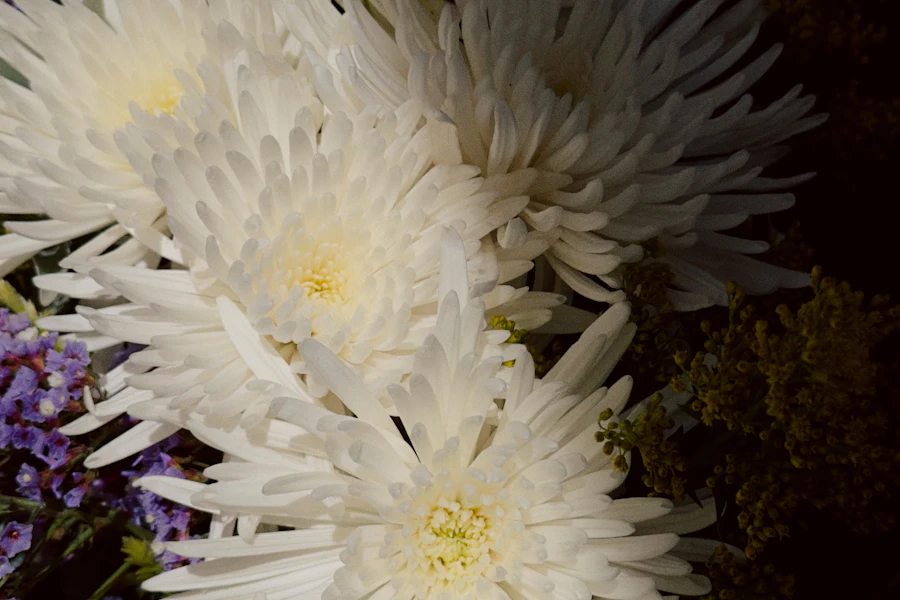
For a softer look, choose analogous colors such as red, orange and gold. Add frilly ornamental kale, ornamental cabbage or burgundy coral bells for contrast in texture. Pansies neatly fill gaps at the pot rim.
Fine ornamental grasses soften the dense mounds of mums. Sedum brings rusty seed heads, and pumpkins or gourds echo orange tones at ground level. Repeat one mum color several times for a planned, unified effect.
Garden Mums FAQs
Are Garden Mums Perennials Or Annuals?
Garden mums are hardy perennials in USDA zones 5-9, but many gardeners treat them as annuals. Survival depends on the type, planting date, drainage and winter protection, not on the plant’s color or flower size.
Hardy types planted in spring return most reliably. Some extra-hardy cultivars, such as Mellow Moon, Maroon Pride and Minnruby, were bred specifically for northern winters. Florist mums usually behave as annuals outside the warmest zones.
In zones 4 and colder, treat most mums as annuals or overwinter them in pots. In zones 8 and 9, plants return reliably and may bloom twice, once in late spring and again in fall.
How Long Do Potted Fall Mums Bloom?
Potted fall mums usually bloom for two to eight weeks. The range depends mostly on temperature, bud stage at purchase and steady watering. Cool nights and tightly budded plants give the longest show by far.
Mums prefer daytime temperatures between 60°F and 70°F. Days above 90°F speed flower fading, so move pots into light shade during heat waves. Bright light keeps colors rich, but afternoon heat shortens bloom time noticeably.
To stretch the season, buy plants in bud and stagger purchases two weeks apart. Water before pots wilt, because one hard wilt can brown open flowers. Remove spent blooms promptly to keep the display tidy.
Should I Cut Back Mums After They Finish Blooming?
No, leave in-ground mums standing until early spring. Dead stems hold snow and leaves around the crown, which helps insulate the roots. Cut them back once new green shoots appear at the base in April.
Potted mums are different. Trim their stems to four to six inches before moving them into storage. Shorter stems take less space, shed fewer leaves and are easier to inspect for pests during winter months.
Spring trimming also helps you judge survival. Healthy plants show green shoots at the base, even when old stems look completely dead. Wait a few extra weeks before discarding a slow plant in colder regions.
Can I Keep Fall Mums Indoors Over Winter?
Yes, but not in a warm living room. Mums need a cold, dormant rest, and heated rooms keep them weak and leggy. An unheated garage, porch or basement that stays above freezing works far better.
Indoor blooming mums can stay inside while they flower. Place them in bright, indirect light, away from heating vents, and water when the top inch feels dry. Expect blooms to last two to three weeks.
Once flowering ends, move the pot to cool, dark storage. Water lightly once a month until spring. Florist mums often decline even with good care, so treat them as seasonal décor rather than long-term plants.
How Often Should I Water Fall Mums?
Water potted fall mums whenever the soil feels dry at knuckle depth. That often means daily in warm, sunny weather and every two to three days in cool, cloudy weeks. Wind also dries pots quickly.
In-ground mums need less frequent but deeper watering. Give about one inch per week, including rain, soaking the root zone each time. Deep watering builds stronger roots than light sprinkles that wet only the surface.
Water early in the day so leaves dry before evening. Avoid wetting open flowers, because damp petals brown quickly. Reduce watering as cold weather arrives, but never let soil dry completely before the ground freezes.
Why Are My Mums Turning Brown?
Most browning comes from drought stress. A root-bound pot can dry out within hours, and wilted flowers rarely recover. Brown lower leaves usually point to uneven watering rather than disease, especially on newly purchased plants.
Natural aging also browns mums. Each flower lasts a few weeks, then fades from the edges inward. Frost browns petals overnight, while foliage often stays green. Trim old blooms and keep watering consistently through fall.
Disease causes browning that spreads. Leaf spot starts on lower leaves and climbs upward, while root rot causes wilting despite wet soil. Remove damaged leaves, improve drainage and avoid watering foliage late in the day.
Related flower guides
More guides you might enjoy.



Pingback: Ranunculus: How to Plant Corms and Grow Rose-Like Blooms
Pingback: November Birth Flower: Chrysanthemum Meaning, Colors and Care
Pingback: How to Dry Flowers: Air Drying, Pressing and Silica Gel Methods
Pingback: September Birth Flower: Aster and Morning Glory Meaning