Lotus Flower: Meaning, Symbolism and How to Grow One in a Pond
The lotus flower is a symbol of purity, rebirth and enlightenment. Learn what the lotus means in Buddhism and Hinduism, meanings by color, how a lotus differs from a water lily, and how to plant a lotus tuber in a pond or patio container and care for it through winter.
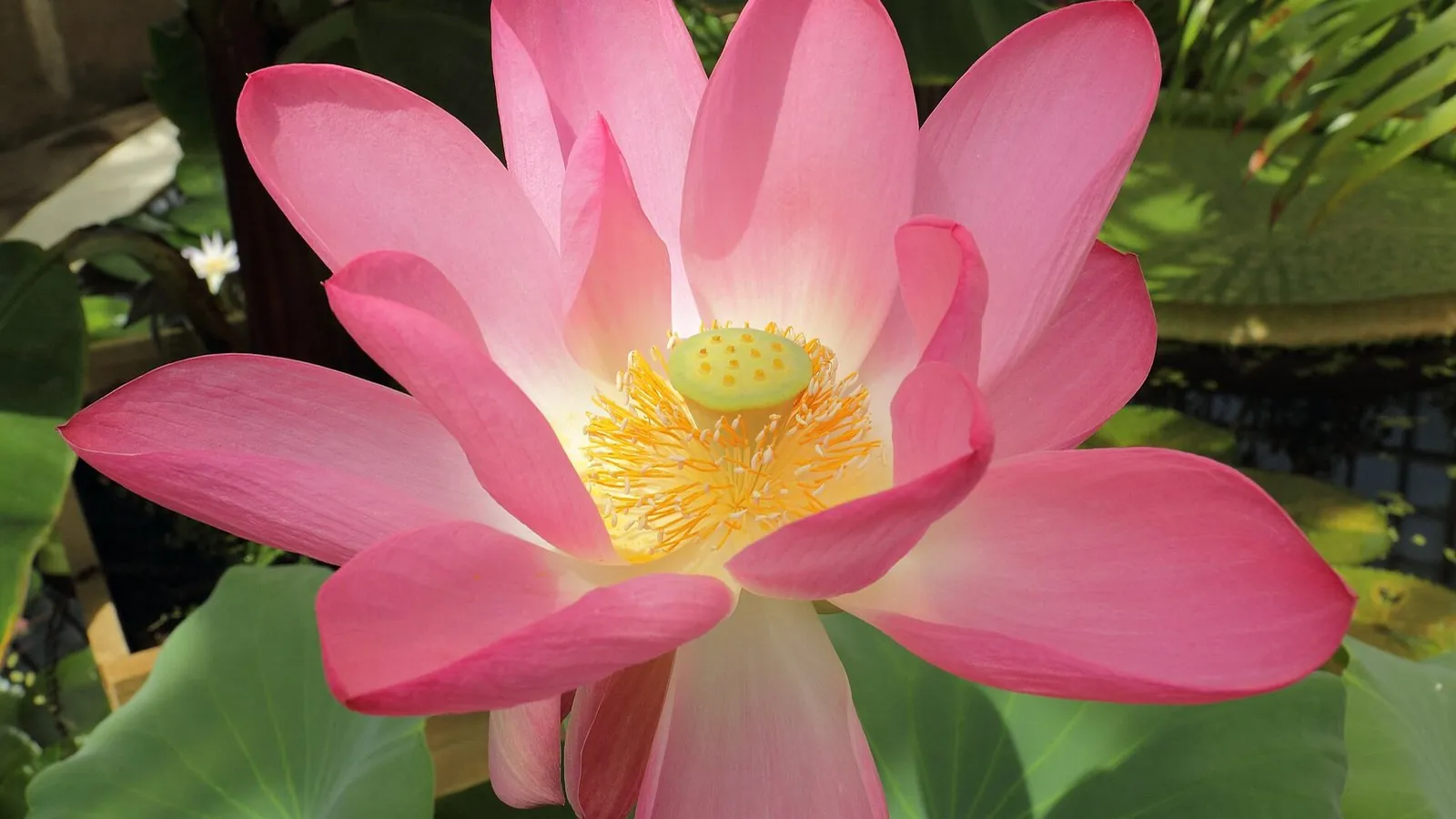
The lotus flower (Nelumbo) stands for purity, rebirth and enlightenment, because it rises from muddy water to bloom clean above the surface. It is sacred in Buddhism and Hinduism. To grow one, plant a tuber in spring in a wide pot with no drainage holes and heavy clay soil. Sink the pot in a sunny pond under 2 to 18 inches of water.
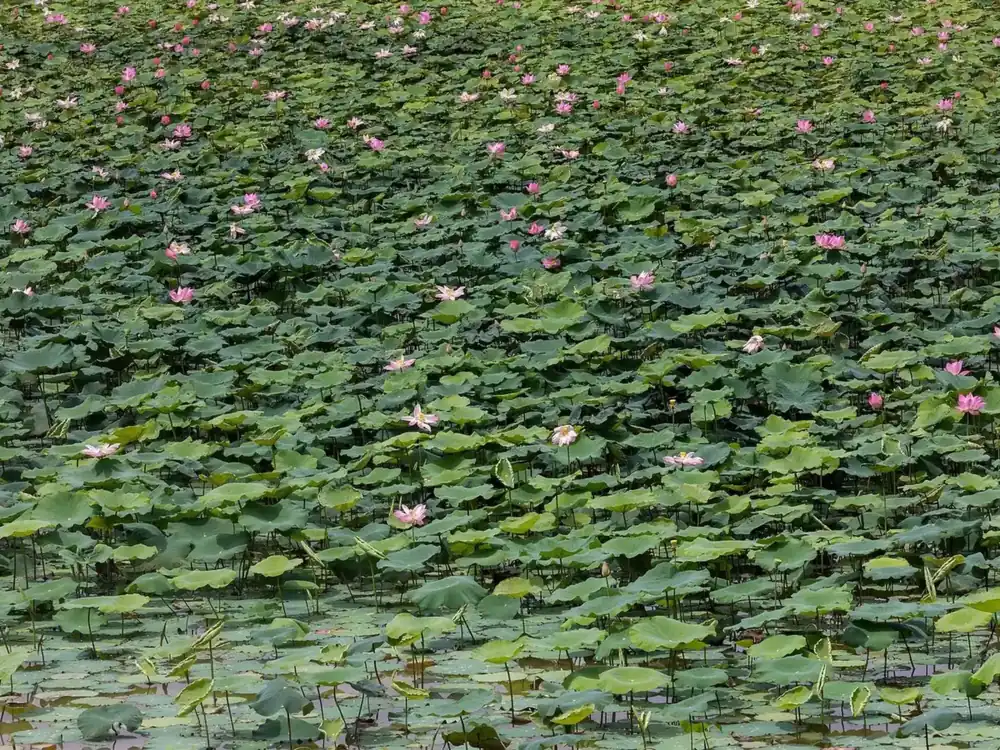
Few flowers have the presence of a lotus in bloom. Its round leaves stand tall above the water like green parasols. Its large pink or white flowers open on strong stems, glowing in the morning sun, then leave behind a seed pod that looks like a showerhead.
For thousands of years, people across Asia have seen the lotus as a symbol of the soul rising from muddy water into light. It appears in temples, paintings, poems and prayers. It is also a hardy pond plant that you can grow in a backyard pond or even a large tub on a patio.
This guide explains what the lotus flower means, how it differs from a water lily and how to plant and care for a lotus in a pond or container. It covers choosing a variety, planting the tuber, feeding, winter care and common problems.
Key takeaways
- The lotus stands for purity, rebirth, enlightenment and spiritual awakening.
- It is sacred in Buddhism and Hinduism and is the national flower of India.
- A lotus is not a water lily. Lotus leaves stand above the water and have no notch, and lotus flowers leave a showerhead-like seed pod.
- Plant lotus tubers in spring in a round pot with no holes, using heavy soil, with the growing tip left uncovered.
- Lotus needs full sun, warm weather and still water. It flowers best after several weeks of summer heat.
- Keep lotus in containers, since it can spread fast and take over natural ponds.
What Is a Lotus Flower?
The lotus is an aquatic perennial in the genus Nelumbo, the only genus in the family Nelumbonaceae. There are just two species.
Sacred Lotus (Nelumbo nucifera)
The sacred lotus, also called Indian or Asian lotus, is native to Asia and northern Australia. It has pink or white flowers, often 6 to 10 inches across, and is the species seen in Asian art and religion. Hundreds of named varieties exist, in shades of pink, white, red and cream, with single or double flowers.
American Lotus (Nelumbo lutea)
The American lotus is native to eastern North America, from the Gulf Coast to the Great Lakes. It has pale yellow flowers and grows in lakes, slow rivers and marshes. Native Americans ate its roots and seeds.
How a Lotus Plant Grows
A lotus grows from long, fleshy rhizomes, often called tubers, that creep through the mud. Each section sends up leaves and flowers. Young leaves float on the water, but older leaves rise on stiff stalks up to 3 to 6 feet tall in large varieties. Flowers open for about three days. They open in the morning and partly close in the afternoon, and they drop their petals on the last day.
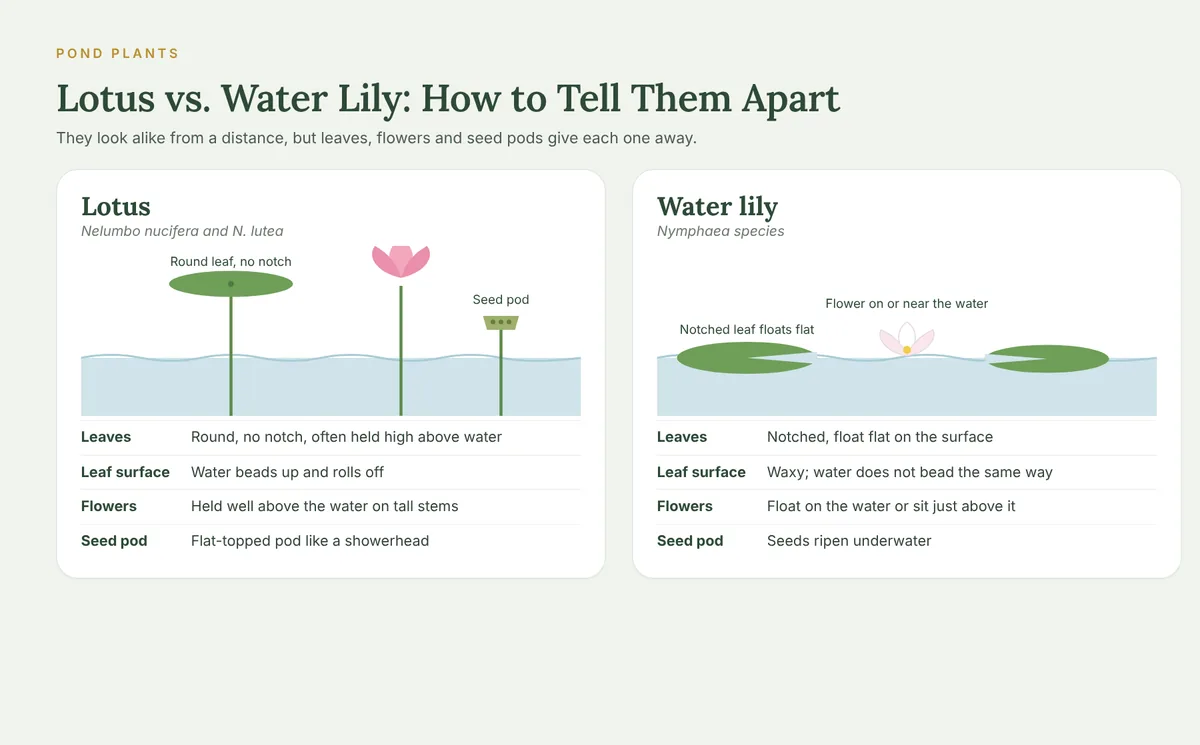
Lotus vs. Water Lily: What Is the Difference?
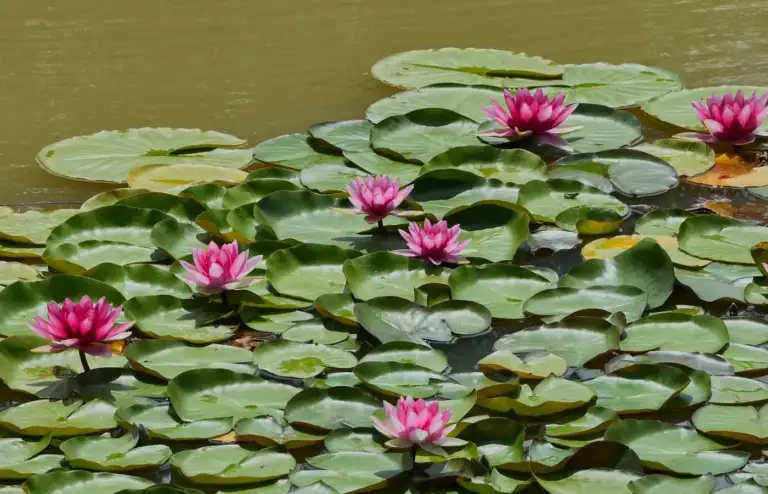
The lotus and the water lily are often confused, and many old texts use the word lotus for both. They are not closely related, though. DNA studies show the lotus is closer to plane trees and proteas than to water lilies.
| Feature | Lotus (Nelumbo) | Water lily (Nymphaea) |
|---|---|---|
| Leaves | Round, no notch, often held above the water | Notched, float flat on the water |
| Leaf surface | Water beads and rolls off | Waxy, but water does not bead the same way |
| Flowers | Held well above the water on tall stems | Float on the water or sit just above it |
| Seed pod | Flat-topped pod like a showerhead | Seeds ripen underwater |
| Dormancy | Dies back fully in winter | Hardy types keep a crown in the pot |
If you are planning a pond, both plants can grow together if there is enough space. See our guide to growing hardy and tropical water lilies for the other half of the pairing.
Lotus Flower Meaning and Symbolism
The core meaning of the lotus is purity rising from impurity. The plant roots in dark mud at the bottom of a pond, yet its flower opens spotless above the water. Over time, this became a powerful symbol of the human spirit.
Purity and Rebirth
The lotus flower closes in the evening and opens again in the morning. Its seeds can also survive for centuries and still sprout. Both traits made it a symbol of rebirth and renewal.
The Lotus in Buddhism
In Buddhism, the lotus stands for the purity of body, speech and mind. The mud represents the struggles of life, and the flower represents enlightenment that rises above them. The Buddha is often shown seated on a lotus. Stories say that when he was born, lotus flowers bloomed where he took his first steps. The phrase “Om mani padme hum” is often translated as “the jewel in the lotus.”
The Lotus in Hinduism
In Hinduism, the lotus is linked to beauty, wealth, fertility and spiritual growth. The goddess Lakshmi sits or stands on a lotus and holds lotus flowers. The god Brahma is said to have been born from a lotus growing from the navel of Vishnu. The lotus position in yoga, padmasana, takes its name from the flower.
The Lotus in Other Cultures
The lotus is the national flower of India, and it also holds a special place in Vietnam. In China, it stands for purity and integrity, and lotus seeds and roots are common foods. In ancient Egypt, the “lotus” seen in art was actually the blue water lily, Nymphaea caerulea, which shows how long the two plants have been mixed up.
Lotus Meaning by Color
- White lotus: purity of mind and spiritual perfection.
- Pink lotus: the most sacred lotus in Buddhism, linked to the Buddha himself.
- Red lotus: love, compassion and the heart.
- Blue lotus: wisdom and knowledge. In art, this is usually a blue water lily.
- Yellow lotus: the American lotus, often tied to joy and new beginnings.
Amazing Facts About the Lotus
The Lotus Effect
Lotus leaves stay clean even in muddy water. Their surface is covered in tiny bumps and wax that make water bead up and roll off, carrying dirt with it. Scientists call this the lotus effect, and it has inspired self-cleaning paints, glass and fabrics.
Flowers That Make Their Own Heat
The sacred lotus can keep its flowers warmer than the air around them, at around 86 to 95°F, even on cool nights. Scientists think this warmth helps attract beetles and other pollinators.
Seeds That Last for Centuries
Lotus seeds have a very hard coat. A lotus seed found in an old lake bed in China was radiocarbon dated to about 1,300 years old, and it still sprouted. That makes lotus seeds among the longest-lived seeds known.
How to Grow a Lotus in a Pond
Growing a lotus is easier than many people think. The key points are a big enough pot, plenty of sun and warmth, and careful handling of the tubers.
Choosing a Lotus Variety
Lotus varieties come in three rough sizes:
- Bowl or micro lotus: leaves under 12 inches tall. Grows in a bowl or small tub with 2 to 4 inches of water over the soil.
- Dwarf or medium lotus: leaves 1 to 3 feet tall. Good for patio containers and small ponds.
- Standard lotus: leaves 3 to 6 feet tall. Best for large ponds.
For a first lotus, a medium variety in a large container is the easiest to manage.
When to Plant
Buy and plant lotus tubers in spring, usually from late March to May, while they are dormant or just starting to grow. Lotus tubers are sold in early spring and do not store well, so plant them soon after they arrive. The water should be at least 60°F for steady growth.
Choosing a Container
Use a wide, round container with no drainage holes. A round shape matters, because the growing tips travel along the side of the pot and can jam and break in square corners. For a medium variety, choose a pot at least 18 to 24 inches wide. For a standard lotus, larger is better.
Soil for Lotus
Use heavy garden soil with plenty of clay, or a soil sold for aquatic plants. Avoid potting mix, peat, bark or compost, which float and foul the water. Fill the container about two thirds full and add water to make a thick mud.
How to Plant a Lotus Tuber Step by Step
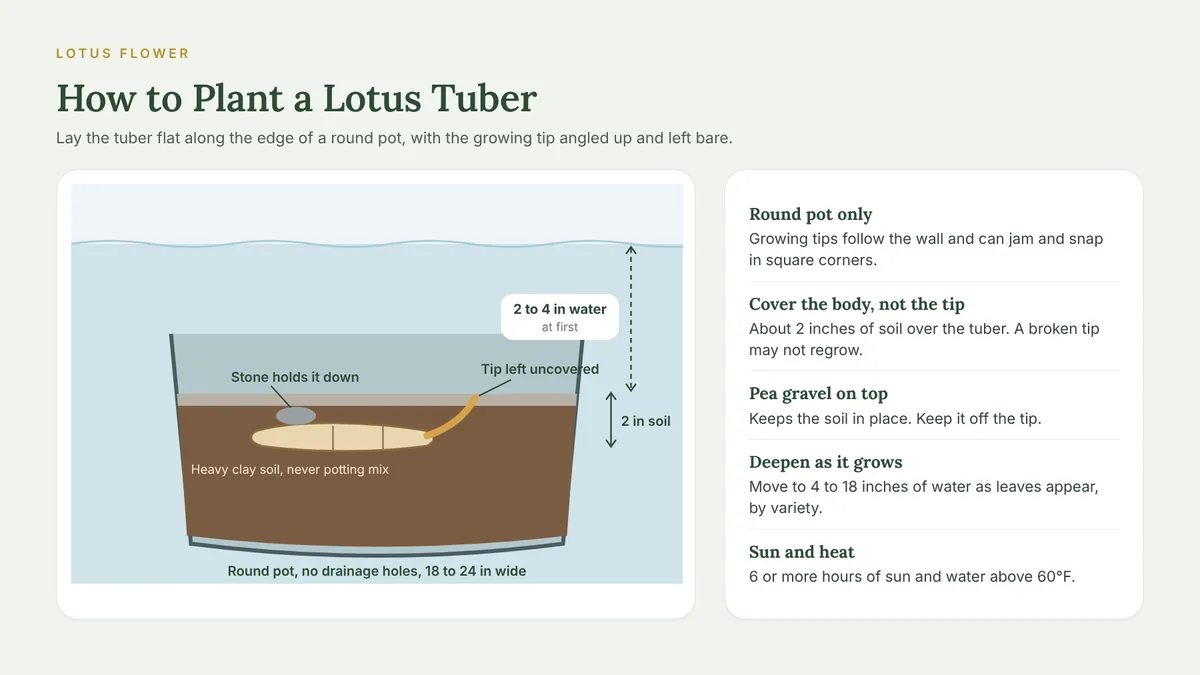
- Handle the tuber gently. The growing tips snap off easily, and a broken tip may not regrow.
- Make a shallow trench in the mud along the side of the pot.
- Lay the tuber flat in the trench, with the growing tip angled slightly up and pointing toward the center.
- Cover the body of the tuber with about 2 inches of soil, but leave the growing tip uncovered.
- Place a smooth stone on the tuber if it tries to float. Do not press on the tip.
- Add a thin layer of washed pea gravel over the soil to hold it in place, keeping it off the tip.
- Fill gently with water so that 2 to 4 inches cover the soil at first.
- As leaves grow, lower the pot or add water until there are about 4 to 18 inches above the soil, depending on the variety.
Light and Temperature
Lotus needs full sun, at least 6 hours a day and ideally more. It also needs warmth. Leaves come quickly in spring, but most lotus need several weeks of hot summer weather, with days in the 80s °F, before they flower. In cool summers, they may grow leaves and few flowers.
Lotus Care Through the Season
Feeding
Lotus is a heavy feeder once it starts growing. Wait until you see several upright, aerial leaves, then push aquatic fertilizer tablets into the soil, away from the tubers. Feed every two to three weeks until about late July or early August, then stop so the plant can prepare for dormancy. Overfeeding can burn tender leaves and turn the water green.
Water Level and Quality
Keep the water level steady and top it up during hot weather. Lotus likes still, warm water. Keep it away from fountains, waterfalls and pumps that stir the surface.
Deadheading and Seed Pods
You can cut faded flowers or leave the seed pods to ripen. Dried lotus pods are popular in flower arrangements. Remove yellowing leaves below the water line, but do not cut green stems below the water, since the hollow stalks can let water into the tuber.
Dividing a Lotus
Lotus fills a container fast. Divide it every one to two years in spring, just as growth starts. Wash away the soil, cut the tubers into sections with at least two joints and a growing tip, and replant the best pieces.
Overwintering a Lotus
Lotus is hardy in about Zones 4 to 10, as long as the tubers do not freeze. In fall, the leaves turn yellow and the plant goes dormant.
In a Pond
Cut back the yellow leaves above the water. Move the container to the deepest part of the pond, below the ice line. In most areas, 18 to 24 inches of water is enough.
In a Container or Small Pond
If your container could freeze solid, move it to an unheated garage or basement where it stays cool but above freezing. Keep the soil wet all winter. Another option is to drain the pot, cover it with a thick layer of mulch and wrap it, then refill it in spring.
Common Lotus Problems
- No flowers: usually too little sun, too little heat or not enough food. Young tubers may also need a year to settle in.
- Rotting tubers: often caused by burying the growing tip, damaging it when planting or planting in cold water.
- Aphids: they gather on leaves and buds. Hose them off into the water so fish can eat them.
- Leaves yellowing in summer: often a sign the plant needs feeding.
- Spreading too far: lotus can take over a natural pond. Keep it in containers.
Is Lotus Invasive?
The sacred lotus spreads quickly through mud, and in a natural lake or large earth pond it can cover the whole surface. In some parts of the US, sacred lotus has escaped into the wild. Grow it in a container, even inside a pond, and never plant it in natural lakes, rivers or wetlands. If you want a native lotus, look for the American lotus from a local native plant nursery.
Using Lotus Flowers and Pods
In Arrangements
Fresh lotus flowers last only a few days, but they are stunning floating in a shallow bowl. Dried seed pods are long-lasting and look striking in fall and winter arrangements. Our guide on how to dry flowers covers drying pods.
As a Food Plant
In Asia, lotus roots, seeds and young leaves are common foods. Sliced lotus root has a pretty lace pattern of holes. Only eat lotus grown as food, from clean water, and never harvest plants from ponds treated with chemicals.
For more aquatic and unusual plants, see our list of 100 popular types of flowers. The water lily, a close pond companion, is also one of the July birth flowers.
Lotus Flower FAQs
What does the lotus flower symbolize?
The lotus flower symbolizes purity, rebirth, enlightenment and spiritual growth. It grows in muddy water but blooms clean above the surface, which made it a symbol of rising above hardship. It is sacred in Buddhism and Hinduism, and the pink lotus is linked to the Buddha himself.
What is the difference between a lotus and a water lily?
A lotus holds its round, unnotched leaves and its flowers well above the water, and it forms a seed pod like a showerhead. A water lily has notched leaves that float flat, and its flowers float on or just above the water. The two plants are not closely related.
Can you grow a lotus in a container?
Yes. Use a wide, round container with no drainage holes and heavy clay soil. Bowl and dwarf varieties grow well in patio tubs. Place the container in full sun and keep the water topped up. Larger varieties need a pot at least 2 feet wide.
How deep should a lotus be planted in a pond?
Start with 2 to 4 inches of water over the soil in spring. As the leaves grow, increase it to about 4 to 18 inches, depending on the variety. In winter, move the pot deeper, below the ice line, so the tubers do not freeze.
Why is my lotus not flowering?
Lotus needs full sun, warm water and several weeks of hot summer weather to bloom. Too little sun, a cool summer, too little fertilizer or a newly planted tuber can all stop flowering. Feed regularly once upright leaves appear, and give it as much sun as possible.
Is lotus hardy in winter?
Most lotus varieties are hardy in about Zones 4 to 10 if the tubers do not freeze. In a pond, move the container below the ice line. In a small container that may freeze solid, store it in a cool garage or basement and keep the soil wet.
Why is the lotus the national flower of India?
The lotus is sacred in Indian religion and culture. It is linked to gods such as Lakshmi, Brahma and Vishnu and appears in art, temples and poetry across the country. It stands for purity, beauty and spiritual growth, which made it a natural national symbol.
Related flower guides
More guides you might enjoy.