Protea Flower: Types, Meaning and How to Grow Them
The protea flower is a striking South African bloom and the king protea is the country's national flower. Learn the main types, what proteas symbolize, and how to grow them in lean, acidic, phosphorus-free soil, plus pruning, cut flower and drying tips.
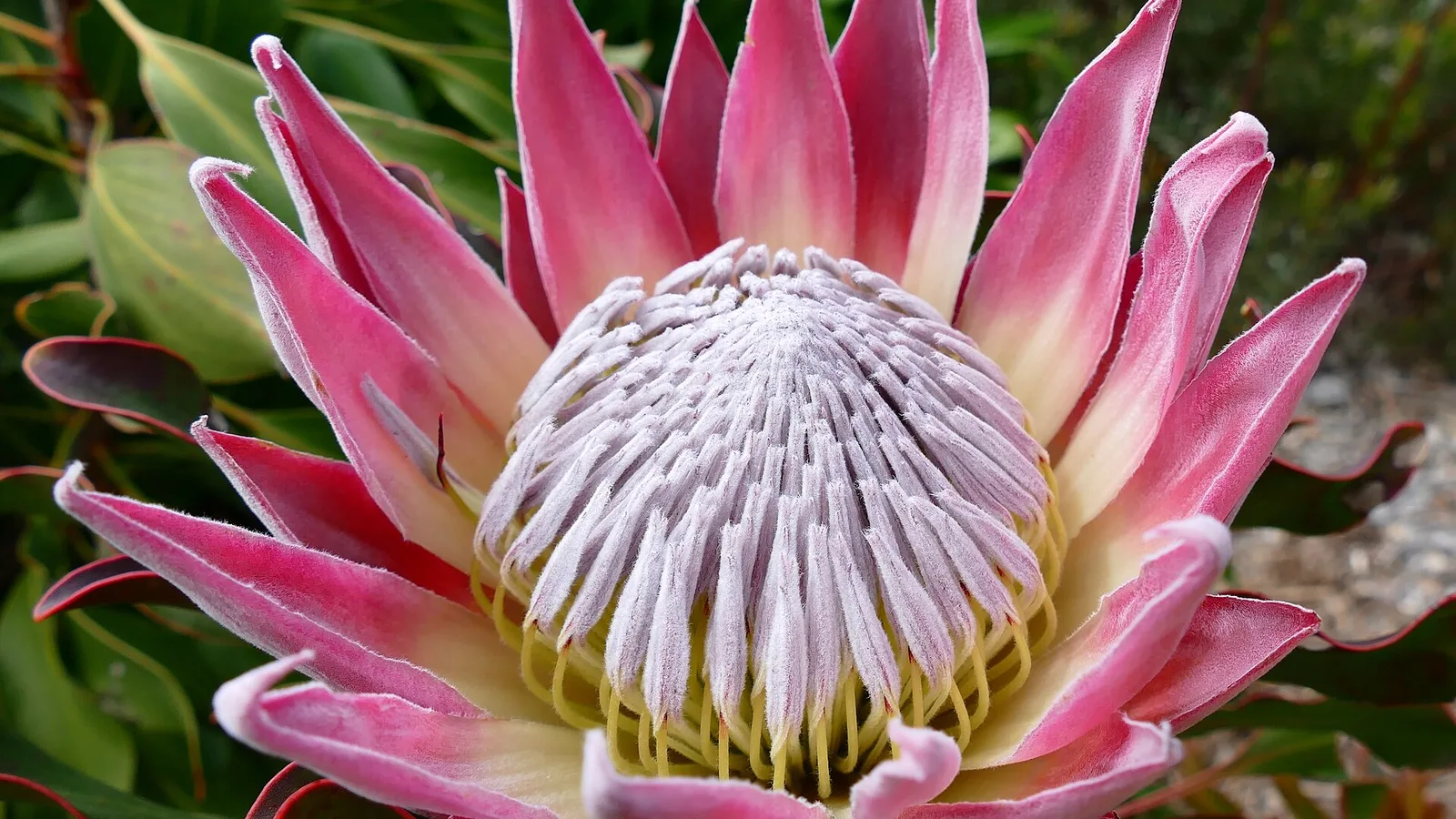
The protea flower is a shrub bloom from the ancient Proteaceae family, found mainly in South Africa, with huge heads ringed by colorful bracts. The king protea is South Africa’s national flower. Proteas grow outdoors only in mild, frost-light climates such as coastal California and upland Hawaii. Give them full sun, moving air, fast-draining acidic soil and no phosphorus fertilizer.
What Is a Protea Flower?
A protea flower looks like nothing else in the garden. Each bloom is a large, bowl-shaped head of many tiny florets, framed by stiff, colorful bracts. Some resemble a crown, others a giant artichoke or a soft, furry cup. Florists prize them because they look striking fresh and keep their shape when dried.
Proteas belong to the Proteaceae family, one of the oldest plant families on Earth. UC Master Gardeners in Sonoma County note that the family dates back more than 90 million years, to the ancient supercontinent Gondwana. That is why most of its species now grow in South Africa and Australia, which were once joined.
The genus Protea is mostly South African. Its relatives include pincushions (Leucospermum), conebushes (Leucadendron), Banksia, Grevillea and even the macadamia nut tree. They share a love of sun, poor soil and sharp drainage. If you are new to unusual blooms, our guide to types of flowers shows how different proteas look from more familiar garden plants.
Key takeaways
- Proteas are shrubs in the ancient Proteaceae family, found mainly in South Africa and Australia.
- The king protea (Protea cynaroides) is South Africa’s national flower, with heads about 5 to 12 inches across.
- They need full sun, moving air and fast-draining, acidic, low-nutrient soil.
- Proteas are very sensitive to phosphorus. Do not use general-purpose fertilizer, bone meal or manure.
- Root rot caused by Phytophthora is the biggest killer, so drainage matters more than anything else.
- Prune lightly after flowering and never cut back into old, leafless wood.
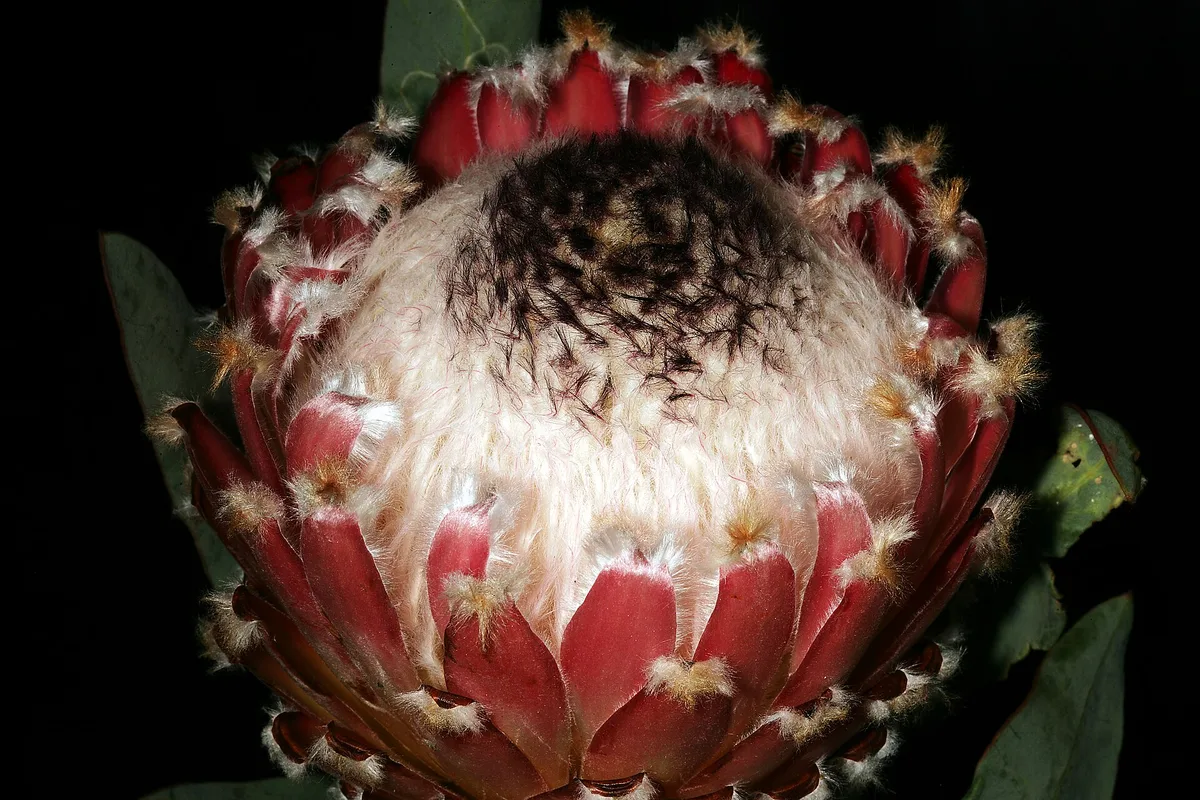
The King Protea: South Africa’s National Flower
The king protea, Protea cynaroides, has the largest flower head in the genus. According to the South African National Biodiversity Institute, each head measures about 120 to 300 mm across, or roughly 5 to 12 inches. The bracts range from creamy white to deep crimson, and soft silvery pink is the most prized shade.
South Africa honors the king protea as its national flower. The national cricket team even plays as the Proteas. The species name cynaroides means “like an artichoke,” a nod to the shape of its large bud.
In the wild, the king protea grows across the fire-prone fynbos of the Western and Eastern Cape, from sea level to about 1,500 meters. It survives wildfire by resprouting from dormant buds in its thick underground stem. Nectar-feeding sugarbirds and sunbirds are its main pollinators, though bees and beetles also visit.
Protea Flower Meaning and Symbolism
The name says a lot about the meaning. Botanist Carl Linnaeus named the genus after Proteus, the Greek sea god who could change his shape at will. The flowers and leaves vary so much from one species to the next that the name fits perfectly.
Because of that story, the protea flower is most often linked with these ideas:
- Change and transformation: a fitting gift for a new job, a move, a graduation or a fresh start.
- Diversity: few flower groups show such a range of shapes, textures and colors.
- Courage and resilience: many proteas regrow after the wildfires that sweep their native hills.
- Pride and heritage: in South Africa, the king protea stands for the nation itself.
Proteas also last a long time in arrangements and dry beautifully. That gives them a natural link to lasting affection, which is why they appear in wedding bouquets and anniversary flowers. Their meaning is modern flower lore rather than ancient tradition, so choose the message that suits the occasion.
Types of Protea Flowers and Close Relatives
Florists and nurseries often sell several genera under the “protea” name. They are all in the same family and need almost identical care. The table below compares the types you are most likely to find.
| Type | Botanical name | Native to | Look and color | Typical bloom season* |
|---|---|---|---|---|
| King protea | Protea cynaroides | South Africa | Huge open crown; white, pink to crimson bracts | Varies; can flower sporadically through the year |
| Queen protea | Protea magnifica | South Africa | Cup-shaped head with a furry white, brown or black beard | Mainly winter to midsummer in the wild |
| Pincushion protea | Leucospermum | South Africa | Rounded heads of long, pin-like styles in red, orange, yellow or pink | Late winter to early spring |
| Conebush | Leucadendron | South Africa | Colorful leafy bracts around a central cone | Late winter to early spring; color peaks in cool months |
| Banksia | Banksia | Australia | Tall, cylindrical spikes in red, yellow or orange | Late spring to early summer |
| Grevillea | Grevillea | Australia | Spidery flowers loved by hummingbirds and bees | Early spring to late summer |
*King and queen protea timing is from SANBI. Other seasons are for Northern California gardens, based on UC Master Gardener guidance, which also notes that many Protea varieties bloom from early fall to early winter. Timing shifts with climate and cultivar.
King Protea
This is the showstopper, but also one of the slower and fussier types. RHS notes that it takes 5 to 10 years to reach full size and that poor growth and dieback usually mean the soil is too rich. It typically grows about 3 to 5 feet tall and wide in gardens.
Queen Protea
Protea magnifica has the second-largest head of any protea, about 6 inches across. Its outer bracts range from greenish cream to pink, salmon and deep carmine. The center carries a soft beard that may be white, tawny brown or almost black. It grows naturally in high mountains and dislikes damp, humid gardens.
Pincushion Protea (Leucospermum)
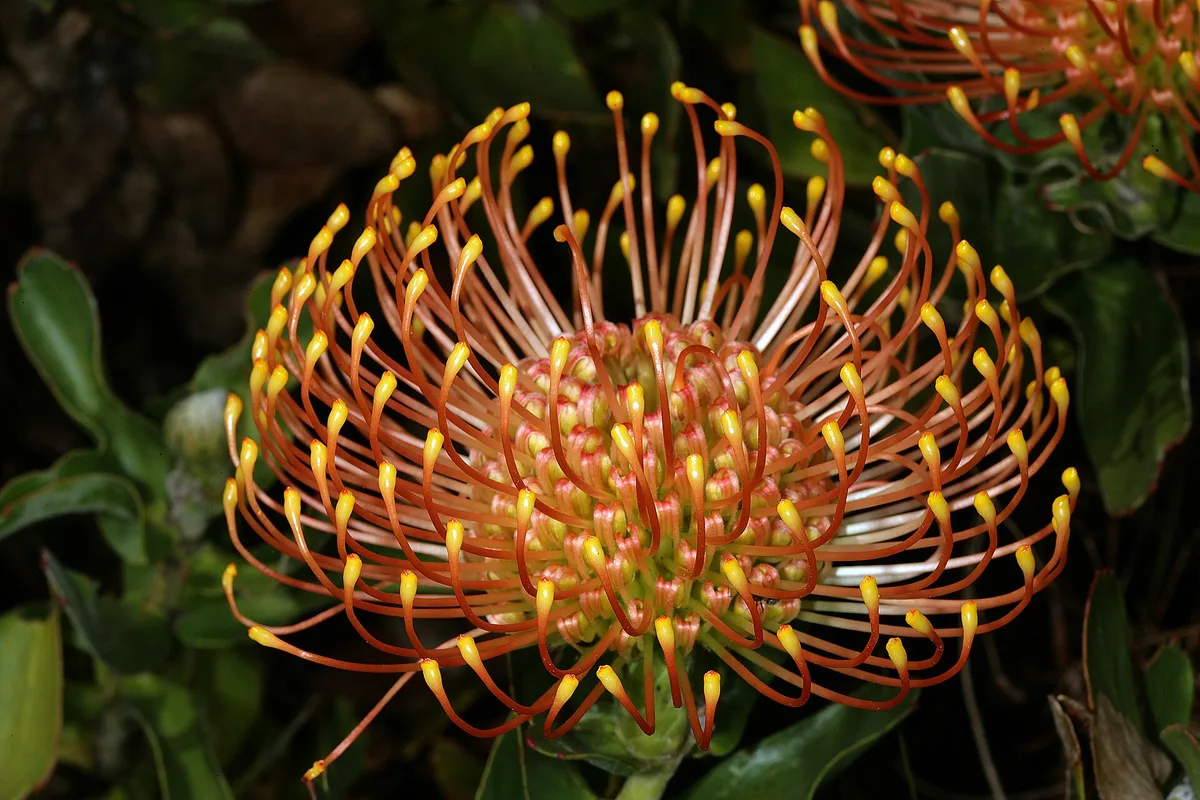
Pincushions are among the most popular proteas for gardens and bouquets. Their round heads bristle with long, stiff styles that look like pins in a cushion. Colors run from yellow and orange to red and pink, often changing as the head opens. They make excellent long-stemmed cut flowers. Researchers at the University of Hawaii bred several hybrids at the Kula experimental farm on Maui, including ‘Hawaiian Sunbeam’, ‘Hawaiian Star’ and ‘Hawaiian Moon’, which flower in winter.
Leucadendron (Conebush)
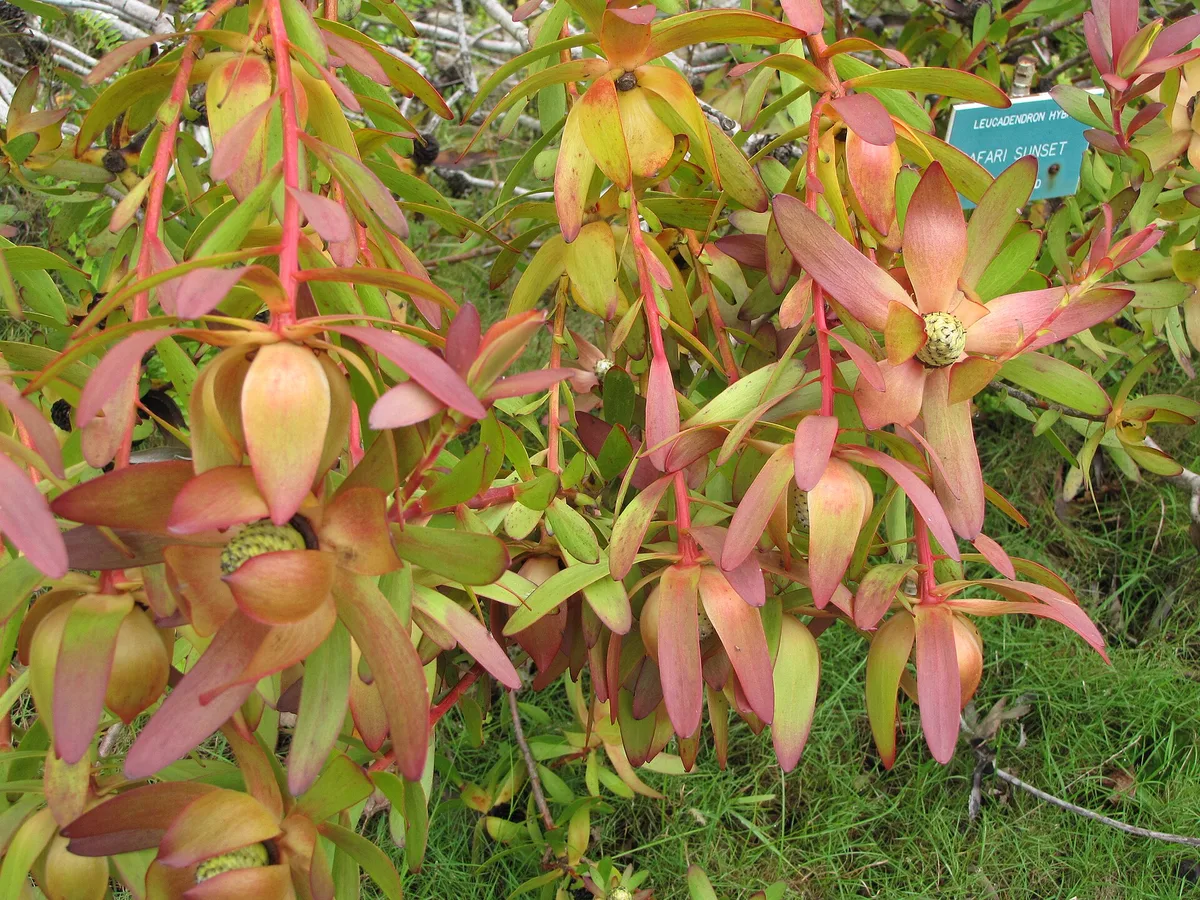
Leucadendrons are grown for their brilliant leafy bracts, which glow red, gold, pink or lime and look their best in the cooler months. The genus has about 80 species, all native to South Africa. Each plant is either male or female, and the woody, cone-like seed heads give the group its common name.
Banksia and Grevillea
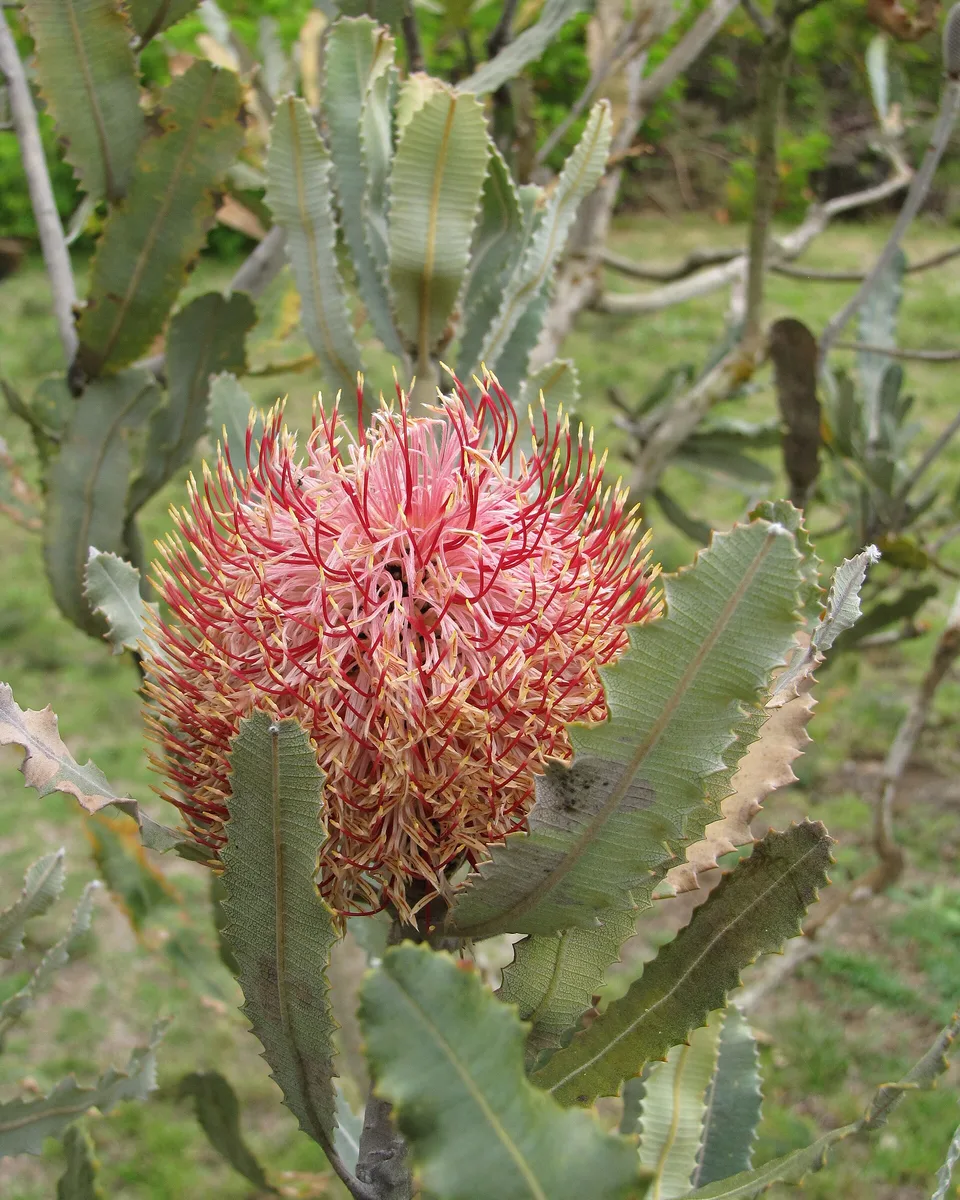
Banksia and Grevillea are Australian members of the family. Banksias carry tall, bottlebrush-like flower spikes in red, yellow or orange, while grevilleas have spidery blooms that hummingbirds and bees love. They are not true proteas, but florists often mix them into protea bouquets, and they grow in the same lean, well-drained conditions.
Where Do Protea Flowers Grow? Climate and Zones
Proteas come from Mediterranean-type climates with warm, dry summers and mild, wet winters. In the United States, that points to coastal and mild inland California and the cool uplands of Hawaii. As a rough guide, they are plants for USDA zone 9 and warmer, but zone numbers alone do not tell the whole story.
Cold is one limit. The RHS rates the king protea as hardy only to about 34 to 41°F, so it needs a frost-free spot. Other types are tougher. SANBI notes that the queen protea tolerates frost to about 18°F, and UC Santa Cruz Arboretum reports that mature, healthy plants can handle a fairly severe frost. Overwatered or overfed plants, however, may die after only a slight one.
Humidity is the other limit. Hot, humid lowland climates are a poor fit even though they never freeze, because warm, wet soil and still air encourage root rot and leaf diseases. That makes hot, humid regions a real challenge, while mild, breezy coastal climates are a much better match.
How to Grow Protea Flowers
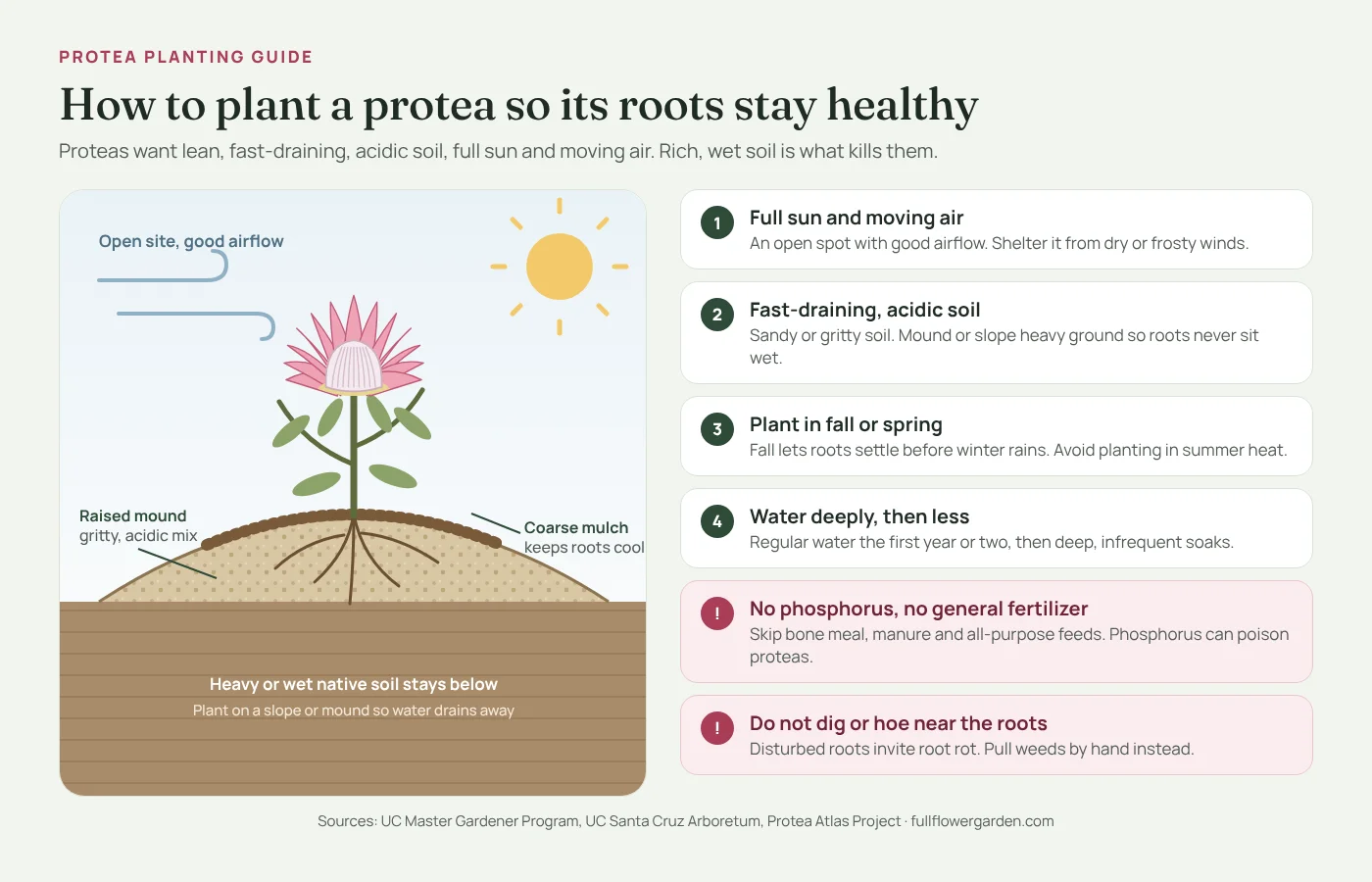
Growing proteas is less about doing more and more about doing less. Most failures come from rich soil, too much water or the wrong fertilizer. Get the site right at planting time and established plants need very little care.
Sun and Airflow
Plant proteas in full sun. An open site with good air circulation keeps the foliage dry and helps prevent fungal disease. UC Master Gardeners in San Luis Obispo County also advise sheltering plants from dry winds, and the Protea Atlas Project warns that cold, frosty winds can be lethal. Avoid hot, enclosed corners where heat and humidity build up.
Soil: Fast-Draining, Acidic and Lean
Drainage is everything. Proteas need sandy or gritty soil that never stays soggy. UC Santa Cruz Arboretum recommends slightly acid soil where the drainage is excellent. The Protea Atlas Project notes that many sand-loving species prefer very acidic soil, below about pH 6.
- Test your soil first. If it is alkaline, amend to lower the pH or grow proteas in containers.
- Raise heavy soil. On clay, plant on a slope or build a mound of well-draining soil over the native ground.
- Keep it lean. Do not dig in rich compost, manure or bagged garden soil that contains fertilizer.
- Mulch with care. Gravel or coarse, acidic mulch such as pine needles keeps the roots cool without adding nutrients.
Phosphorus Sensitivity and Fertilizer
This is the rule that surprises most gardeners. Proteas evolved in some of the poorest soils in the world. Many grow dense clusters of fine roots, often called proteoid or cluster roots, that pull phosphorus from soil very efficiently. Add more, and it soon builds up to toxic levels.
The UC Master Gardener Program warns that proteas are highly sensitive to phosphorus and can be poisoned by general-purpose fertilizers. UC Santa Cruz Arboretum adds that phosphate stays in the soil for a long time, so a single mistake can linger. Follow these rules:
- Do not use all-purpose, bloom-booster or high-phosphorus fertilizers.
- Skip bone meal and manure, which are rich in phosphorus.
- Keep proteas away from fertilized lawns, vegetable beds and annual flower beds.
- If a plant truly needs feeding, use a product with very little phosphorus, applied weakly and rarely.
- Watch for phosphorus toxicity: yellow young leaves, leaf drop and blackened, dying shoots.
Watering
Young proteas need regular water during warm, dry weather for the first year or so. Water deeply at the base of the plant and keep the foliage dry. After that, most become fairly drought tolerant.
In coastal Northern California, established plants may need little or no summer water. Hotter, drier inland gardens will need occasional deep summer soaks. Either way, let the soil dry out between waterings. Constantly wet soil is far more dangerous than a dry spell.
Planting Proteas in California and Hawaii
California
Much of coastal California, with its mild winters and dry summers, suits proteas well. UC Master Gardeners recommend planting in fall, from September to November, so roots settle in before winter rain. Spring planting, from March to May, also works. Avoid planting in summer heat, which stresses young plants.
On heavy valley soils, plant on a mound or slope. Throw frost cloth over young plants on the few freezing nights a year. Deer may bite off flower heads, and gophers can tunnel through roots, so protect new plantings where these are common.
Hawaii
Hawaii has a long history with proteas. University of Hawaii extension horticulturist Norman Bezona notes that proteas planted at the Kula station on Maui around 1965 helped inspire the state’s protea industry. They do best in cool upland areas on the drier side of the islands, such as Kula, Waimea and Volcano, rather than in hot, humid lowlands.
Good drainage is just as important here. Wet, humid sites bring disease and pest problems, so choose a sunny slope with volcanic, free-draining soil and steady breezes.
Growing Protea Flowers in Containers
Containers are the best option if your soil is heavy or alkaline, or if winters bring hard frost. Choose compact cultivars that will stay in scale with the pot. Use a large pot with plenty of drainage holes and a gritty, acidic, low-nutrient mix. Avoid standard potting mixes with added fertilizer.
- Water so the mix never stays soggy but never dries out completely.
- Shade the pot itself from hot afternoon sun, or wrap it with insulating material, to keep the roots cool.
- Move pots to a frost-free, bright spot, such as a cool greenhouse or sunroom, when freezing weather threatens.
- Water sparingly in winter, when growth slows.
If you already overwinter tender plants in pots, such as angel trumpet or black bat flower, the routine will feel familiar. Just remember that proteas want a much leaner diet than those heavy feeders.
How to Prune Proteas After Flowering
Light, regular pruning keeps proteas bushy and productive. Without it, many become leggy and bare at the base. The best time is right after the flowers fade, which is often March or April in California.
- Use sharp, clean pruners and wear gloves.
- Cut each faded flower stem back to just above a leaf node.
- Leave about 6 to 8 inches of stem with healthy leaves below the cut.
- Make cuts at a 45-degree angle.
- Never cut into old, leafless wood. Most branches will not resprout from bare stems.
Cutting stems for bouquets counts as pruning, so harvesting flowers helps shape the plant. King proteas are an exception to the old-wood rule: SANBI notes that older, woody plants can be cut back hard to regrow from the base, as they would after a wildfire.
Proteas as Cut Flowers and How to Dry Them
Proteas are some of the longest-lasting cut flowers you can grow. Their thick stems and woody bracts hold up well in a vase. Pincushions and leucadendrons are especially generous with long, straight stems for arrangements. For tips on harvesting and conditioning other blooms, see our guide to planning a cut flower garden.
Keeping Fresh Proteas Longer
- Harvest in the cool of the day and put stems straight into clean water.
- Recut stems at an angle and strip any leaves that would sit below the waterline.
- Change the water every couple of days and recut the stems.
- Keep the vase out of direct sun and away from heaters.
Leaves on cut proteas sometimes turn black before the flower fades. Research at Stellenbosch University links this leaf blackening to the large flower head draining sugars from the foliage. In their trials, stems cut later in the day showed less blackening than those cut in the morning.
Drying Proteas
Proteas dry beautifully and hold their shape for months. Pick heads soon after they open fully, strip the lower leaves and hang the stems upside down in a dry, dark and airy room. Colors soften as they dry, but the structure stays intact. Proteas pair well with other long-lasting dried flowers, such as celosia, in wreaths and everlasting bouquets.
Common Protea Problems: Root Rot and More
Most protea problems start below ground. Soil organisms that attack proteas thrive in warm, wet soil, while leaf diseases thrive in warm, damp, still air. Good siting prevents most issues before they start.
Phytophthora Root Rot
Root rot caused by Phytophthora, especially Phytophthora cinnamomi, is the most serious threat. University of Hawaii research on Maui found this pathogen in the blackened roots of dying Banksia plants, and rated the king protea as highly susceptible. Pincushions are also very sensitive to it.
Infected plants often wilt suddenly, sometimes on one side first, even when the soil is moist. Inside, the stem may show dark discoloration. There is little you can do once a plant collapses, so prevention is the key:
- Plant only in fast-draining soil, on a mound or slope if needed.
- Water deeply but infrequently, and never let roots sit in standing water.
- Do not dig, hoe or cultivate near the roots. The Protea Atlas Project warns this spreads soil diseases such as Phytophthora.
- Remove and bin dead plants rather than replanting proteas in the same wet spot.
Other Problems
- Yellowing and dieback: usually too much phosphorus or rich soil. Stop all feeding.
- Leaf spots and blights: fungal diseases are worst in shade and humidity. Improve sun and airflow.
- Scale insects: often protected by Argentine ants. Control the ants and treat the scale.
- Deer and gophers: deer bite off flower heads and young plants, and gophers tunnel through roots.
- Old age: proteas are fairly short-lived. UC Santa Cruz Arboretum notes that a plant is likely to be old by about ten years.
Because proteas are short-lived, plan to replace them every so often. Pincushions, for example, often become leggy after about eight years. New plants can be grown from semi-hardwood cuttings or seed, though seedlings may take several years to bloom. For quicker color in beds while young plants establish, cool-season bulbs such as ranunculus thrive in the same mild, winter-rain climates.
Protea Flower FAQs
What does the protea flower symbolize?
The protea flower is most often linked with change, transformation and diversity, because it is named after Proteus, the Greek god who could change his shape. Its ability to resprout after wildfire also makes it a popular symbol of courage and resilience. In South Africa, the king protea is a symbol of national pride.
Is the protea the national flower of South Africa?
Yes. The king protea, Protea cynaroides, is the national flower of South Africa. It also gives its name to the country’s national cricket team, the Proteas.
Can you grow protea flowers in the United States?
Yes, in mild, frost-light climates with dry air. Coastal and mild inland California and the cool upland areas of Hawaii, such as Kula on Maui and Waimea and Volcano on the Big Island, suit them best. Elsewhere, grow them in containers and protect them from frost.
Why are proteas sensitive to phosphorus?
Proteas evolved in very poor soils. Many grow dense clusters of fine roots that absorb phosphorus very efficiently, so extra phosphorus quickly builds up to toxic levels. Too much can cause yellow young leaves, leaf drop and blackened, dying shoots.
Do proteas need fertilizer?
Usually not. UC Master Gardeners advise that proteas thrive in nutrient-poor soil and can be poisoned by general-purpose fertilizers. Skip bone meal, manure and all-purpose plant food. If you must feed, use a product with very little phosphorus, applied weakly and rarely.
How long do protea flowers last in a vase?
Protea flowers are known for a long vase life. Recut the stems, strip leaves below the waterline and change the water often. Leaves may darken before the flower fades, which is a common postharvest problem called leaf blackening.
How do you dry protea flowers?
Pick heads that have just opened, strip the lower leaves and hang the stems upside down in a dry, dark and airy room. You can also stand them upright in an empty vase. They keep their shape well and can last for many months as dried flowers.
How long does a protea plant live?
Proteas are fairly short-lived shrubs in gardens. University of California Santa Cruz Arboretum notes that a protea is likely to be old at about ten years and is unlikely to live to twenty. Many pincushions become leggy after about eight years.
Related flower guides
More guides you might enjoy.