Ranunculus: How to Plant Corms and Grow Rose-Like Blooms
How to grow ranunculus from corms: soaking, pre-sprouting, planting by zone, watering, harvesting for the vase and saving corms for next year.
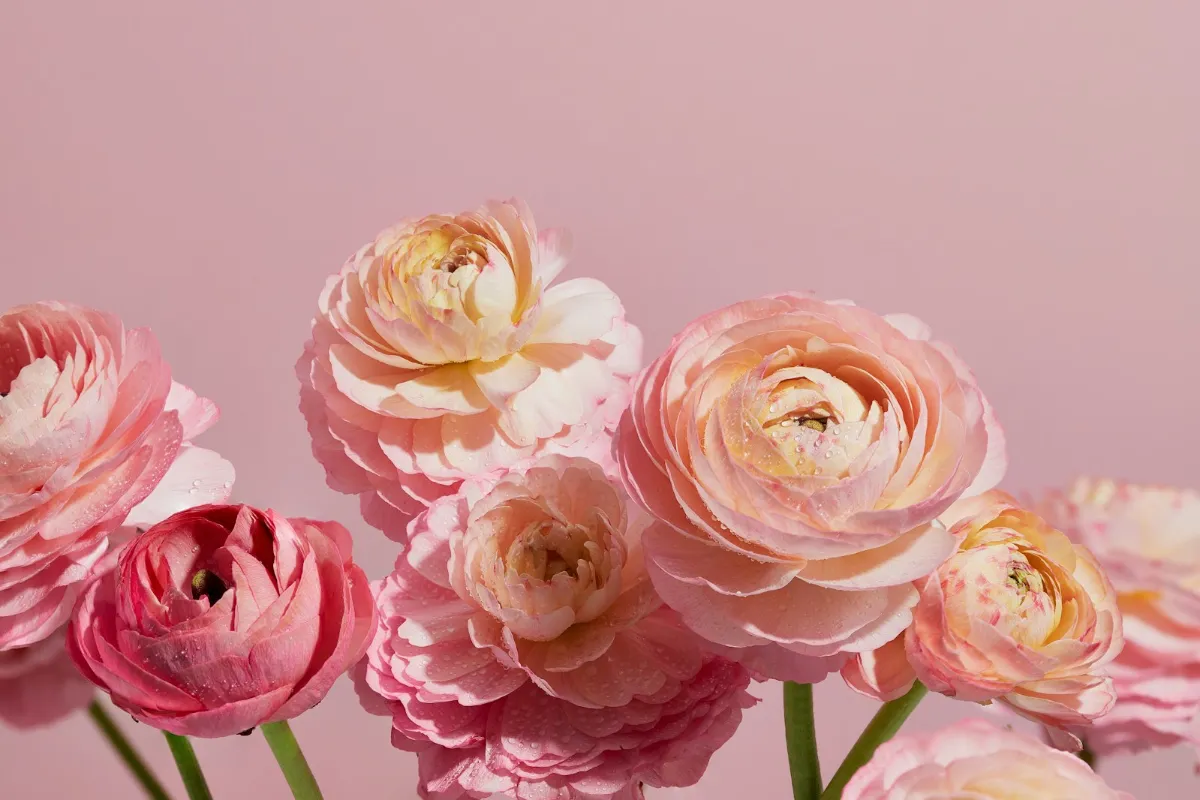
Ranunculus grow from claw-shaped corms that bloom best in cool weather. Soak the corms for 3 to 4 hours, then plant them claws down about 2 inches deep and 6 to 9 inches apart in full sun and well-drained soil. Plant in fall in zones 8 to 10, or in late winter or early spring in colder zones. Water once, then wait for sprouts.
Ranunculus: Rose-Like Blooms From Tiny Corms
Ranunculus produce layered, paper-thin petals that look like a cross between a rose and a peony. A single corm the size of a walnut can send up a dozen or more flowers in spring, each one lasting well in a vase.
The garden ranunculus is Ranunculus asiaticus, often called Persian buttercup, a member of the buttercup family, Ranunculaceae. It is native to the eastern Mediterranean and southwest Asia, where it grows through cool, damp winters and rests in summer.
This guide covers how to choose, soak, pre-sprout and plant ranunculus corms, then how to water, feed and harvest them. It also explains growing in pots, saving corms and fixing the problems that trip up most beginners.
Key takeaways
- Ranunculus are cool-season bulbs that bloom best when days stay between about 55°F and 70°F.
- Plant corms claws down, about 2 inches deep and 6 to 9 inches apart.
- Zones 8-10 plant in fall; zones 7 and colder plant in late winter or early spring.
- Water once after planting, then wait for sprouts, because soggy corms rot.
- Cut stems at the soft marshmallow stage for a vase life of about 7 to 10 days.
Understanding Ranunculus Corms
Ranunculus grow from small, dry, claw-like corms that look a little like tiny octopuses or dried spiders. The pointed claws are the roots, and the flat crown on top is where leaves and stems emerge.
Larger corms produce more stems. Growers sort them by size, with jumbo corms of 8 to 9 centimeters or larger often giving 20 or more flowers. Smaller corms still bloom, just with fewer stems per plant.
Buy firm, plump corms with no soft spots or mold. Store them somewhere cool, dry and dark until planting. Dry corms can keep for many months, but once soaked, they must be planted or pre-sprouted promptly.
When To Plant Ranunculus By Zone
Timing matters more with ranunculus than with most bulbs. They need cool weather to grow and bloom, and they stop flowering once summer heat arrives. So, plant early enough to give them a long, mild spring.
In USDA zones 8-10, plant in fall, usually October to November, for late winter and spring flowers. Corms survive mild frosts in the ground, though a frost cloth helps on nights that drop below about 25°F.
In zones 7 and colder, plant outdoors in late winter or early spring, once hard freezes have passed. Starting pre-sprouted corms indoors about 4 to 6 weeks before your last frost gives you earlier and longer flowering.
| USDA zone | Planting time | Expected bloom | Notes |
|---|---|---|---|
| 9-10 | October to December | February to April | Plant outdoors in fall; avoid hot spells |
| 8 | October to November | March to May | Use frost cloth on very cold nights |
| 7 | Fall with protection, or February to March | April to June | A low tunnel improves fall plantings |
| 5-6 | March to April, after hard freezes | May to July | Pre-sprout indoors for an earlier start |
| 3-4 | April to May | June to July | Grow in pots or treat as annuals |
How To Soak Ranunculus Corms
Soaking rehydrates dry corms and wakes them from dormancy. Place them in a bowl of room-temperature water for 3 to 4 hours. They swell to roughly twice their dry size and soften to a plump, firm texture.
Do not soak them overnight or for days. Too long in water starves the corms of oxygen and raises the risk of rot. Some growers run a small aquarium bubbler in the bowl, but a short soak works well without one.
After soaking, plant them straight away or move on to pre-sprouting. Discard any corm that turns mushy, smells sour or shows gray mold, because it will not grow and may spread rot to its neighbors.
Pre-Sprouting For Earlier, Stronger Plants
Pre-sprouting gives ranunculus a head start of several weeks and lets you plant only corms that are clearly alive. Many cut flower growers swear by it for bigger plants and earlier blooms.
Fill a shallow tray with lightly moist potting mix. Lay the soaked corms on top, claws down, and cover them with a thin layer of mix. Keep the tray somewhere cool, ideally around 40°F to 50°F, out of direct sun.
Check every few days and mist if the mix dries. In 10 to 14 days, small white roots appear and short shoots may begin to form. Plant the sprouted corms promptly, before roots tangle together.
How To Plant Ranunculus Corms
Choose a site with full sun, at least six hours a day, and loose, well-drained soil. Work in a few inches of compost before planting. In heavy clay, use raised beds, because standing water quickly rots the corms.
Plant corms with the claws pointing down, about 2 inches deep and 6 to 9 inches apart. In cut flower beds, growers often space them closer, around 6 inches, to get more stems from a small area.
Water the bed thoroughly once after planting, then hold off until shoots appear. Ranunculus corms are prone to rot in cold, wet soil before they have leaves, so only water again if the soil turns completely dry.
Growing Ranunculus In Pots
Ranunculus grow well in containers, which suit patios, balconies and cold climates. Use a pot at least 8 inches deep with drainage holes. A 12-inch pot holds about five to seven corms comfortably.
Fill it with quality potting mix blended with a handful of perlite for extra drainage. Plant corms 2 inches deep and claws down, then water well. Place the pot in full sun where nights stay above freezing.
Pots dry out faster than beds once plants are growing, so check moisture every few days. Move containers into a garage or under cover on frosty nights, then back into the sun in the morning.
Watering And Feeding Ranunculus
Once leaves appear, keep the soil evenly moist but never soggy. Water deeply about once a week in cool weather, more often in warm, windy spells. Water at the soil level so foliage stays dry and healthy.
Ranunculus benefit from steady feeding. Mix a balanced, slow-release fertilizer into the bed at planting time. Then, once plants are actively growing, feed every two to three weeks with a diluted liquid fertilizer.
A 2-inch layer of mulch keeps the soil cool and moist, which extends flowering into late spring. Our guide to garden mums covers a similar feeding rhythm for long, steady bloom.
Temperature And Frost Protection
Ranunculus prefer cool days and cold nights. They grow strongly between about 50°F and 65°F and bloom best before daytime temperatures reach the 80s. Once heat arrives, plants yellow and go dormant.
Leafy plants tolerate light frost, but hard freezes damage foliage and buds. When nights drop below about 25°F, cover beds with frost cloth or row cover. Remove the cover during the day so plants get sun.
In warm zones, partial afternoon shade can stretch the season by a week or two. In cooler zones, a low plastic tunnel in early spring warms the soil and brings flowers several weeks earlier.
Best Ranunculus Varieties
Ranunculus come in nearly every color except true blue, from white and blush to apricot, red, purple and bicolors. Different series offer different flower shapes, stem lengths and vase performance.
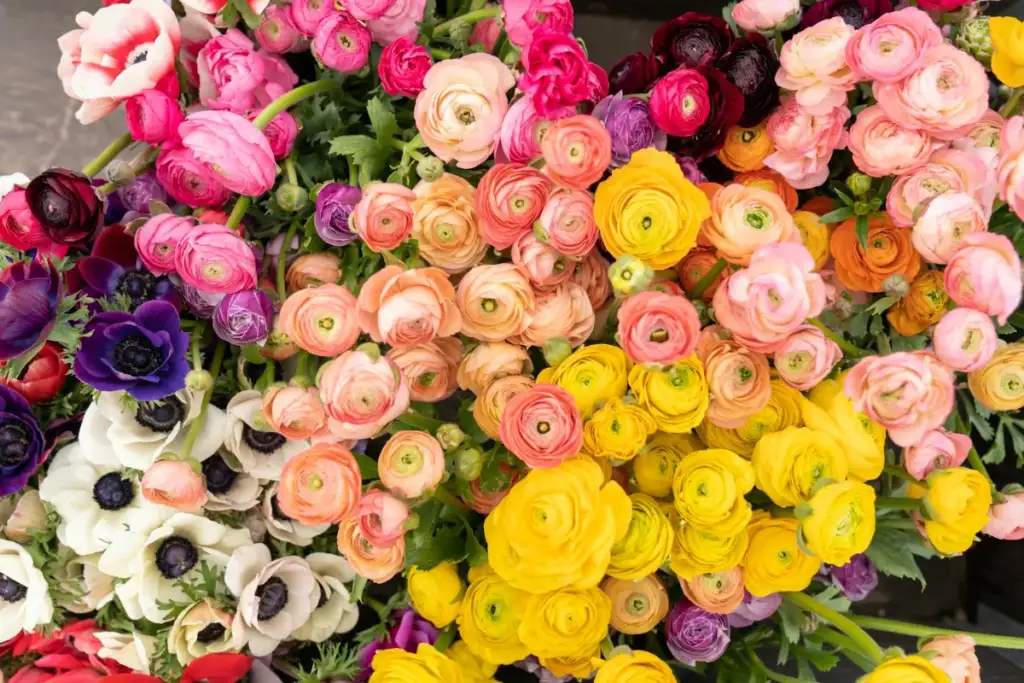
Tecolote ranunculus are the classic garden type, with large, ruffled double flowers on sturdy stems. Italian-bred types such as La Belle and Amandine are popular with florists for their long stems and many layered petals.
Butterfly ranunculus have single, glossy petals that shimmer in sunlight, and plants produce many stems. Pon-pon types have a green button center, which gives them an unusual, eye-catching look in mixed bouquets.
How To Harvest Ranunculus For The Vase
Cut ranunculus when the buds show full color and feel soft, like a marshmallow, when you squeeze them gently. At this stage, flowers open fully in the vase and last longest, often 7 to 10 days.
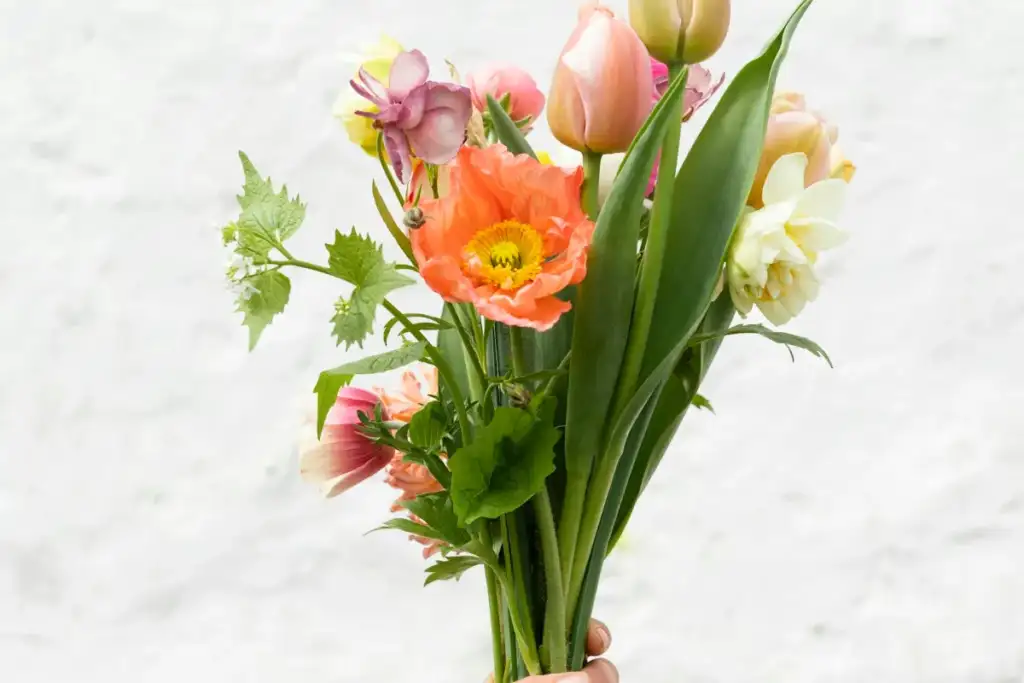
Harvest in the cool of the morning, cutting stems near the base of the plant. Place them in clean, cool water right away. Regular cutting encourages the plant to send up more stems over the next weeks.
Change the vase water every couple of days and trim stems slightly each time. Keep arrangements away from heat and ripening fruit. Our guide to October birth flowers has more ideas for seasonal bouquets.
After Blooming: Saving Corms For Next Year
When flowering slows and foliage turns yellow, stop watering. In zones 8-10 with dry summers, corms can stay in the ground. In wet or humid summers, lift them to prevent rot.
Dig the corms once leaves have fully browned, brush off soil and let them dry in a shaded, airy spot for one to two weeks. Then, store them in a mesh bag or paper bag somewhere cool and dry.
Saved corms may produce fewer flowers than fresh ones, especially in hot climates. Many gardeners treat ranunculus as annuals and buy new corms each year for the most reliable display.
Common Problems, Pests And Diseases
Corm rot is the most common failure. It happens when corms sit in cold, wet soil before leaves form. Prevent it with good drainage, a short soak and careful watering until shoots appear.
Aphids cluster on new growth and buds in spring. A strong spray of water or insecticidal soap controls them. Powdery mildew and botrytis appear in damp, crowded beds, so space plants well and water at the soil.
Birds and squirrels sometimes dig up newly planted corms, and slugs chew young leaves. Lay netting over fresh plantings and set slug traps. Also note that all parts of ranunculus are toxic if eaten by people and pets.
Ranunculus Meaning And Symbolism
In the language of flowers, ranunculus often stand for charm and radiance. The Victorians used them to tell someone they were dazzling or attractive, which made them a favorite in romantic posies.
The name comes from the Latin rana, meaning frog, because many wild buttercups grow in damp places where frogs live. The garden ranunculus is a showier cousin of the wild meadow buttercup.
Today, ranunculus are a top choice for spring weddings and Mother’s Day bouquets. Their soft, layered petals pair beautifully with tulips, anemones, sweet peas and early garden roses.
Ranunculus FAQs
Do Ranunculus Come Back Every Year?
They can return in zones 8-10 with dry summers. In colder or wetter areas, lift and store the corms or treat them as annuals. Many gardeners buy fresh corms each year for the best flowers.
Which Way Up Do You Plant Ranunculus?
Plant ranunculus corms with the pointed claws facing down and the flatter crown facing up. If you are unsure, plant them on their side, and the shoots will still find their way up.
How Long Do Ranunculus Take To Bloom?
Most ranunculus bloom about 90 days after planting, depending on temperature. Pre-sprouted corms often flower several weeks earlier than corms planted dry straight into the garden.
Should You Soak Ranunculus Before Planting?
Yes. Soak corms in room-temperature water for 3 to 4 hours before planting or pre-sprouting. Avoid soaking them overnight, because long soaks can cause rot.
Can Ranunculus Grow In Shade?
Ranunculus need full sun for strong stems and plenty of flowers. In hot climates, light afternoon shade can extend the season, but deep shade produces weak plants with few blooms.
Are Ranunculus Toxic To Pets?
Yes. Ranunculus contain compounds that can irritate the mouth and stomach of cats, dogs and horses. Keep corms and cut flowers out of reach and contact a vet if a pet chews them.
Related flower guides
More guides you might enjoy.
Pingback: White Flowers: 40 Beautiful White Blooms for Every Garden
Pingback: Cut Flower Garden: Plan, Plant and Harvest Bouquets