Rarest Flowers in the World: 20 Blooms Few People Ever See
Meet the rarest flowers in the world, from Middlemist's Red camellia and the giant Rafflesia to the ghost orchid, jade vine and a flower that blooms underground. Learn where each one grows, why it is rare and which ones you can see in public gardens.

The rarest flowers in the world include Middlemist’s Red, a camellia known from only two plants, plus Kokia cookei and the Franklin tree, which survive only in cultivation. The western underground orchid blooms below the soil, while the corpse flower and Rafflesia bloom rarely and briefly. Most rare flowers face habitat loss, overcollecting and the loss of their pollinators.
Most flowers we know are common for a reason. They are easy to grow, quick to spread and happy in many climates. The flowers on this list are the opposite. Some are down to a handful of plants. Some grow in a single valley, cliff or swamp. Others are not rare as plants, but their flowers appear so seldom that most people never see one open.
“Rare” can mean different things, so we have chosen flowers for a mix of reasons. A few are close to extinction. A few survive only because gardeners saved them. Others are rare in bloom, hidden underground or found only in remote places.
Below are 20 of the rarest flowers in the world, where they grow, what makes them special and whether you can see them yourself. For the flowers you can grow at home, see our list of 100 popular types of flowers.
Key takeaways
- Middlemist’s Red camellia is known from only two plants, one in London and one in New Zealand.
- Kokia cookei and the Franklin tree are extinct in the wild and survive only because people grew them.
- Rafflesia arnoldii has the largest single flower on Earth, up to about 3 feet across.
- The corpse flower blooms only every few years, and each bloom lasts just one to two days.
- The western underground orchid lives and flowers below the soil surface in Western Australia.
- Habitat loss, overcollecting and the loss of pollinators are the main reasons flowers become rare.
What Makes a Flower Rare?
A flower can be rare in several ways. Botanists and conservation groups such as the IUCN look at how many plants are left, how small their range is and whether their numbers are falling. Gardeners tend to think of rarity in a simpler way: how hard it is to see the flower in bloom.
Few Plants Left
Some species are down to a few hundred, a few dozen or even a single known plant in the wild. These are the flowers most at risk. A storm, a fire or one collector can wipe out a large share of what is left.
Tiny Natural Range
Other plants may be healthy where they grow, but they grow in only one place. A single cliff, valley or wetland may hold the whole wild population.
Rare in Bloom
Some plants are not hard to find, yet their flowers are seldom seen. They may bloom once in decades, for a single night or only after the right fire or rain. These “rare to see” flowers are often the ones that draw crowds to botanic gardens.

Flowers Down to a Handful of Plants
1. Middlemist’s Red Camellia
Middlemist’s Red is often called the rarest flower in the world. This camellia was brought from China to England in 1804 by a London nurseryman named John Middlemist. It has since vanished from China. Only two plants are known today: one in a conservatory at Chiswick House in London and one at the Treaty House at Waitangi in New Zealand. Despite the name, the flowers are a deep rose pink rather than true red.
2. Kokia cookei (Cooke’s Koki’o)
Kokia cookei is a small Hawaiian tree in the hibiscus family with curled, brick-red flowers. It was first collected on the island of Molokai in the 1800s, and it has been extinct in the wild for many decades. At one point the species was down to a single surviving tree. Today it lives on because botanists grafted cuttings onto the roots of related Kokia trees. Only a small number of plants exist.
3. Gibraltar Campion
The Gibraltar campion, Silene tomentosa, is a small pink and white flower that grows only on the Rock of Gibraltar. It was thought to be extinct for years until a climber found a plant on the cliffs in 1994. Seeds were collected and grown at the Gibraltar Botanic Gardens and at Kew, and new plants have been placed back on the Rock.
4. Western Underground Orchid
Rhizanthella gardneri may be the strangest flower on this list. It spends its whole life underground in Western Australia. It has no green leaves and gets its food through fungi linked to the roots of broom bush shrubs. Its small cluster of cream and red flowers opens just below the soil surface. A farmer found it by chance in 1928 while plowing a field. It is critically endangered, and only a small number of plants are known.
5. Lady’s Slipper Orchid in Britain
The lady’s slipper orchid, Cypripedium calceolus, grows across Europe and Asia, but in Britain it is one of the rarest wild plants. Collectors dug it up for gardens until it was thought to be extinct in the early 1900s. In 1930, a single plant was found in the Yorkshire Dales. Its location was kept secret, and volunteers guarded it during flowering for decades. Kew later raised seedlings that have been planted at protected sites.
Flowers That Survive Only in Gardens
6. Franklin Tree
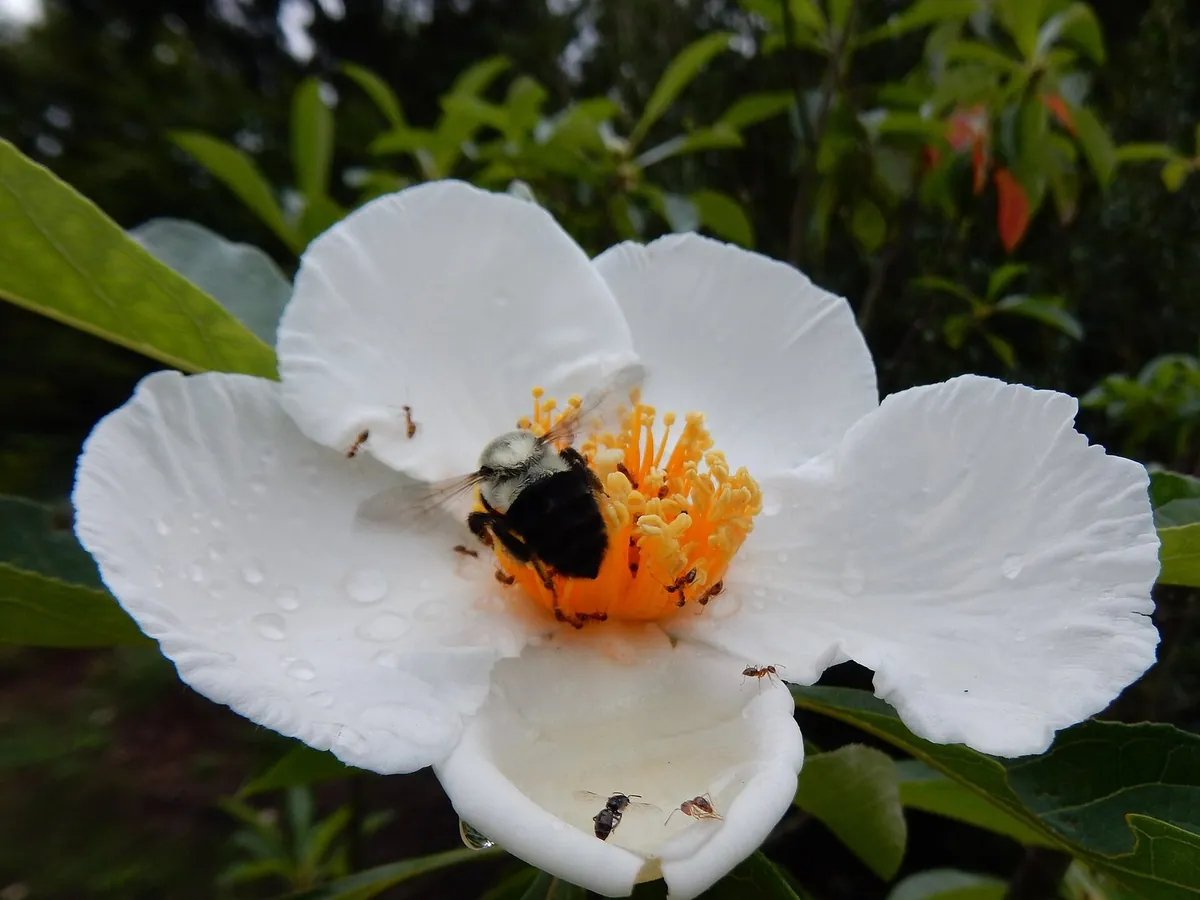
The Franklin tree, Franklinia alatamaha, has white, cup-shaped flowers with golden centers that open in late summer. The American botanists John and William Bartram found it along the Altamaha River in Georgia in the 1760s and named it after Benjamin Franklin. William Bartram collected seeds, and it is a good thing he did. The tree was last seen in the wild in 1803. Every Franklin tree alive today descends from those early seeds.
7. Chocolate Cosmos
Chocolate cosmos, Cosmos atrosanguineus, has velvety maroon flowers that smell faintly of chocolate and vanilla. It comes from Mexico and has long been considered extinct in the wild. The plant sold in garden centers is mostly one clone that does not set seed, so it is spread by dividing roots and by tissue culture. You can grow it as a tender perennial, but you will not find wild plants.
8. Parrot’s Beak
Parrot’s beak, Lotus berthelotii, has silver, needle-like leaves and claw-shaped flowers in flaming orange and red. It is native to the Canary Islands, where it is now extremely rare in the wild. Its flowers seem built for bird pollinators that no longer visit, so wild plants rarely set seed. In gardens, though, it is a popular plant for hanging baskets.
9. Chilean Blue Crocus
The Chilean blue crocus, Tecophilaea cyanocrocus, has flowers of a deep gentian blue with a white throat. Collectors and grazing animals wiped it out of its home in the hills around Santiago, and it was thought to be extinct in the wild for much of the 20th century. In 2001, a wild population was found south of Santiago. It still survives mostly in specialist bulb collections.
Flowers That Bloom Rarely or Briefly
10. Corpse Flower
The corpse flower, Amorphophallus titanum, comes from the rainforests of Sumatra. Its flower head can reach about 10 feet tall, making it one of the largest flowering structures on Earth. A young plant may take 7 to 10 years to bloom for the first time, then rest for several years between blooms. Each bloom lasts only one to two days and smells like rotting meat to attract carrion beetles and flies. It is listed as endangered in the wild.
11. Rafflesia arnoldii
Rafflesia arnoldii has the largest single flower in the world, up to about 3 feet across and weighing up to about 24 pounds. It has no leaves, stems or roots of its own. Instead, it lives as a parasite inside Tetrastigma vines in the forests of Sumatra and Borneo. A bud can take many months to develop, and the flower lasts less than a week before it rots. Like the corpse flower, it smells of decaying meat.
12. Queen of the Andes
Puya raimondii is a giant bromeliad from the high Andes of Peru and Bolivia, growing at around 10,000 to 15,700 feet. It spends many decades as a huge rosette of spiny leaves, then sends up a flower spike that can reach about 30 feet tall with thousands of flowers. After this one bloom, the plant dies. Wild plants may take 80 years or more to flower, and the species is listed as endangered.
13. Queen of the Night
Queen of the night, Epiphyllum oxypetalum, is a cactus with large, white, sweetly scented flowers. The plant itself is common and easy to grow as a houseplant. What makes it rare is the bloom. Each flower opens after dark and wilts by dawn, so many owners never see one open. In Sri Lanka it is known as Kadupul and is linked to Buddhist legend.
14. Venus Flytrap Flower
Most people know the Venus flytrap for its traps, not its flowers. In spring it sends up a tall stalk of small white flowers, held well above the traps so pollinators are not eaten. In the wild, the plant grows only in wetlands within about 75 miles of Wilmington, North Carolina. Habitat loss and poaching have made wild plants rare, and digging them up is a felony in North Carolina.
Flowers Hidden in Remote Places
15. Ghost Orchid
The ghost orchid, Dendrophylax lindenii, grows in a few swamps in southern Florida and in Cuba. It has no leaves. The plant is a tangle of green roots clinging to tree bark, and its white flower seems to float in midair. Giant sphinx moths pollinate it at night. Poachers, drainage and storms have reduced its numbers, and finding one in bloom often means wading through a swamp. The US Fish and Wildlife Service tracks its status.

16. Jade Vine
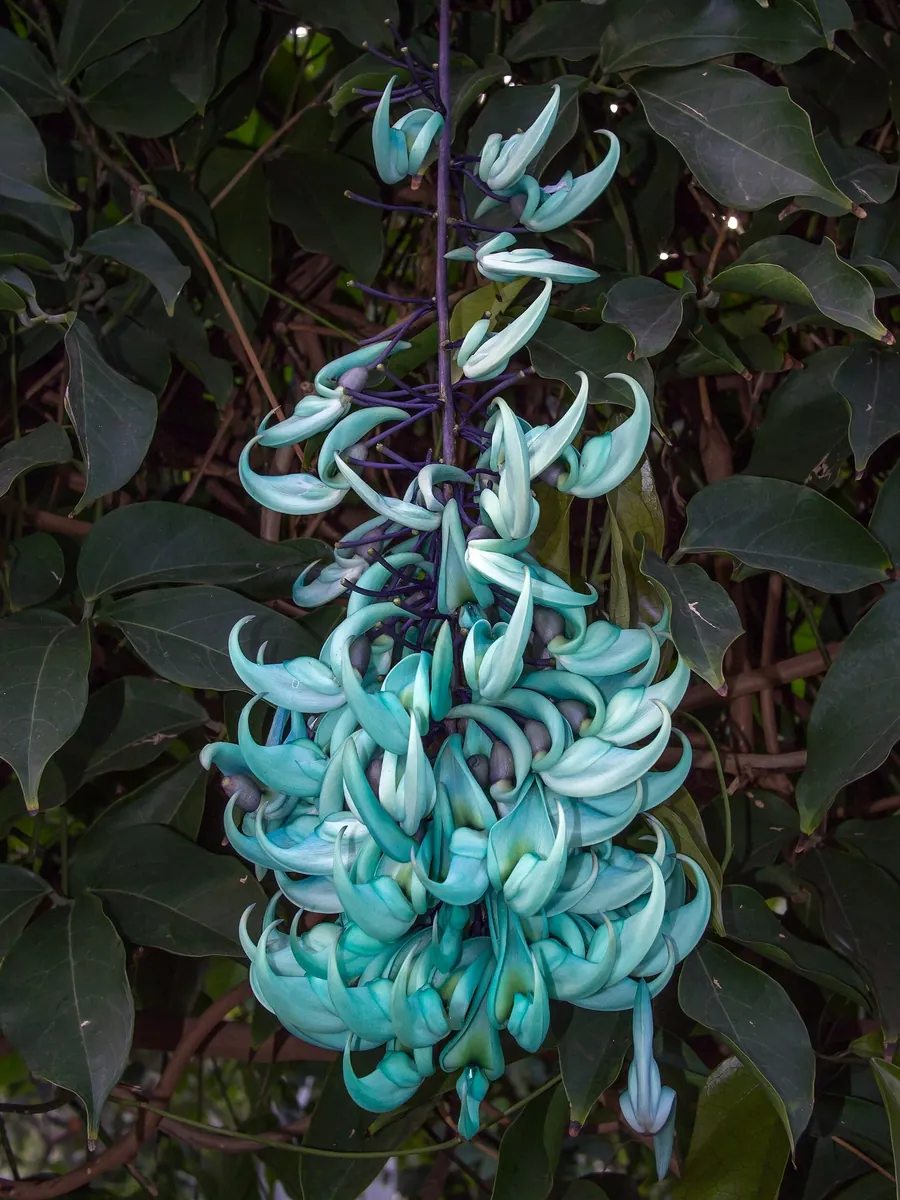
The jade vine, Strongylodon macrobotrys, has claw-shaped flowers in a striking blue-green color that is almost unknown in nature. The flowers hang in clusters up to 3 feet long. It grows in the rainforests of the Philippines, where bats pollinate it, and forest loss has made it threatened in the wild. It can be seen in large tropical glasshouses, such as the one at Kew.
17. Monkey Face Orchid
Dracula simia grows in cloud forests in Ecuador and Peru, at elevations of around 3,000 to 6,500 feet. The center of each flower looks like a tiny monkey face. It is not as rare as some flowers here, but it lives only in cool, damp mountain forests and is seldom seen outside them. Its flowers smell of ripe oranges.
18. Hydnora africana
Hydnora africana is a parasitic plant from southern Africa that lives underground on the roots of Euphorbia shrubs. After rain, its thick, fleshy flower pushes up through the sand. The outside is brown and rough, while the inside is a bright salmon orange. It smells of dung to attract beetles, which it traps for a short time to spread pollen.
19. Sapria himalayana
Sapria himalayana is a close relative of Rafflesia. It grows as a parasite on vines in northeast India, Myanmar and Thailand. Its flower is about 8 inches across, red with pale yellow or white spots, and it appears straight out of the vine. Forest loss threatens it, and it is seldom recorded in the wild.
20. Snowdon Lily
The Snowdon lily, Gagea serotina, is a small white mountain flower with purple veins. It grows in the Alps and Rocky Mountains, but in Britain it survives only on a few cliff ledges in Snowdonia, Wales. It is a remnant of the last ice age. Warming summers and grazing threaten the few British plants that remain.
Why Flowers Become Rare
Each rare flower has its own story, but the same causes come up again and again.
Habitat Loss
Forests are cleared, wetlands are drained and grasslands are plowed. Plants with tiny ranges, such as the ghost orchid or Venus flytrap, have nowhere else to go when their home changes.
Overcollecting
Showy flowers draw collectors. The lady’s slipper orchid, Chilean blue crocus and Venus flytrap were all pushed toward the edge by people digging them up for gardens or sale.
Lost Pollinators and Partners
Many rare plants depend on a single animal or host. Parrot’s beak lost its bird pollinators. Rafflesia needs one type of vine. The western underground orchid needs a fungus and a shrub. Lose one partner and the plant cannot complete its life cycle.
Slow Life Cycles
Plants that bloom once in decades, such as Puya raimondii, recover slowly after any loss. A bad year can set them back for generations.
Where You Can See Rare Flowers
You do not have to travel to a rainforest to see some of these flowers. Major botanic gardens grow many of them and announce blooms to the public.
Botanic Gardens and Glasshouses
- Corpse flower blooms are shared online by gardens in the US, UK and Europe, often with live cameras.
- The jade vine flowers in large tropical glasshouses, including Kew Gardens in London.
- Franklin trees grow at arboretums across the eastern US and flower in late summer.
- Middlemist’s Red can be seen in the Chiswick House conservatory when it blooms in early spring.
Rare Flowers You Can Grow
A few rare flowers are easy to grow at home, even if their wild cousins are in trouble. Chocolate cosmos, parrot’s beak, queen of the night and the Franklin tree are all sold by nurseries. If you enjoy unusual plants, our guides to the black bat flower and the protea flower are good next steps.
How to Help Protect Rare Flowers
You can help rare plants from your own backyard.
- Buy plants only from nurseries that propagate them, not from wild-collected stock.
- Never dig up wild orchids or other native plants.
- Plant native flowers to support local pollinators.
- Support botanic gardens and seed banks that save rare species.
- Stay on trails in protected areas so fragile plants are not trampled.
Rarest Flowers FAQs
What is the rarest flower in the world?
Middlemist’s Red camellia is often named the rarest flower in the world. Only two plants are known, one at Chiswick House in London and one at Waitangi in New Zealand. Other candidates include Kokia cookei, which survives only through grafting, and the western underground orchid of Western Australia.
What is the largest flower in the world?
Rafflesia arnoldii has the largest single flower, up to about 3 feet across. The corpse flower, Amorphophallus titanum, has a larger flower head, up to about 10 feet tall, but it is made up of many small flowers, not one.
How often does the corpse flower bloom?
A corpse flower usually takes 7 to 10 years to bloom for the first time. After that, it may bloom every few years, depending on how much energy its giant underground tuber has stored. Each bloom lasts only one to two days.
Can I grow any of the rarest flowers at home?
Yes, a few. Chocolate cosmos, parrot’s beak, queen of the night and the Franklin tree are sold by nurseries and grow well in the right climate. Always buy from nurseries that propagate their plants rather than collect them from the wild.
Why is the ghost orchid so rare?
The ghost orchid grows only in a few swamps in southern Florida and in Cuba. It needs very specific conditions, high humidity and certain host trees. Poaching, drainage, storms and changes in water levels have all reduced its numbers.
What flower blooms only once in its life?
Puya raimondii, the queen of the Andes, blooms once after many decades and then dies. Its flower spike can reach about 30 feet tall and carry thousands of flowers. Agaves and some bamboos share this habit of blooming once and then dying.
Is the Kadupul flower really the rarest flower?
Not as a plant. The Kadupul is Epiphyllum oxypetalum, a cactus that is common and easy to grow. It is called rare because each flower opens at night and wilts by dawn, so few people see it in bloom.
Related flower guides
More guides you might enjoy.


